
History
From antiquity to the present.
2005 - 2021
Gaza: Disengagement to Operations
The 2005 disengagement and the Israel-Hamas rounds of fighting to 2021.
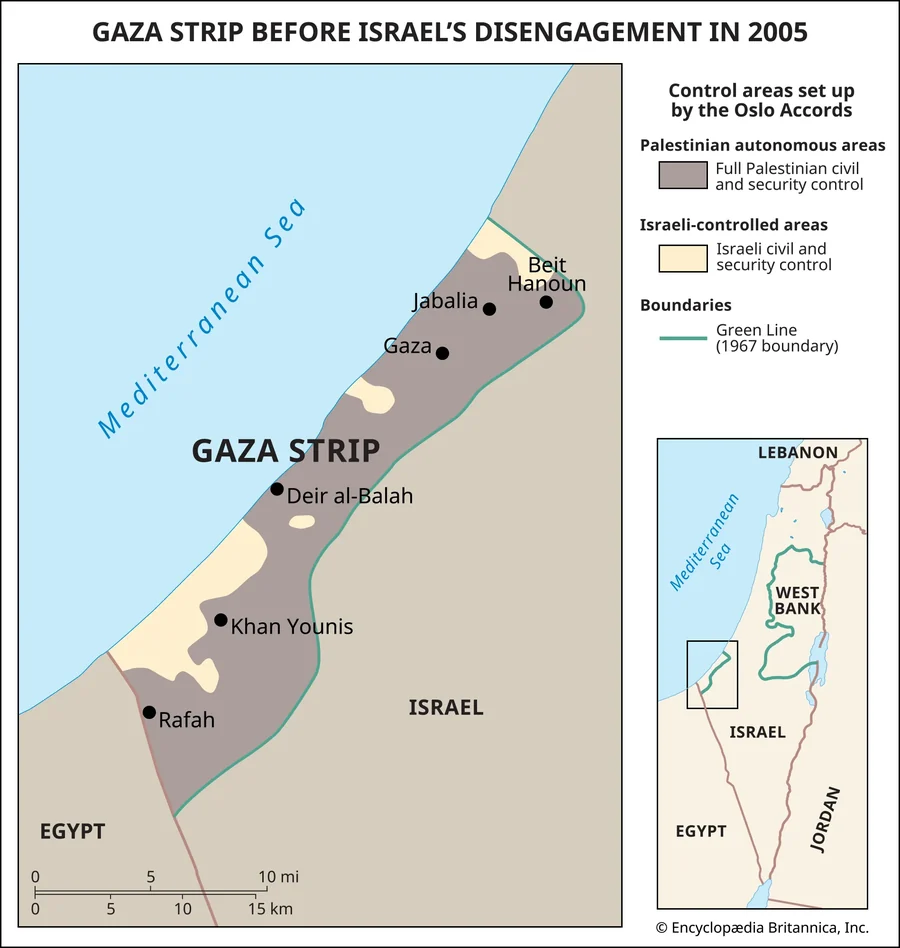
The 2005 Gaza Disengagement
The Gaza disengagement was Israel's unilateral removal of all its settlements and military forces from the Gaza Strip in 2005. Four small settlements in the northern West Bank were also removed. Prime Minister Ariel Sharon proposed the plan in December 2003. The cabinet approved it on 6 June 2004. The Knesset endorsed it on 26 October 2004 by 67 votes to 45 and passed the implementing law on 16 February 2005. Eviction notices were served on 15 August 2005, forced removals began after the deadline of midnight on 16 August, and the last Gaza settlement, Netzarim, was emptied on 22 August. The last soldiers left on 12 September 2005. Between 8,000 and 9,000 residents were moved, depending on the count used. Israel kept control of Gaza's airspace, sea and most crossings. Hamas won Palestinian elections in January 2006 and seized Gaza by force in June 2007. Whether the withdrawal ended the occupation, and whether it served Israel's security, remain disputed.
Gaza Operations, 2006 to 2021
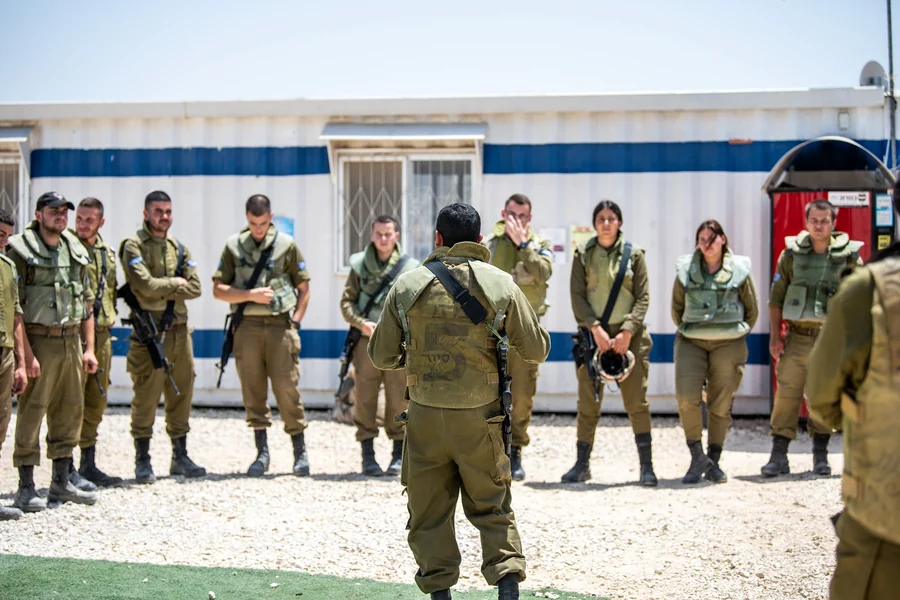
Between 2006 and 2021, Israel fought one war in Lebanon and four large operations in the Gaza Strip. The Lebanon war against Hezbollah lasted from 12 July to 14 August 2006 and ended under UN Security Council Resolution 1701. Lebanese authorities counted 1,191 people killed in Lebanon. Israel counted 44 civilians and 119 soldiers killed. The Gaza operations were Cast Lead (27 December 2008 to 18 January 2009), Pillar of Defence (14 to 21 November 2012), Protective Edge (7 July to 26 August 2014) and Guardian of the Walls (10 to 21 May 2021). All four followed rocket fire from Gaza and opened with Israeli air strikes. Ground forces entered Gaza only in 2009 and 2014. Each operation ended in a ceasefire with no political agreement. After each one, UN bodies and the Israeli government published different counts of the Palestinian dead. For 2014 the UN count was 2,251 and the Israeli count was about 2,125.
2023 - 2025
October 2023 & Aftermath
The October 2023 attack, the war, and the 2025 ceasefire.
The October 2023 Attack and Its Aftermath
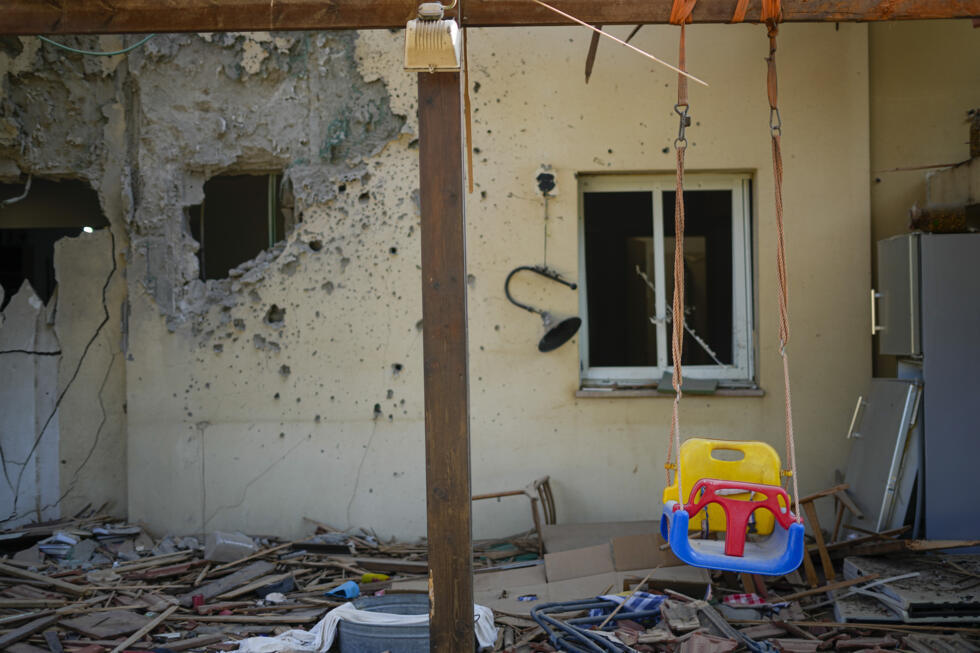
On October 7, 2023, a massive surprise attack from Gaza brought unimaginable loss and forced Israel into a multi-front war for survival. This article explores the events of that fateful day, the military response that dismantled the threats, and the stories of profound resilience that helped the nation rebuild.
The 2025 Gaza Ceasefire and the Board of Peace
The late 2025 Gaza ceasefire established a historic path to stability built around an innovative, internationalised architecture. This article details the mechanics of President Trump's 20-point plan, the resolution of the hostage crisis, and how the newly formed Board of Peace aims to oversee Gaza's reconstruction and demilitarisation.

1947 - 1949
The 1948 Arab-Israeli War
Causes, course, armistice lines, and demographic consequences.
The 1948 War
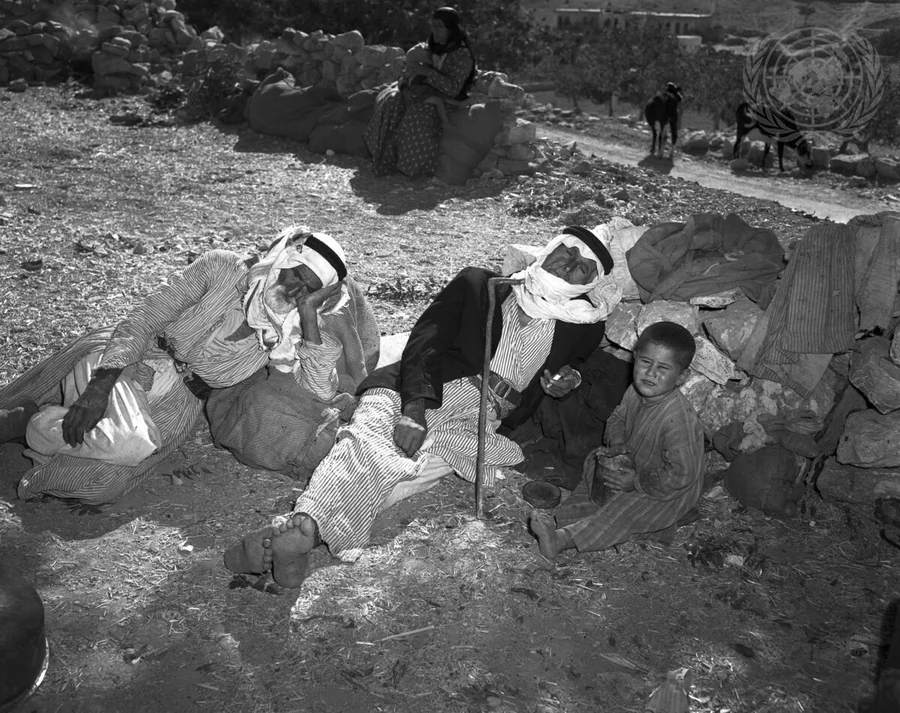
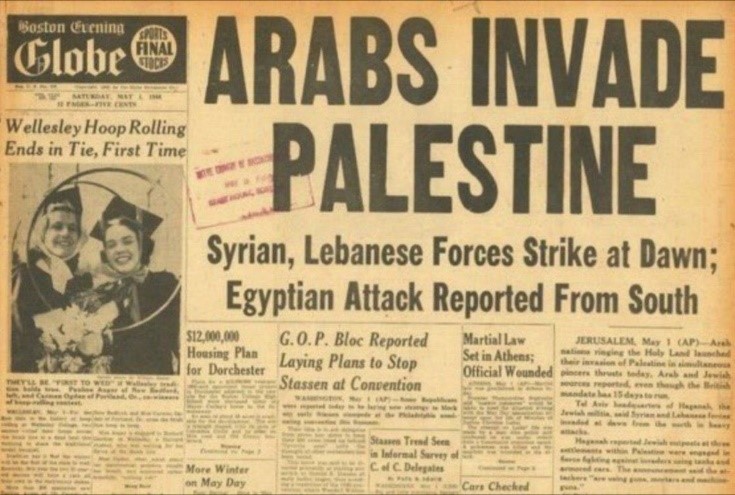
The 1948 War was fought between the Jewish community of Palestine, which became the State of Israel, and Palestinian Arab forces joined by the regular armies of the Arab states. It began the day after the United Nations General Assembly recommended partition on 29 November 1947. It ended with four armistice agreements signed between 24 February and 20 July 1949. The first phase was a civil war inside British-ruled Palestine. The second began on 15 May 1948, when Egypt, Transjordan, Syria, Lebanon and Iraq sent armies across the borders a day after Israel declared independence. Israel survived at a cost of about 6,000 dead, close to one percent of its Jewish population. It ended the war holding about 77 percent of Mandate Palestine. Jordan held the West Bank and East Jerusalem, and Egypt held Gaza. Israelis call it the War of Independence. Palestinians call it the Nakba, meaning the catastrophe.
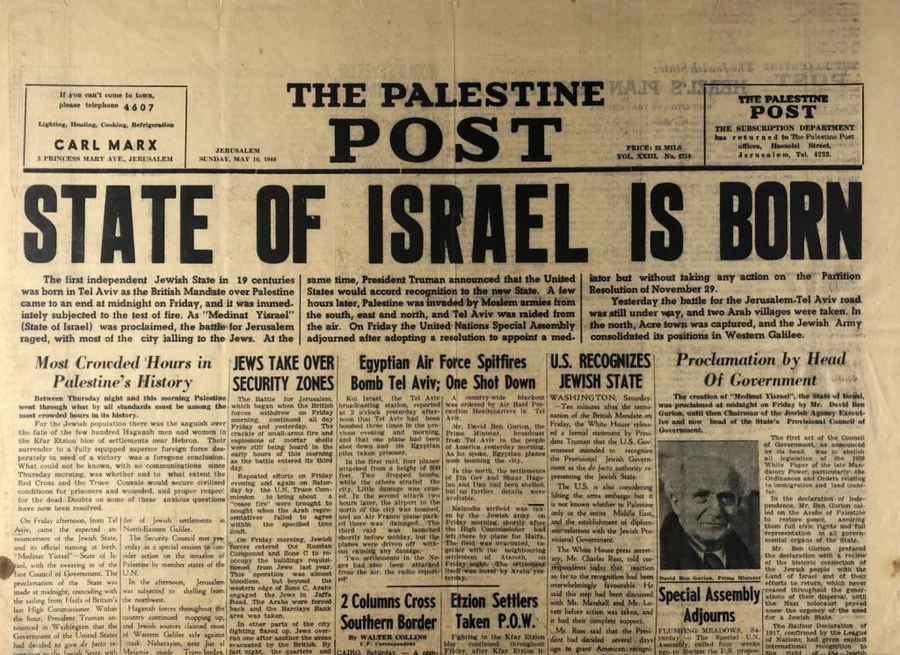
The Declaration of Independence, 14 May 1948
David Ben-Gurion read the Declaration of the Establishment of the State of Israel at the Tel Aviv Museum at about 4 p.m. on Friday, 14 May 1948. The British Mandate for Palestine ended at midnight that night. Members of the People's Council, which then became the Provisional Council of State, signed the text. It bases the new state on the Jewish people's historical connection to the land and on UN General Assembly Resolution 181 of 29 November 1947. It promises equal social and political rights without regard to religion, race or sex, and a constitution by 1 October 1948. No constitution was adopted. In December 1948 the Supreme Court ruled that the Declaration is not binding constitutional law. Since 1953, courts have used it to interpret laws. Since 1994, the Basic Law: Human Dignity and Liberty has required basic rights to be upheld in its spirit.
The 1947 UN Partition Plan: what Resolution 181 actually said
UN General Assembly Resolution 181, adopted on 29 November 1947 by a vote of 33 to 13 with 10 abstentions, recommended partitioning Mandatory Palestine into an independent Jewish state, an independent Arab state, and an international zone for Jerusalem. The resolution was accepted by the Jewish Agency and rejected by the Arab Higher Committee and the Arab League. It was a non-binding recommendation - not a directive. Communal violence began the following day.
1915 - 1948
WWI, Balfour & the British Mandate
The Sinai and Palestine campaign, the Balfour Declaration, and Mandate-era governance.
The Sinai and Palestine Campaign, 1915–1918
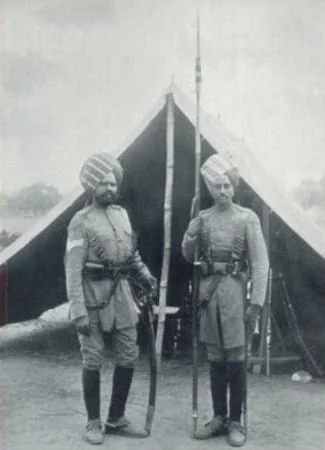
Indian soldiers served from the first battle of the Sinai and Palestine Campaign to the last. In February 1915, Indian infantry and camel troops helped defeat an Ottoman attempt to cross the Suez Canal. About 144,000 Indian personnel were sent to Egypt and Palestine during the war. When Jerusalem surrendered on 9 December 1917, Indian Muslim guards were sent to protect its holy places. In early 1918 the British moved most of their own infantry to France, and Indian soldiers replaced them. By the final offensive in September 1918, Indians made up most of General Allenby's infantry and two full cavalry divisions. On 23 September 1918 the Jodhpur and Mysore Lancers captured Haifa, and their commander, Dalpat Singh, was killed. India and Israel now honour this battle together. New Delhi renamed Teen Murti Chowk as Teen Murti Haifa Chowk on 14 January 2018.
The British Mandate
Britain governed Palestine under a League of Nations Mandate from 1920 to 1948. The League approved the Mandate in July 1922, and it came into force in September 1923. It required Britain to secure a Jewish national home while protecting the civil and religious rights of all inhabitants. Jewish immigration raised the Jewish share of the population from about 13 % in 1922 to about 33 % at the end of 1946. Arab opposition to this policy led to violence in 1920, 1921 and 1929, and to the Arab Revolt of 1936 to 1939. Britain responded with commissions of inquiry and with policy statements called White Papers in 1922, 1930 and 1939. The 1939 White Paper limited Jewish immigration to 75,000 over five years. In 1947 Britain referred the question to the United Nations, which recommended partition. British rule ended on 15 May 1948.
The Balfour Declaration
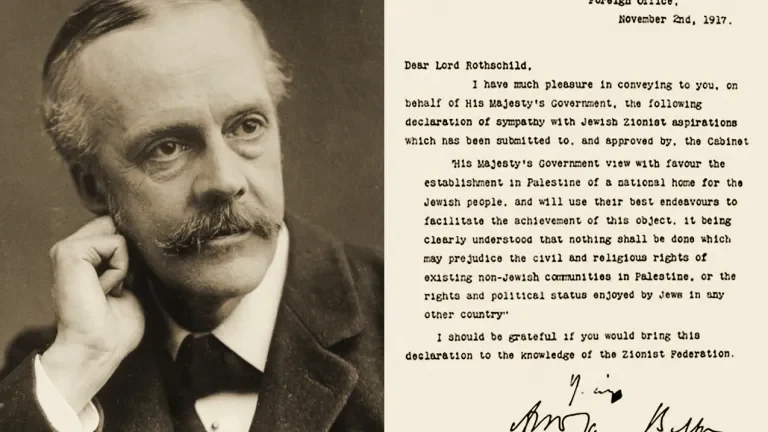
The Balfour Declaration is a statement of British policy in a letter dated 2 November 1917 from Foreign Secretary Arthur James Balfour to Lord Walter Rothschild. It said the British government viewed "with favour the establishment in Palestine of a national home for the Jewish people" and would use its "best endeavours" to help. It added two conditions. Nothing would prejudice the civil and religious rights of existing non-Jewish communities in Palestine. Nothing would prejudice the rights and political status of Jews in other countries. The War Cabinet approved the final text on 31 October 1917, after drafts that began in July. The Declaration overlapped with two earlier British commitments: the McMahon-Hussein letters of 1915 and 1916, and the Sykes-Picot agreement with France of May 1916. In 1922 the League of Nations wrote the Declaration into the Mandate for Palestine.
Zionism & Founding
The movement that turned an ancient hope into a modern state.
Pre-State History: From Antiquity to UN Resolution 181
Jews formed kingdoms and a temple-centred nation in the land in antiquity. They lost self-rule after Roman wars in 70 and 135 CE. A small Jewish community stayed in the land, while most Jews lived in a diaspora marked by expulsions from England, France, Spain and Portugal. Under Ottoman rule from 1517 to 1917, a religious community called the Old Yishuv lived mainly in Jerusalem, Hebron, Safed and Tiberias. Organised modern immigration began with the First Aliyah in 1882. Theodor Herzl's First Zionist Congress in Basel in August 1897 set the goal of a Jewish home in Palestine secured by public law. Britain issued the Balfour Declaration in November 1917, entered Jerusalem in December 1917, and governed under a League of Nations mandate from 1922. Britain's 1939 White Paper limited Jewish immigration while the Holocaust killed about six million Jews. After 1945, clandestine immigration and a UN inquiry led to Resolution 181 on 29 November 1947.
Aliyah and Israel's Immigration Waves
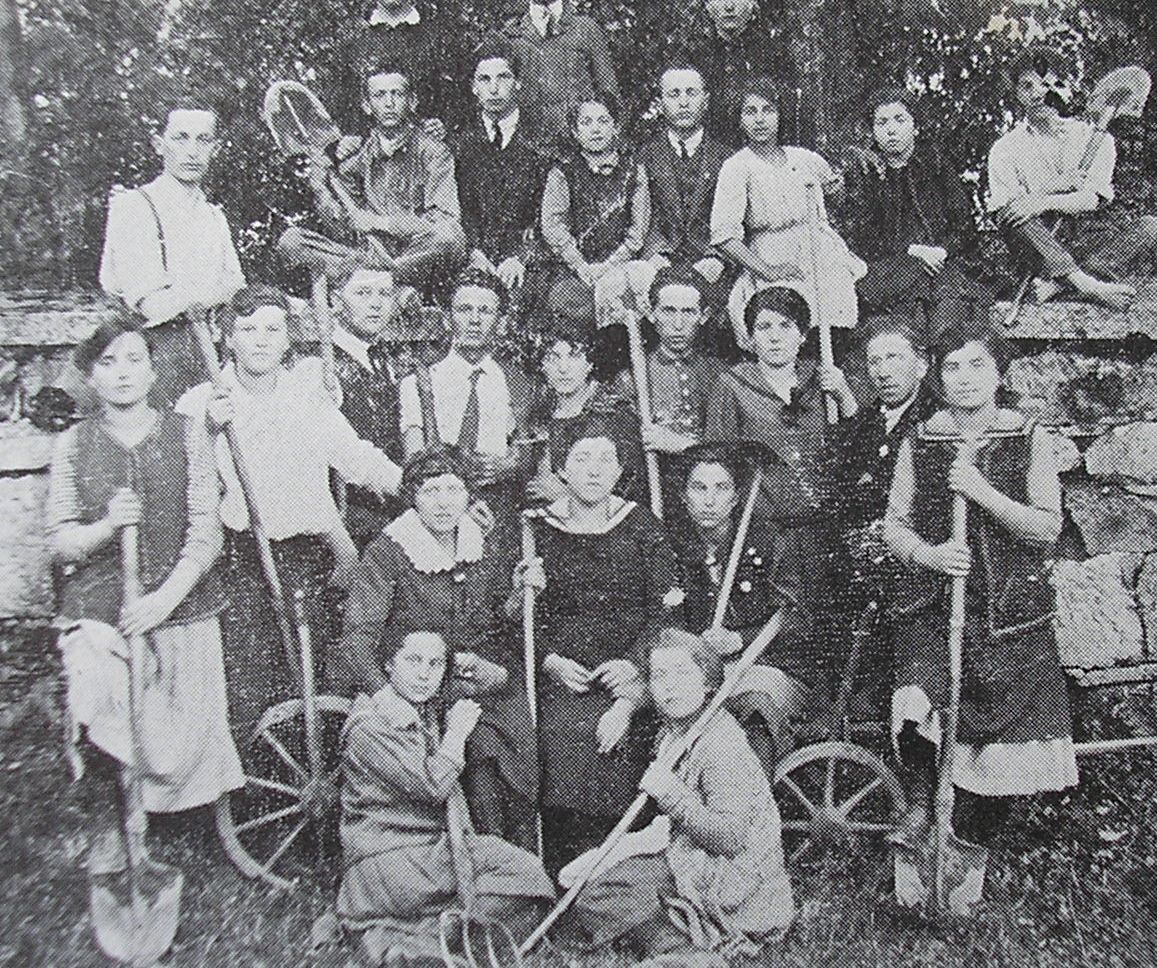
This article outlines the major waves of Jewish immigration (Aliyah) that built modern Israel, from the early farming pioneers to the millions who arrived after statehood. It highlights historic rescue operations for endangered communities and the massive influx of nearly one million skilled professionals from the former Soviet Union in the 1990s.
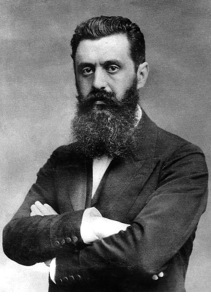
Origins of Modern Zionism
For nearly two millennia, the Jewish aspiration to return to their ancestral homeland endured through exile, persecution, and dispersion. This article traces how that ancient longing evolved into the modern Zionist movement, transforming a centuries-old dream into one of the most consequential nation-building projects of the modern era.