
Origins of Modern Zionism
Quick answer · ~120 words
The story of modern Zionism is one of a people reclaiming their ancient homeland after centuries of exile. For Jews scattered across the world, the dream of returning to Zion, the biblical name for Jerusalem and the Land of Israel, never faded. This longing shaped Jewish prayers, songs, and daily life for thousands of years. Modern Zionism turned that ancient hope into a practical movement in the late 19th century, leading to the rebirth of Israel as a Jewish state.
Ancient Roots and Enduring Connection
The Jewish connection to the Land of Israel goes back nearly 4,000 years. According to tradition, the patriarch Abraham left his home in Mesopotamia and settled in Canaan, the land promised to his descendants. The Bible records how the Israelites formed kingdoms there, with Jerusalem as their capital. Even after the destruction of the First Temple in 586 BCE and the Second Temple in 70 CE by the Romans, Jews maintained a presence in the land and prayed for return.
Throughout the diaspora, Jews ended prayers with "Next year in Jerusalem." They faced the direction of the Holy Land during worship. This deep tie was not merely religious. It was part of their identity as a people. Small Jewish communities continued to live in places like Jerusalem, Hebron, Safed, and Tiberias over the centuries, preserving the link despite hardships.
Challenges in Europe Spark New Thinking
By the 19th century, Jews in Europe faced growing difficulties. In Eastern Europe, violent pogroms, or organized attacks, swept through Russia and surrounding areas, especially after 1881 following the assassination of Czar Alexander II. Thousands of Jews were killed or driven from their homes. In Western Europe, even assimilated Jews encountered prejudice. The Dreyfus Affair in France in 1894, where a Jewish army officer was falsely accused of treason amid public anti-Jewish hysteria, shocked many.
These events convinced thinkers that Jews needed a safe national home. In 1882, Dr. Leon Pinsker, a Russian Jewish physician, wrote Auto-Emancipation. He argued that Jews were treated as outsiders everywhere and must emancipate themselves by creating their own state. This pamphlet inspired the Hibbat Zion (Lovers of Zion) movement, which encouraged practical settlement in the Land of Israel.
Theodor Herzl and Political Zionism
Theodor Herzl, an Austrian Jewish journalist, is widely seen as the father of modern political Zionism. Born in Budapest in 1860, Herzl initially believed Jews could fully integrate into European society. Covering the Dreyfus trial in Paris changed him. He realized anti-Semitism was deep-rooted and would not disappear through assimilation.
In 1896, Herzl published Der Judenstaat (The Jewish State). He called for an organized effort to establish a Jewish homeland, preferably in Palestine. Herzl's vision was practical: a modern state where Jews could live freely, speak their language, and govern themselves.
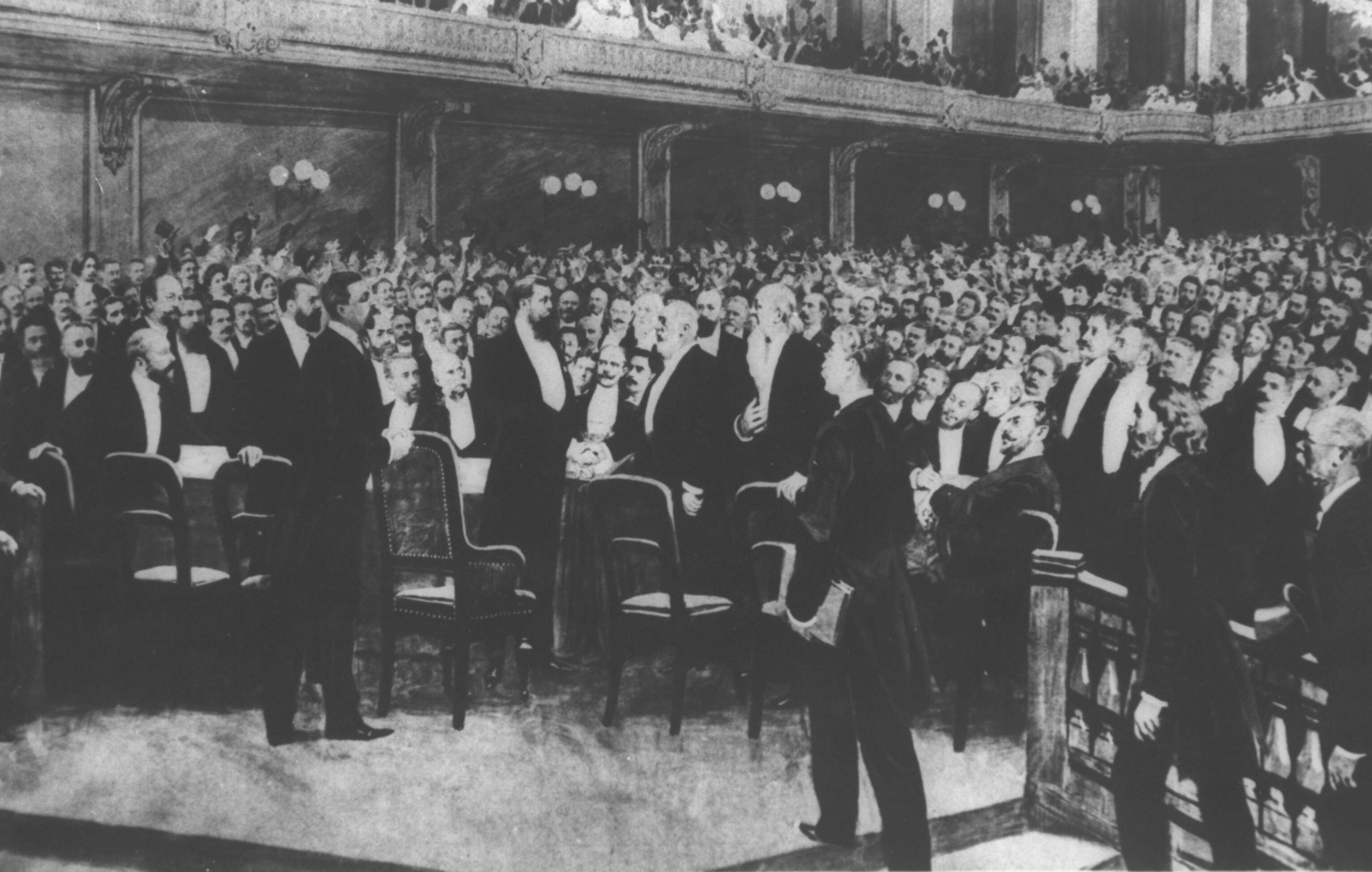
Herzl worked tirelessly. In 1897, he convened the First Zionist Congress in Basel, Switzerland. Over 200 delegates from 17 countries attended. They adopted the Basel Program, which declared: "Zionism seeks to establish a home for the Jewish people in Palestine secured by public law." The event delineated the means to achieve their declaration through four commitments:
- The promotion of the settlement of Jewish agriculturists, artisans, tradesmen and manufacturers in Palestine.
- The organization and uniting of all Jews by means of appropriate local and international institutions, in accordance with the laws of the various countries.
- The strengthening and fostering of Jewish national sentiment and national consciousness.
- Preparatory steps toward obtaining the consent of governments, where necessary, to achieve the Zionist purpose.
Herzl was elected president of the new Zionist Organization. In his diary, he noted, "At Basel I founded the Jewish State." Though it seemed like a dream then, his words proved prophetic.
Early Settlement and Waves of Immigration
The Hebrew word for immigration to the Land of Israel is Aliyah. Even before Herzl, small groups of pioneers made their way to the land. The First Aliyah (1882–1903) brought thousands of Jews from Eastern Europe. They faced swamps, malaria, and tough conditions but established agricultural settlements like Rishon LeZion and Petah Tikva. They revived Hebrew as a spoken language, thanks to efforts by Eliezer Ben-Yehuda and others. Nearly 35,000 Jews came to Palestine during the First Aliya, with some 15,000 establishing new rural settlements.
Later waves, including the Second Aliyah (1904–1914), during which 40,000 Jews immigrated, brought idealistic young people who built kibbutzim, collective farms that emphasized labor and self-reliance. These settlers drained swamps, planted trees, and created new communities, turning neglected land into fertile areas. By the early 20th century, the Jewish population in the land grew significantly, laying groundwork for future development.
Broader Impact and Path Forward
Zionism united Jews from different backgrounds around a shared goal of national revival. It drew support from figures like Chaim Weizmann, who later helped secure the 1917 Balfour Declaration, in which Britain expressed support for a Jewish national home in Palestine. The movement combined political diplomacy with practical work on the ground.
Modern Zionism represents the Jewish people's determination to end two thousand years of exile and vulnerability. It is about returning home, rebuilding, and creating a refuge and a vibrant society. The pioneers' courage and vision transformed an idea into reality, culminating in Israel's independence in 1948.
Sources
[1]: Halperin, Liora. "Origins and Evolution of Zionism." Foreign Policy Research Institute, January 9, 2015. https://www.fpri.org/article/2015/01/origins-and-evolution-of-zionism/
[2]: "Zionist Congress: First Zionist Congress and Basel Program (August 1897)." Jewish Virtual Library. https://jewishvirtuallibrary.org/first-zionist-congress-and-basel-program-1897
[3]: Israel Ministry of Foreign Affairs. "1897: The First Zionist Congress Takes Place in Basel, Switzerland." Gov.il. https://www.gov.il/en/pages/1897-the-first-zionist-congress-takes-place-in-basel
[4]: Israel Ministry of Foreign Affairs. "Aliya." Gov.il. https://www.gov.il/en/pages/aliya
[5]: Eichler, William. "Herzl's Troubled Dream: The Origins of Zionism." History Today 73, no. 6 (June 2023). https://www.historytoday.com/archive/feature/herzls-troubled-dream-origins-zionism
[6]: Gluckin, Tzvi. "What Is Zionism?" Aish, June 30, 2024. https://aish.com/what-is-zionism/
[7]: "Zionism and Israel." The Pluralism Project, Harvard University. https://pluralism.org/zionism-and-israel