International Relations
Diplomacy, conflicts, treaties.
1964 - 2026
Hamas, Hezbollah & the PLO
Origins, ideology, and role of the main non-state actors around Israel.
The PLO, Fatah and the Palestinian Authority
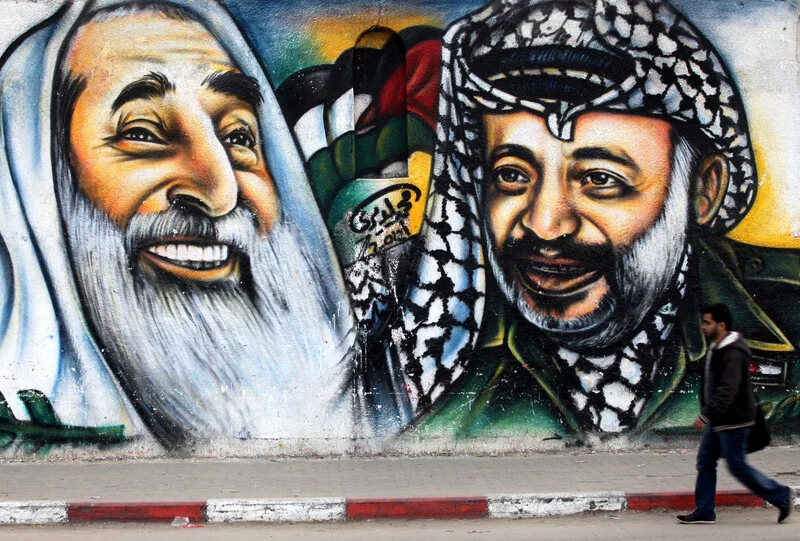
The Palestine Liberation Organization (PLO) was founded in May 1964. Fatah, the movement led by Yasser Arafat, took control of it in 1969 and still dominates it. The PLO's 1968 Charter called armed struggle the only way to liberate Palestine. On 9 September 1993 the PLO recognized Israel's right to exist. The Oslo agreements of 1993 and 1995 then created the Palestinian Authority (PA) to govern parts of the West Bank and Gaza. The Palestine National Council voted in 1996 to cancel the charter clauses that denied Israel's existence and reaffirmed this in 1998, though Israel disputed whether the legal process was complete. Hamas won the January 2006 legislative election and took Gaza by force in June 2007, which split Palestinian rule. Mahmoud Abbas has led the PLO and the PA since 2005 without a new election. The PA is in a fiscal crisis, and a presidential vote is promised for 2027.
Hezbollah and the Lebanon Front
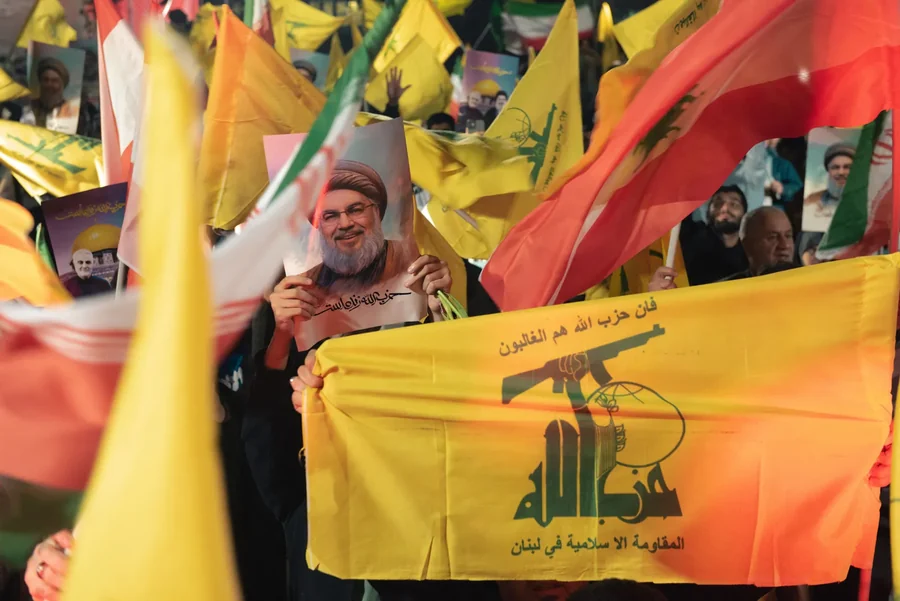
Hezbollah is a Lebanese Shia Islamist movement and armed group. It was founded in 1982, during Israel's invasion of Lebanon, with money, training and ideology from Iran. It fought Israeli forces in southern Lebanon until Israel withdrew in May 2000, and the UN confirmed that withdrawal in June 2000. On 12 July 2006 Hezbollah crossed into Israel, killed eight soldiers and captured two, starting a war that lasted until 14 August 2006. UN Security Council Resolution 1701 ended that war. It barred all armed forces except the Lebanese army and UN peacekeepers from the area south of the Litani River. Hezbollah rearmed anyway. It also sits in parliament and has held cabinet posts. From 8 October 2023 it fired on Israel. That led to war in 2024 and a ceasefire on 27 November 2024. Renewed war began on 2 March 2026, and a truce has been in place since June 2026.
Hamas
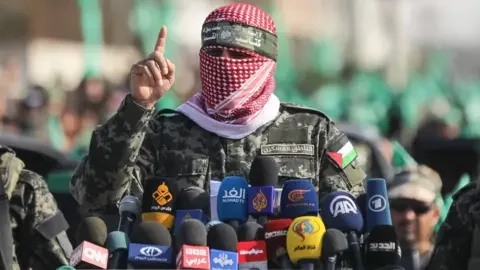
Hamas, the Islamic Resistance Movement, was founded in the Gaza Strip in December 1987, at the start of the first intifada. Its founders were members of the Palestinian branch of the Muslim Brotherhood, led by Sheikh Ahmed Yassin. Its 1988 charter called all of historic Palestine an Islamic trust and said the only solution was jihad. Its 2017 document kept the goal of liberating Palestine "from the river to the sea" and refused to recognise Israel. It also called a Palestinian state on the 4 June 1967 lines a "formula of national consensus." Hamas won 74 of 132 seats in the January 2006 Palestinian legislative election. In June 2007 it took sole control of Gaza by force. A Shura Council and a political bureau lead the movement, and its armed wing is the Izz al-Din al-Qassam Brigades. Iran supplies money, weapons and training. The United States has listed Hamas as a terrorist organisation since October 1997. Hamas led the 7 October 2023 attack on Israel, which killed about 1,200 people.
India
From cautious recognition to a strategic partnership in defence, trade, agriculture and water.
Why India's Recognition of Israel Took Until 1950
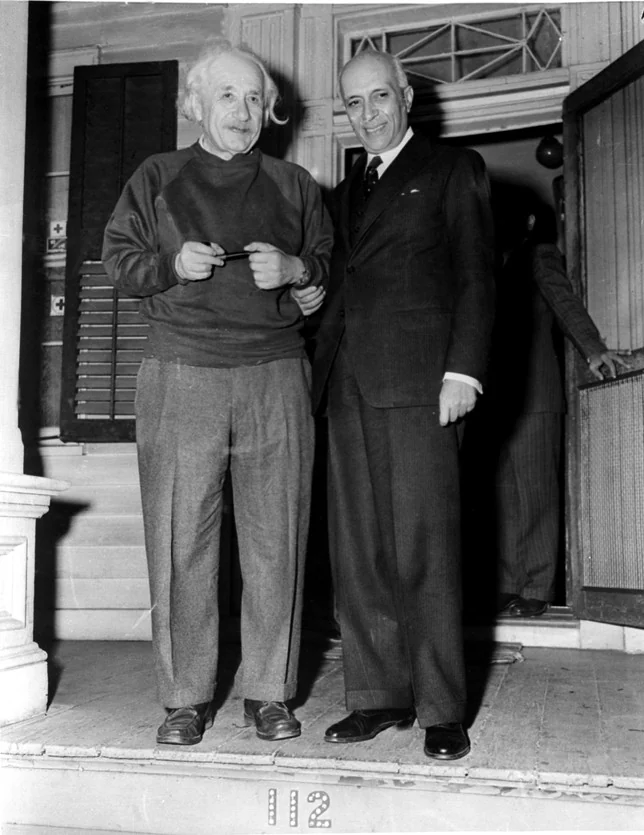
India recognised Israel on 17 September 1950, more than two years after Israel declared independence on 14 May 1948. Nehru's papers show that by February 1949 he privately accepted that Israel had come to stay. The delay was about timing. He held back for four reasons. The first was the Congress party's long commitment to an Arab-majority Palestine, which was tied to its rivalry with the Muslim League. The second was fear of angering Indian Muslims after partition. The third was the need for Arab support at the United Nations over Kashmir and against Pakistan. The fourth was a wish not to disturb India's Asian diplomacy, especially a January 1949 conference on Indonesia. Cabinet colleagues, senior diplomats, the Hindu Mahasabha and Indian Jews pressed for recognition. It came only after Turkey and Iran had recognised Israel first. Full diplomatic relations followed on 29 January 1992.
Why India-Israel Relations Took Until 1992
India recognised Israel on 17 September 1950 but did not establish full diplomatic relations until 29 January 1992. For four decades, New Delhi allowed Israel only a consulate in Bombay, which operated from 1953. The delay came from India's vote against the 1947 partition plan, its ties with Arab states and the Non-Aligned Movement, its reliance on the Soviet Union, and concern over domestic Muslim opinion. Israel kept seeking relations and gave India quiet military help in 1971. Prime Minister P. V. Narasimha Rao changed course after the Soviet collapse, the Madrid Peace Conference of October 1991, and India's December 1991 vote to revoke the UN resolution equating Zionism with racism. Foreign Secretary J. N. Dixit announced the decision two weeks after PLO chairman Yasser Arafat said the matter was India's sovereign choice. Defence, farming, and trade ties followed. India's formal support for a Palestinian state did not change.
Teen Murti Haifa Chowk
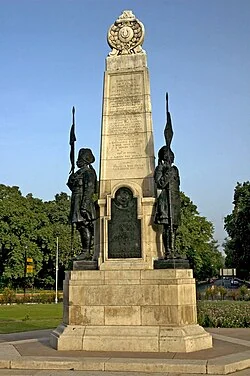
Teen Murti Haifa Chowk is a roundabout in central New Delhi built around a First World War memorial. The memorial honours the soldiers of the 15th (Imperial Service) Cavalry Brigade. The brigade was drawn from the princely states of Hyderabad, Jodhpur and Mysore, and it fought in Sinai, Palestine and Syria. The British sculptor Leonard Jennings made its three life-size figures of lancers. The memorial was built in 1922, and the Viceroy, Lord Reading, inaugurated it on 8 March 1924. On 23 September 1918, the Jodhpur and Mysore Lancers captured the port of Haifa from Ottoman and German forces. On 14 January 2018, Prime Ministers Narendra Modi and Benjamin Netanyahu renamed the roundabout Teen Murti Haifa Chowk. Every 23 September is Haifa Day. The Indian Army's 61st Cavalry marks it as its raising day, and ceremonies are held in New Delhi and in Haifa.
India's UN Voting Record on Israel, 1947 to 2026
India voted against both founding UN decisions on Israel: the partition plan on 29 November 1947 and Israel's admission as a member on 11 May 1949. India recognised Israel on 17 September 1950 but opened full diplomatic relations only on 29 January 1992. In 1975 India voted for Resolution 3379, which called Zionism a form of racism. In 1991 it voted to revoke that resolution. From 2015 onward India began abstaining on texts that targeted Israel through inquiries and international courts. In 2019 it voted with Israel at the Economic and Social Council, and in October 2023 it backed an amendment condemning Hamas. India still votes for most General Assembly texts on Palestinian statehood, including the September 2025 two-state declaration. The record runs from opposition, to recognition, to selective abstention alongside a strategic partnership.
India's Balancing Act
India keeps working ties with Israel, the Gulf Arab states, Iran and the Palestinians at the same time. It does this by handling each relationship on its own terms. Israel is now one of India's closest partners. India recognised Israel on 17 September 1950 and opened full diplomatic relations in 1992. Israel supplied 15 per cent of India's major arms imports in 2021-25. On 25 February 2026 Narendra Modi became the first Indian prime minister to address the Knesset, and the two governments then declared a Special Strategic Partnership. On Palestine, India backs a two-state solution and gives UNRWA US$5 million a year. It voted for the UN's New York Declaration on 12 September 2025, but it has abstained on some texts, including one in October 2023 that did not name Hamas. About 10 million Indians live in the Gulf states. Ties with Iran have narrowed for two reasons: the United States withdrew the sanctions exemption for Chabahar port in 2025, and Iran closed the Strait of Hormuz during the war that began on 28 February 2026.
Indian Workers in Israel
By 1 July 2025, 6,774 Indian workers had arrived in Israel under the India–Israel government-to-government (G2G) framework. Of these, 6,730 worked in construction and 44 in caregiving. India's Ministry of External Affairs also reported about 7,000 caregivers and 6,400 construction workers recruited through private channels, a combined total of roughly 20,000. Before the war, about 18,000 Indians were employed in Israel, most of them as caregivers. The framework began on 9 May 2023, when the two foreign ministers signed an agreement for 42,000 workers: 34,000 in construction and 8,000 in nursing care. The implementing protocols were signed in November 2023, after Israel suspended most Palestinian work permits following the Hamas-led attack of 7 October 2023. The first G2G batch of 64 construction workers left India on 2 April 2024. In February 2026, the two prime ministers agreed that up to 50,000 more Indian workers may arrive within five years.
Indian Tourism to Israel
Indian visits to Israel reached a record of about 70,800 in 2018 and about 69,100 in 2019, according to the Israel Ministry of Tourism. After the pandemic, arrivals recovered to about 30,900 in 2022 and reached nearly 44,000 between January and September 2023. The war that began on 7 October 2023 cut numbers to about 9,600 in 2024 and about 13,900 in 2025. About half of recent Indian visitors travel for Christian pilgrimage, mostly from Kerala. The rest come for leisure, business and conferences. Air India opened the first Delhi to Tel Aviv nonstop service on 22 March 2018, crossing Saudi airspace. El Al had earlier flown from Tel Aviv to Mumbai. Since October 2023, direct service has been halted several times. Israel introduced an e-visa for Indian travellers on 1 January 2025. Air India plans five weekly Delhi to Tel Aviv flights from 1 December 2026.
Indian Students and Academic Links
Academic ties between India and Israel are built mainly at the research level. The Embassy of India in Tel Aviv puts the number of Indian students in Israel at about 900, most of them doctoral or postdoctoral researchers. Since 2012-13, Israel's Council for Higher Education has run a postdoctoral fellowship for Indian and Chinese researchers, offering up to 55 two-year awards a year. Joint funding includes the UGC-Israel Science Foundation programme, begun in 2013 with USD 12.5 million from each side, and the USD 40 million India-Israel Industrial R\&D and Technological Innovation Fund (I4F), agreed in July 2017. Institutional links include Israel studies centres in India, India studies courses at Israeli universities, a Tel Aviv University India Chair signed in December 2025, and a Nalanda University-Hebrew University agreement signed during the Indian Prime Minister's February 2026 visit. That visit also announced an India-Israel Academic Cooperation Forum.
Indian Public Opinion on Israel
Indian public opinion leans toward Israel more than opinion in almost any other large country, although many Indians give no view at all. In Pew Research Center's 2026 survey of 36 countries, 32 percent of Indian adults viewed Israel favourably and 28 percent unfavourably. Only four countries in that survey had more favourable than unfavourable views, and India was the only one in the Asia-Pacific region. A 2009 study for Israel's Foreign Ministry found 58 percent sympathy for Israel in India, the highest of 13 countries. India recognised Israel in 1950 but kept it at a distance until full diplomatic relations began in January 1992. Under the Bharatiya Janata Party (BJP), ties became open and close: Narendra Modi visited in 2017 and addressed the Knesset in February 2026. The Congress party and the left continue to stress Palestinian rights and criticise this closeness.
India, Israel and the Abraham Accords
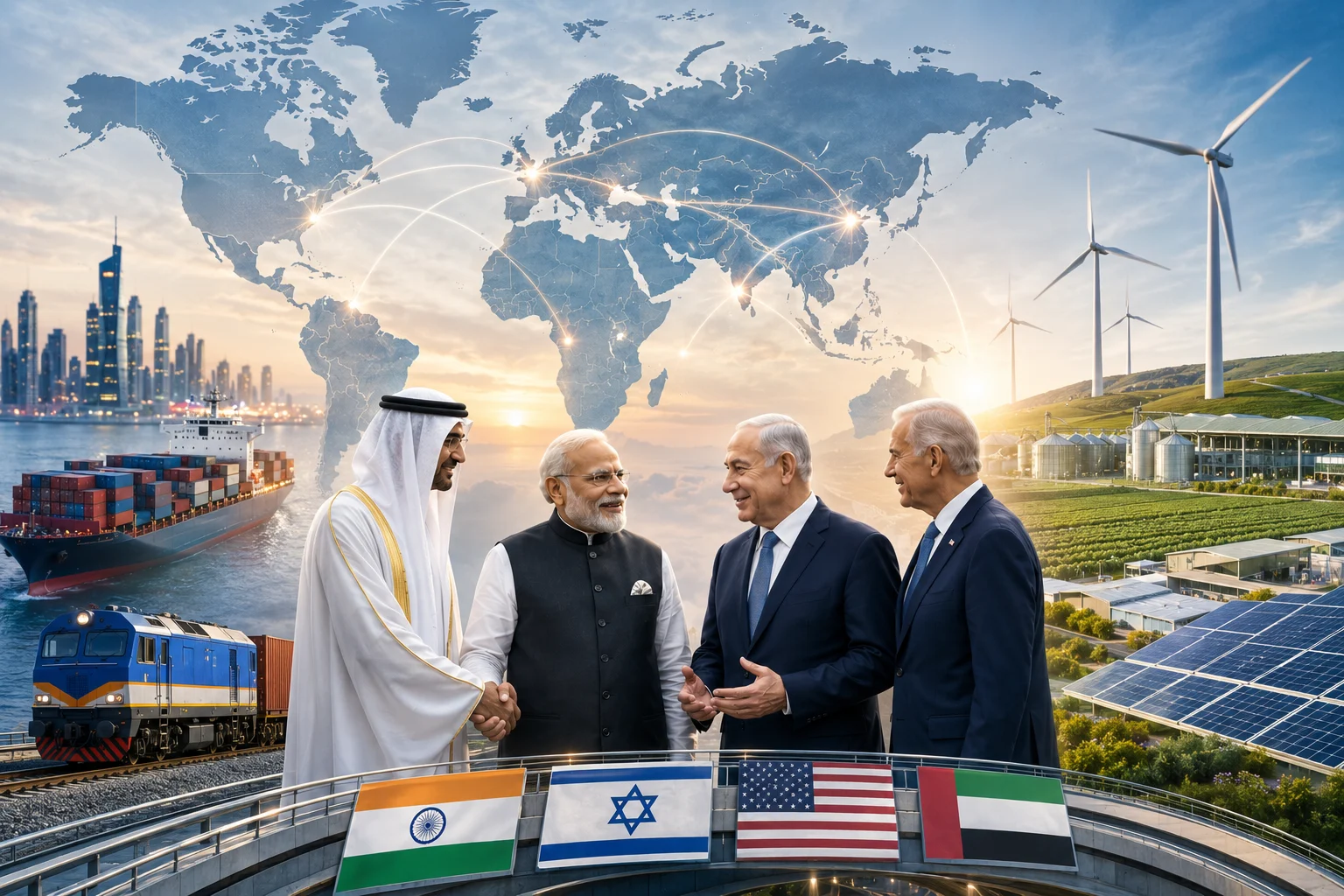
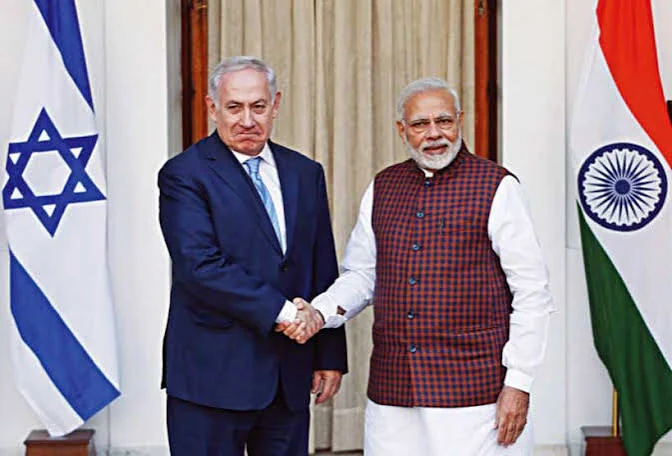
The Abraham Accords were announced on 13 August 2020 and signed at the White House on 15 September 2020. They established diplomatic relations between Israel and the United Arab Emirates (UAE) and Bahrain. Morocco and Sudan joined later. India welcomed the agreements on 14 August 2020 and called both Israel and the UAE key strategic partners. Normalisation let India work with Israel and its Gulf partners together instead of separately. The first result was the I2U2 group of India, Israel, the UAE and the United States. Its July 2022 summit announced a USD 2 billion UAE investment in Indian food parks. The second was the India-Middle East-Europe Economic Corridor, agreed in September 2023, which plans a trade route through Israel. In February 2026, India and Israel raised their ties to a Special Strategic Partnership. A bilateral investment treaty entered into force on 4 July 2026.
Adani and Haifa Port
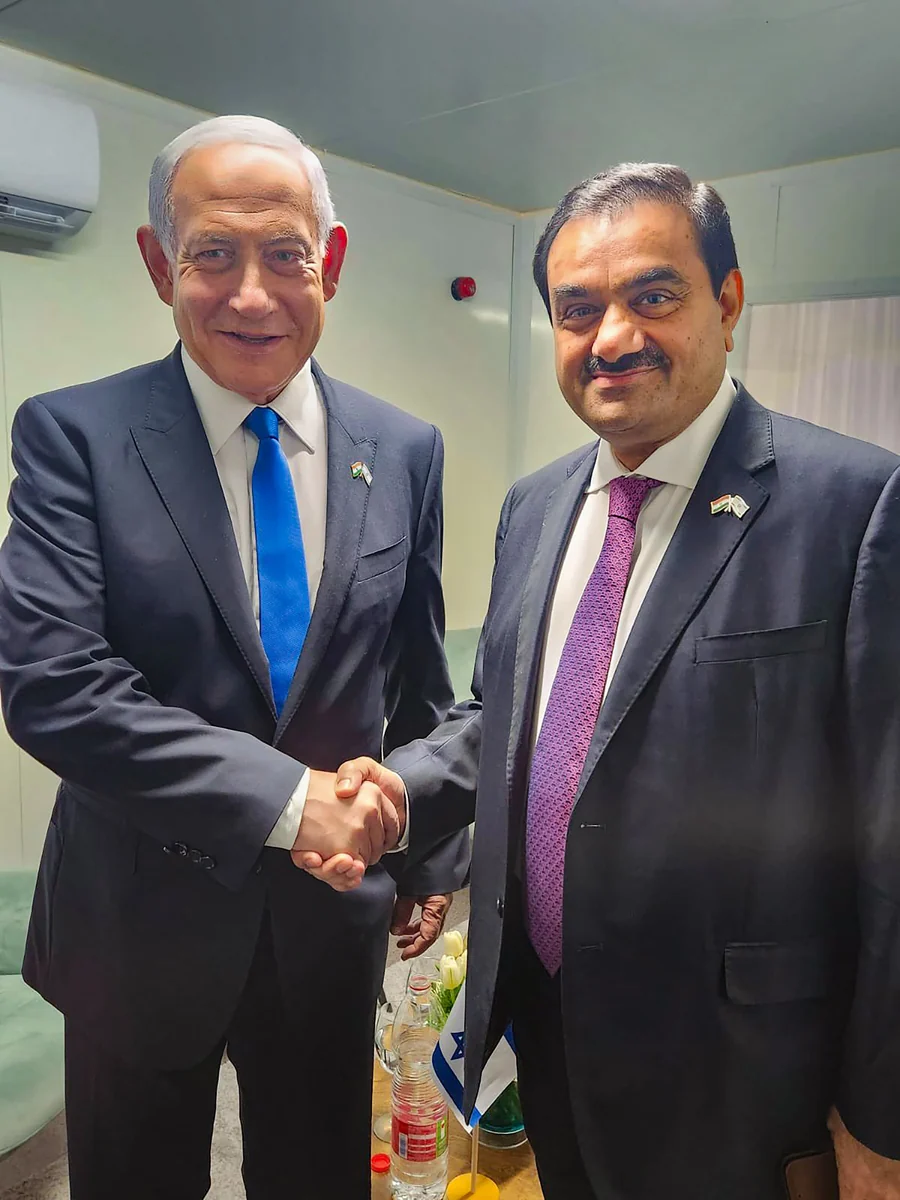
In July 2022, a consortium of India's Adani Ports and Special Economic Zone (APSEZ), holding 70 percent, and Israel's Gadot Group, holding 30 percent, won Israel's tender to buy all shares of the state-owned Haifa Port Company. The winning offer was NIS 4.1 billion, about US$1.18 billion. The sale closed on 10 January 2023, and the concession runs until 2054. It covers the existing Haifa port, Israel's main cruise port, but not the separate Bayport terminal run by China's Shanghai International Port Group (SIPG). The buyer had to inject up to NIS 1 billion into the company and must build capacity for 400-metre ships, with works starting by 1 January 2033. Israel reads the deal as port reform, competition, and a trusted partner beside a Chinese-run terminal. India reads it as its first Mediterranean gateway and an anchor for the India-Middle East-Europe Economic Corridor.
India-Israel trade and the FTA
India-Israel bilateral merchandise trade reached USD 3.62 billion in FY 2024-25, well below the level the relationship's other indicators would suggest. A long-stalled Free Trade Agreement was unblocked in late 2025: Terms of Reference signed in November 2025, first round of negotiations concluded in New Delhi on 23 to 26 February 2026. This piece sets out the trade composition, the FTA negotiating frame, and the gap between the strategic and the commercial picture.
A short history of India-Israel relations
India voted against the 1947 UN Partition Plan, recognised Israel in 1950, and waited 42 years before establishing full diplomatic relations in January 1992. The pace has accelerated sharply since: full embassies in 1992, the first Israeli PM visit in 2003, the first Indian PM visit in 2017, and elevation to a Special Strategic Partnership in November 2025. This piece traces the path.
Defence and security cooperation: India and Israel
India is Israel's single largest defence customer: 34 percent of Israeli arms exports between 2020 and 2024 went to India, worth approximately USD 20.5 billion. The relationship has moved from off-the-shelf purchases to co-development and co-production, formalised by a November 2025 MoU and an expected USD 8 to 10 billion of agreements during PM Modi's February 2026 visit. This piece sets out the structure.
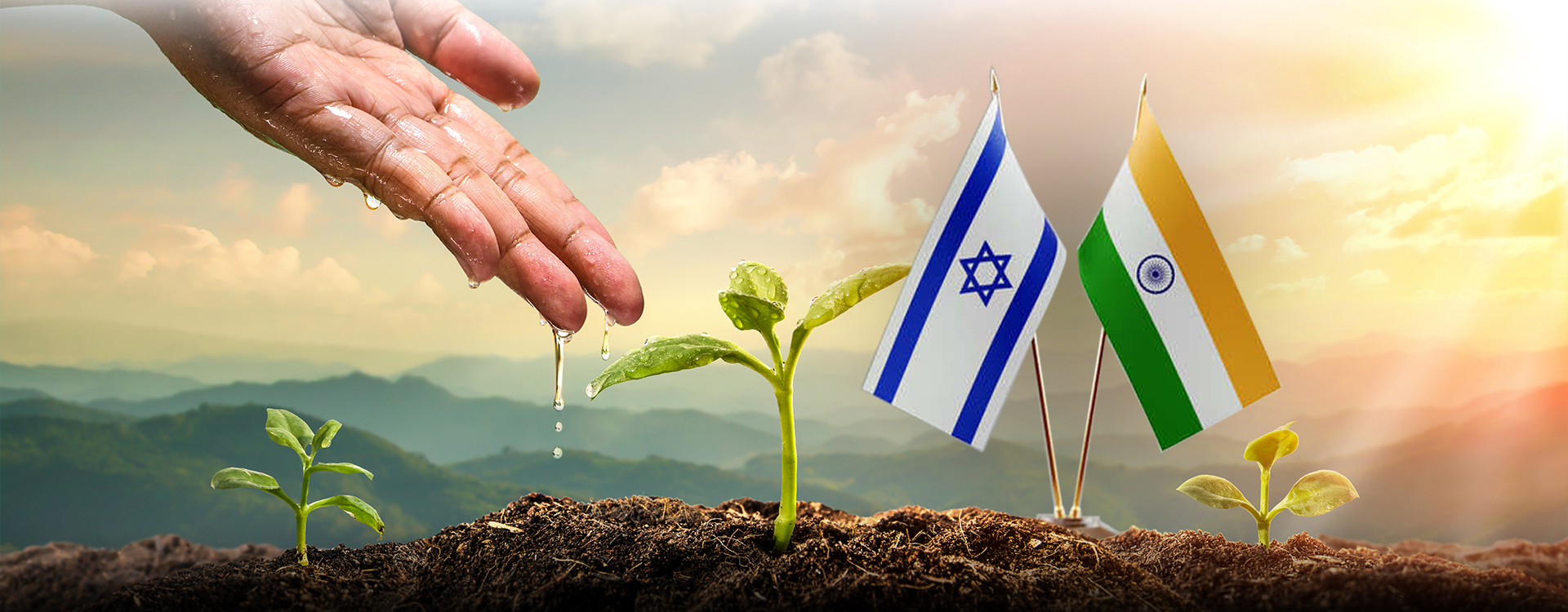
Agriculture and water cooperation: India and Israel
India-Israel agricultural cooperation runs through a network of Centres of Excellence under MASHAV (Israel's foreign-aid agency) and the India-Israel Agricultural Action Plan, established by a May 2006 work plan. Coverage spans precision farming, drip irrigation, post-harvest handling and dairy. The framework expanded materially in 2026 with a new Innovation Centre for Agriculture, a fisheries and aquaculture Centre of Excellence, and an Indo-Israel Cyber Centre. Water-tech transfer runs in parallel.
Multilateral & Diplomacy
Israel's diplomatic footprint, recognition battles, and new groupings like I2U2 and IMEC.
Israel's International Relations
Israel's foreign relations rest on one close alliance, a small group of peace and normalisation agreements with Arab states, and a long, contested record at the United Nations and in international courts. The United States is Israel's main partner. A 2016 agreement pledged 38 billion US dollars in military aid for 2019 to 2028. Egypt made peace with Israel in 1979 and Jordan in 1994. The United Arab Emirates, Bahrain, Morocco and Sudan joined the Abraham Accords in 2020 and 2021. Saudi Arabia says it will not establish relations without a Palestinian state. Since October 2023, Israel's position has weakened in several places. Turkey halted trade, Bolivia and Colombia cut ties, the International Court of Justice and the International Criminal Court acted, and in September 2025 the United Kingdom, France and other states recognised Palestine. In March 2026, 60 % of Americans viewed Israel unfavourably.
Israel at the United Nations
Israel joined the United Nations as its 59th member on May 11, 1949, through General Assembly Resolution 273. This came after several applications following its declaration of independence in 1948. The path reflected the young state's determination to take its place among natio
Iran-Israel: The Strategic Dynamic
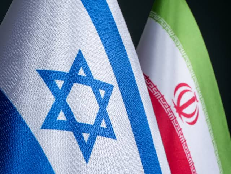
Israel faces one of its most serious long-term challenges from Iran. For decades, Tehran has built a network of proxies, advanced its nuclear program, and used harsh rhetoric against the Jewish state. From Israel's viewpoint, these actions represent an existential threat that dem
EU-Israel: The Deepest non-US Relationship
The partnership between Israel and the European Union stands as one of the most comprehensive and enduring ties Israel maintains with any bloc outside the United States. Built on decades of shared history, economic integration, scientific collaboration, and mutual interests, this
Israel's diplomatic footprint: which countries recognise Israel
Israel has formal diplomatic relations with 163 countries as of February 2026, up from roughly 80 at the end of the Cold War. The map has been reshaped four times since 1948: by the post-1967 break with the Soviet bloc and much of Africa, by the post-1991 reopening that brought India, China and the former Eastern bloc, by the 2020 Abraham Accords, and by a partial Latin American contraction during the 2023 to 2025 Gaza war. This piece unpacks the headline number and the gaps that remain.
I2U2 and IMEC: India's two new architectures with Israel
Two new multilateral architectures connect India and Israel through the Arabian Peninsula. The I2U2 grouping (India, Israel, UAE, USA), formed in 2021, runs a working agenda across water, energy, transport, space, health and food security. The India-Middle East-Europe Economic Corridor (IMEC), announced at the G20 in September 2023, plans a rail and shipping corridor from India through the Gulf and Israel to Europe. Construction began in April 2025; build-out remains uneven. This piece explains both.