Multilateral & Diplomacy
Israel's diplomatic footprint, recognition battles, and new groupings like I2U2 and IMEC.
Explainers in this topic
5 pieces
Israel at the United Nations
Israel joined the United Nations as its 59th member on May 11, 1949, through General Assembly Resolution 273. This came after several applications following its declaration of independence in 1948. The path reflected the young state's determination to take its place among natio

Iran-Israel: The Strategic Dynamic
Israel faces one of its most serious long-term challenges from Iran. For decades, Tehran has built a network of proxies, advanced its nuclear program, and used harsh rhetoric against the Jewish state. From Israel's viewpoint, these actions represent an existential threat that dem
EU-Israel: The Deepest non-US Relationship
The partnership between Israel and the European Union stands as one of the most comprehensive and enduring ties Israel maintains with any bloc outside the United States. Built on decades of shared history, economic integration, scientific collaboration, and mutual interests, this
Israel's diplomatic footprint: which countries recognise Israel
Israel has formal diplomatic relations with 163 countries as of February 2026, up from roughly 80 at the end of the Cold War. The map has been reshaped four times since 1948: by the post-1967 break with the Soviet bloc and much of Africa, by the post-1991 reopening that brought India, China and the former Eastern bloc, by the 2020 Abraham Accords, and by a partial Latin American contraction during the 2023 to 2025 Gaza war. This piece unpacks the headline number and the gaps that remain.
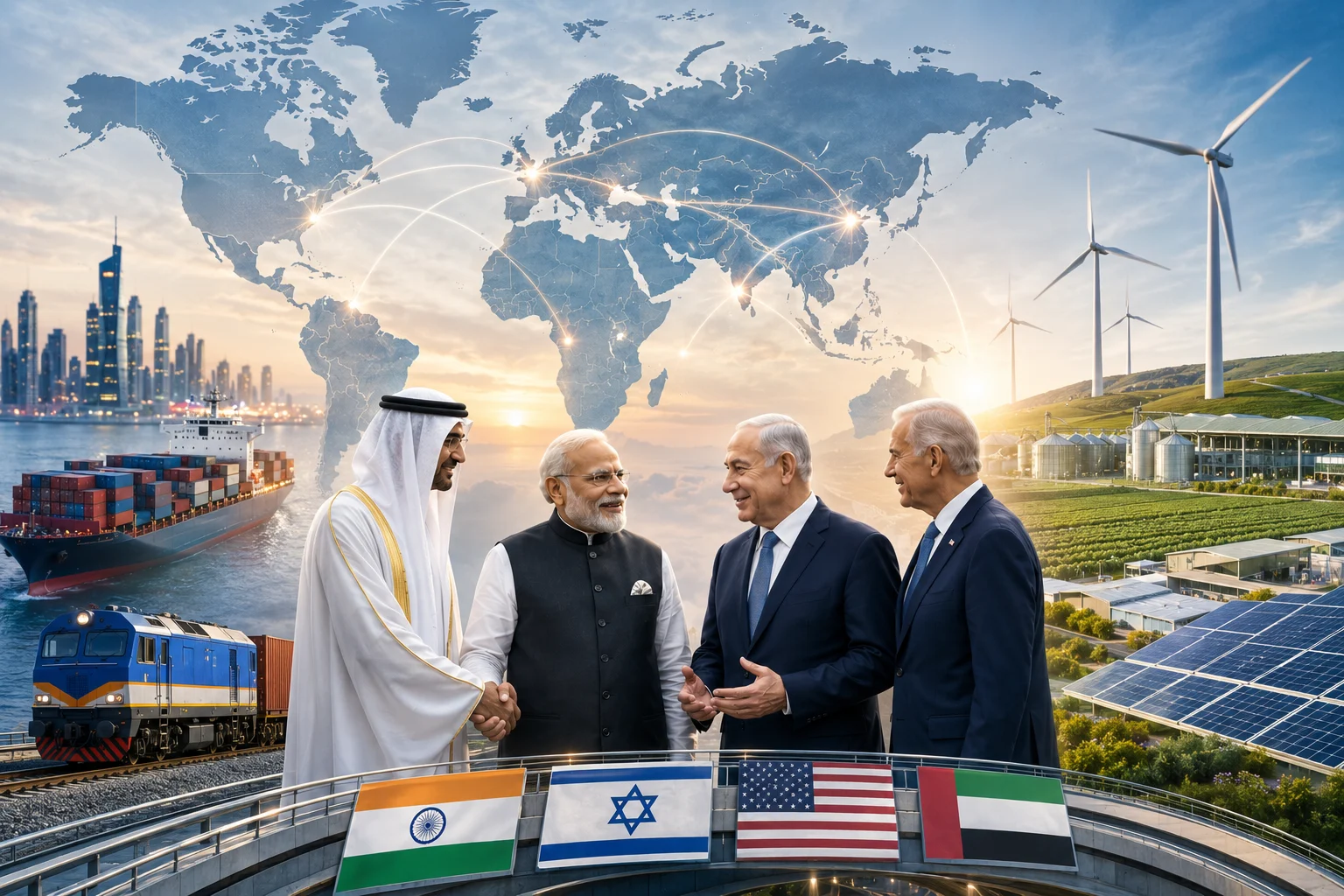
I2U2 and IMEC: India's two new architectures with Israel
Two new multilateral architectures connect India and Israel through the Arabian Peninsula. The I2U2 grouping (India, Israel, UAE, USA), formed in 2021, runs a working agenda across water, energy, transport, space, health and food security. The India-Middle East-Europe Economic Corridor (IMEC), announced at the G20 in September 2023, plans a rail and shipping corridor from India through the Gulf and Israel to Europe. Construction began in April 2025; build-out remains uneven. This piece explains both.