
Iran-Israel: The Strategic Dynamic
Early Relations
The relationship between Iran and Israel has not always been tense. After Israel's founding in 1948, Iran became the second Muslim-majority country to recognize the new state. Under the Shah, the two nations cooperated closely on security, intelligence, and economics. Iran supplied oil to Israel, and Israeli experts helped with projects in Iran. This fits Israel's "periphery strategy" of building ties with non-Arab powers to counter regional isolation.
Everything changed with the 1979 Islamic Revolution. The new regime under Ayatollah Ruhollah Khomeini cut all ties, called Israel the "Little Satan," and made opposition to Israel a core part of its ideology. What had been a practical partnership turned into open hostility. Iran began supporting groups committed to Israel's destruction.
Iran's Proxy Network
Iran does not usually attack Israel directly. Instead, it funds, arms, and directs a network of militant groups known as the Axis of Resistance. These proxies allow Tehran to pressure Israel on multiple fronts while trying to maintain some distance.
- Hezbollah in Lebanon: Founded with Iranian help in the early 1980s, Hezbollah has become one of the most heavily armed non-state groups in the world. Estimates suggest it holds around 150,000 rockets and missiles, many supplied or financed by Iran. It has fought multiple conflicts with Israel, including the 2006 war.
- Hamas and Palestinian Islamic Jihad: Iran provides these Gaza-based groups with funding (over $100 million annually in some reports), weapons, and training. Their attacks, including thousands of rockets fired at Israeli communities, have forced Israel to develop advanced defense systems like Iron Dome.
- Houthis in Yemen: These Iran-backed fighters have launched drones and missiles toward Israel and disrupted shipping in the Red Sea. Their actions show how Iran's reach extends far beyond its borders.
- Other militias: Iranian-supported groups in Iraq and Syria have also targeted Israeli interests.
From Israel's perspective, these proxies create a ring of threats. They force Israel to defend itself on several borders at once and divert resources from other priorities. Israel has responded with targeted operations to disrupt arms shipments and degrade these groups' capabilities, always with the goal of protecting civilians.
The Nuclear Threat
Iran's nuclear program stands at the heart of the strategic rivalry. Israeli leaders across parties have long viewed it as a potential threat to the state's very existence. Iran insists its program is peaceful, but its secrecy, enrichment activities, and support for terrorism raise serious doubts.
Key facts highlight the concern:
- Iran has enriched uranium to levels far beyond civilian needs.
- It has developed ballistic missiles capable of reaching Israel.
- Revelations, such as the 2018 Israeli operation that brought out a vast archive of nuclear documents from Tehran, showed Iran had lied about its past weapons-related work.
Israel has taken measured steps to slow the program without seeking broader war. The 2010 Stuxnet cyber operation, widely linked to Israeli and American efforts, damaged centrifuges at Natanz and delayed progress. Israel has also been connected to other sabotage actions and the targeted removal of key scientists involved in the program. These efforts bought time for diplomacy and sanctions.
Israel's Strategic Approach
Israel's responses follow a clear logic: prevent threats before they become unmanageable. This includes:
- Intelligence and precision operations: Gathering detailed information and acting against specific targets.
- Defensive systems: Investing heavily in multi-layered air defenses that have intercepted the vast majority of incoming attacks.
- Diplomatic efforts: Working with allies, especially the United States, to maintain pressure through sanctions and isolation of Iran.
- Regional partnerships: Building ties with Arab states that also see Iran as a danger, leading to the Abraham Accords and further cooperation.
These actions reflect Israel's determination to live securely in a tough neighborhood. Despite the challenges, Israel has maintained its qualitative military edge and technological innovation.
Recent Dynamics and Resilience
Direct military confrontation began in June 2025, when Israel launched what is known as the Twelve-Day War, striking Iranian nuclear facilities at Natanz, Isfahan, and Fordow, along with missile production sites and senior military and scientific personnel. Before the strikes, Iran's stockpile of uranium enriched to 60 percent was estimated at approximately 440.9 kilograms, according to International Atomic Energy Agency assessments; officials and analysts have since disputed how much of that stockpile survived the strikes intact, with some remaining "mainly" at Isfahan per IAEA reporting. The United States also struck three Iranian nuclear facilities on June 22, 2025, and Iranian ballistic missile attacks during the war killed at least 33 people in Israel, wounded more than 3,500, and caused an estimated $1.5 billion in damage, straining Israel's Arrow missile defense interceptor stockpiles.
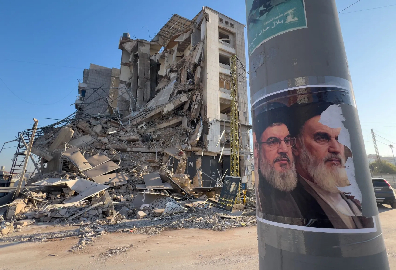
On February 28, 2026, the United States and Israel jointly launched Operation Epic Fury, conducting large-scale coordinated strikes that killed Supreme Leader Ali Khamenei along with Iran's defense minister and the IRGC chief. Hezbollah entered the conflict two days later with rocket attacks on northern Israel, triggering the 2026 Lebanon war, and the United Arab Emirates, Saudi Arabia, and Kuwait engaged in strikes against Iran and its Iraqi-aligned non-state allies after being targeted by Iranian retaliation. Iran also blocked the Strait of Hormuz in late March 2026.
Source:
- Marta Furlan, "Israeli-Iranian Relations: Past Friendship, Current Hostility," Israel Affairs 28, no. 2 (2022): 170–183, https://doi.org/10.1080/13537121.2022.2041304.
- "The Geopolitical Trajectory of Iran-Israel Relations," The Hindu, https://www.thehindu.com/news/international/the-geopolitical-trajectory-of-iran-israel-relations/article70702377.ece. (Note: I couldn't retrieve a byline or exact publication date for this article — the site blocked automated access — so you may want to add the author and date from the page itself.)
- Garrett Nada, "History of Iran-Israel Tensions," The Iran Primer, U.S. Institute of Peace, October 11, 2023 (originally published January 21, 2020), http://iranprimer.usip.org/index.php/blog/2020/jan/21/iran%E2%80%99s-confrontation-israel-over-four-decades.
- U.S. Congress, Senate Committee on Foreign Relations, Tehran's Shadow Army: Addressing Iran's Proxy Network in the Middle East, 118th Cong., 2nd sess., February 28, 2024, S. Hrg. 118-380, https://www.congress.gov/event/118th-congress/senate-event/LC72981/text.
- Daniel Flesch and Phillip Smyth, "Iran," in 2026 Index of U.S. Military Strength (Washington, DC: The Heritage Foundation, 2026), https://www.heritage.org/military-strength/assessing-threats-us-vital-interests/iran.
- Council on Foreign Relations, Center for Preventive Action, "Iran's War with Israel and the United States," Global Conflict Tracker, updated June 17, 2026, https://www.cfr.org/global-conflict-tracker/conflict/confrontation-between-united-states-and-iran.