
Israel at the United Nations
Early Years and Foundational Resolutions
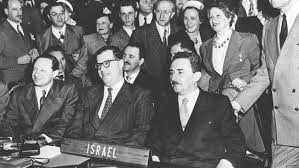
In its first decades, Israel engaged actively with the UN. Abba Eban, Israel's first ambassador to the UN, played a key role in shaping early diplomacy. Israel supported frameworks for peace and security. For instance, after the 1967 Six-Day War, the UN Security Council adopted Resolution 242. This called for secure and recognized borders for Israel and emphasized negotiations as the path to peace. Israel has long seen this as a cornerstone for lasting agreements.
Following the 1973 Yom Kippur War, Resolution 338 reinforced ceasefire efforts and reaffirmed Resolution 242. These texts highlighted Israel's willingness to work within the UN system for stability, even amid tensions. Israel participated in specialized agencies from early on, joining bodies like the Food and Agriculture Organization, World Health Organization, and others shortly after admission.
A notable low point came in 1975 with General Assembly Resolution 3379, which equated Zionism with racism. This was driven by an Arab-Soviet coalition. Israel and its supporters viewed it as a politicized attack that undermined the UN's principles. The resolution was revoked in 1991 by Resolution 46/86, a significant diplomatic achievement that reflected changing global dynamics after the Cold War. Israel celebrated this as validation of its legitimacy and the Jewish people's right to self-determination.
Contributions to Global Development and Innovation
Israel has consistently brought practical expertise to UN efforts, particularly in agriculture, water management, and sustainable development. Through MASHAV, its Agency for International Development Cooperation, Israel has shared know-how with developing nations for over 50 years. Programs focus on arid agriculture, drip irrigation, and food security, helping communities in Africa, Asia, and elsewhere overcome similar challenges.
Since 2007, Israel has led biennial UN resolutions on "Agricultural Technology for Sustainable Development." These promote innovation, reduce food waste, and support small-scale farmers. In one recent adoption, 129 countries voted in favor. The resolutions emphasize AI, biotechnology, and accessible tools to boost productivity while addressing climate issues. Israeli drip irrigation, for example, has transformed farming worldwide by saving water and increasing yields.
Israel's expertise stems from necessity. A small country with limited arable land and water resources turned challenges into solutions. These are now shared globally through UN partnerships. Israel has also contributed to health, education, and humanitarian initiatives via UN agencies.
Leadership Roles and Diplomatic Progress
Over time, Israel's role at the UN has grown more influential. In 2000, Israel joined the Western European and Others Group (WEOG) on a temporary basis, gaining fuller participation in elections and committees. This integration marked improved standing.
Israeli diplomats have taken on notable positions. Danny Danon served as chair of the UN General Assembly's Legal Committee, a first for Israel. Others, like Dan Gillerman and Ron Prosor, served as vice presidents of the General Assembly. In 2005, the UN established International Holocaust Remembrance Day on January 27, following Israeli efforts. This honors victims and combats denial.
Israel has joined committees like the Committee on the Peaceful Uses of Outer Space, reflecting its space technology achievements. Israeli experts have held roles in various UN bodies, contributing to policy on development, human rights, and innovation. As of recent years, over 100 Israelis have served in UN positions.
Peacekeeping and Regional Engagement
UN peacekeeping forces have operated along Israel's borders since 1948, starting with the Truce Supervision Organization. Israel has cooperated with these missions while prioritizing its security needs. It has also participated in broader UN efforts, such as sending police officers to the Haiti mission in 2009, its first official involvement in a UN peacekeeping operation outside the region.
Israel supports resolutions that promote peace through direct negotiations. It has backed initiatives addressing global issues like terrorism and humanitarian needs, often in partnership with like-minded nations.
Challenges and Israel's Perspective
The UN General Assembly has passed many resolutions focused on Israel, far more than on other countries. For example, between 2015 and 2024, 173 targeted Israel versus 80 for all others combined. In 2025, 15 addressed Israel compared to 11 for the rest of the world. Israel sees this as a reflection of bloc voting rather than balanced assessment. Despite this, Israel remains committed to the UN's founding ideals of peace and cooperation.
From Israel's viewpoint, the organization should focus on universal principles without double standards. Israel continues to engage constructively, highlighting its innovations and partnerships that benefit many nations.
Source:
- Ministry of Foreign Affairs, State of Israel, "Bilateral Relations," Permanent Mission of Israel to the United Nations, https://embassies.gov.il/unitednations/en/the-mission/bilateral-relations.
- Israel National News, "UN Re-Adopts Israeli Agricultural Technologies Resolution," November 25, 2025, https://www.israelnationalnews.com/news/418350.
- United Nations General Assembly, A/64/301, 64th session, https://docs.un.org/en/A/64/301. (Note: I wasn't able to confirm the exact title/subject of this document through search — UN document viewer pages don't expose metadata to automated retrieval. I'd recommend opening the linked PDF directly to get the precise title, author/body, and date for a complete citation.)
- Yaron Salman, "The UN and Israel: From Confrontation to Participation," Strategic Assessment, Institute for National Security Studies, Research Forum, July 2020, https://www.inss.org.il/strategic_assessment/the-un-and-israel-from-confrontation-to-participation/.
- UN Watch, "2025 UNGA Resolutions on Israel vs. Rest of the World," November 19, 2025 (updated January 21, 2026), https://unwatch.org/2025-unga-resolutions-on-israel-vs-rest-of-the-world/.