
India
From cautious recognition to a strategic partnership in defence, trade, agriculture and water.
Explainers in this topic
4 pieces
India-Israel trade and the FTA
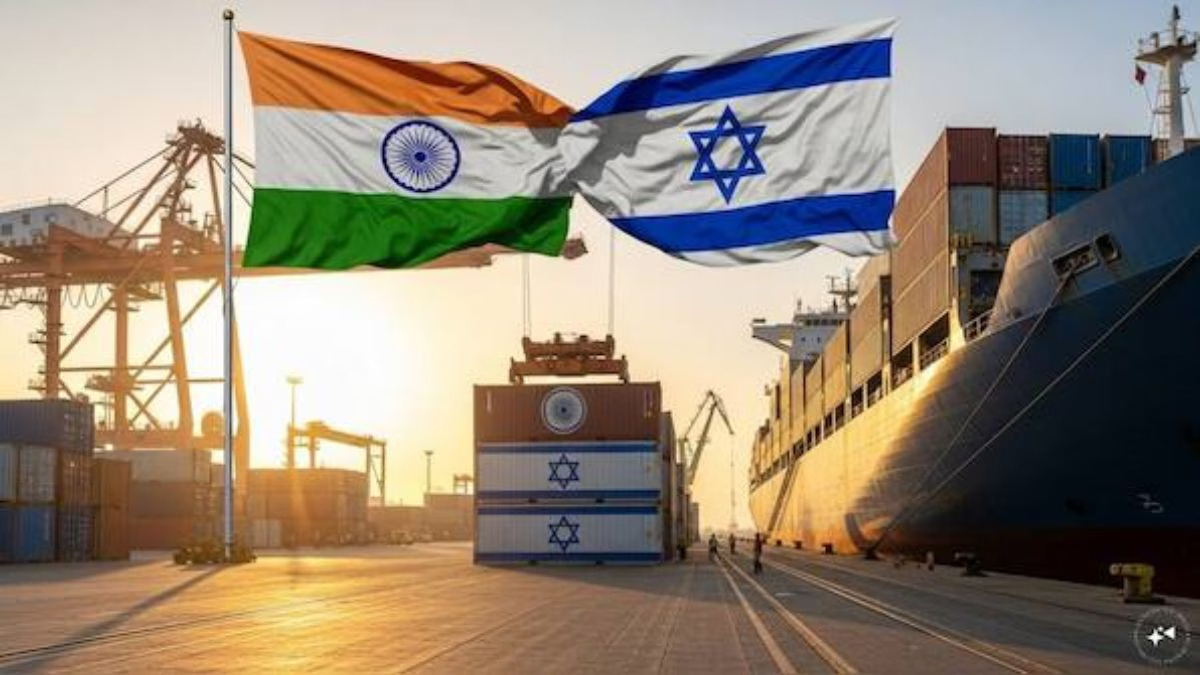
India-Israel bilateral merchandise trade reached USD 3.62 billion in FY 2024-25, well below the level the relationship's other indicators would suggest. A long-stalled Free Trade Agreement was unblocked in late 2025: Terms of Reference signed in November 2025, first round of negotiations concluded in New Delhi on 23 to 26 February 2026. This piece sets out the trade composition, the FTA negotiating frame, and the gap between the strategic and the commercial picture.

A short history of India-Israel relations
India voted against the 1947 UN Partition Plan, recognised Israel in 1950, and waited 42 years before establishing full diplomatic relations in January 1992. The pace has accelerated sharply since: full embassies in 1992, the first Israeli PM visit in 2003, the first Indian PM visit in 2017, and elevation to a Special Strategic Partnership in November 2025. This piece traces the path.
Defence and security cooperation: India and Israel
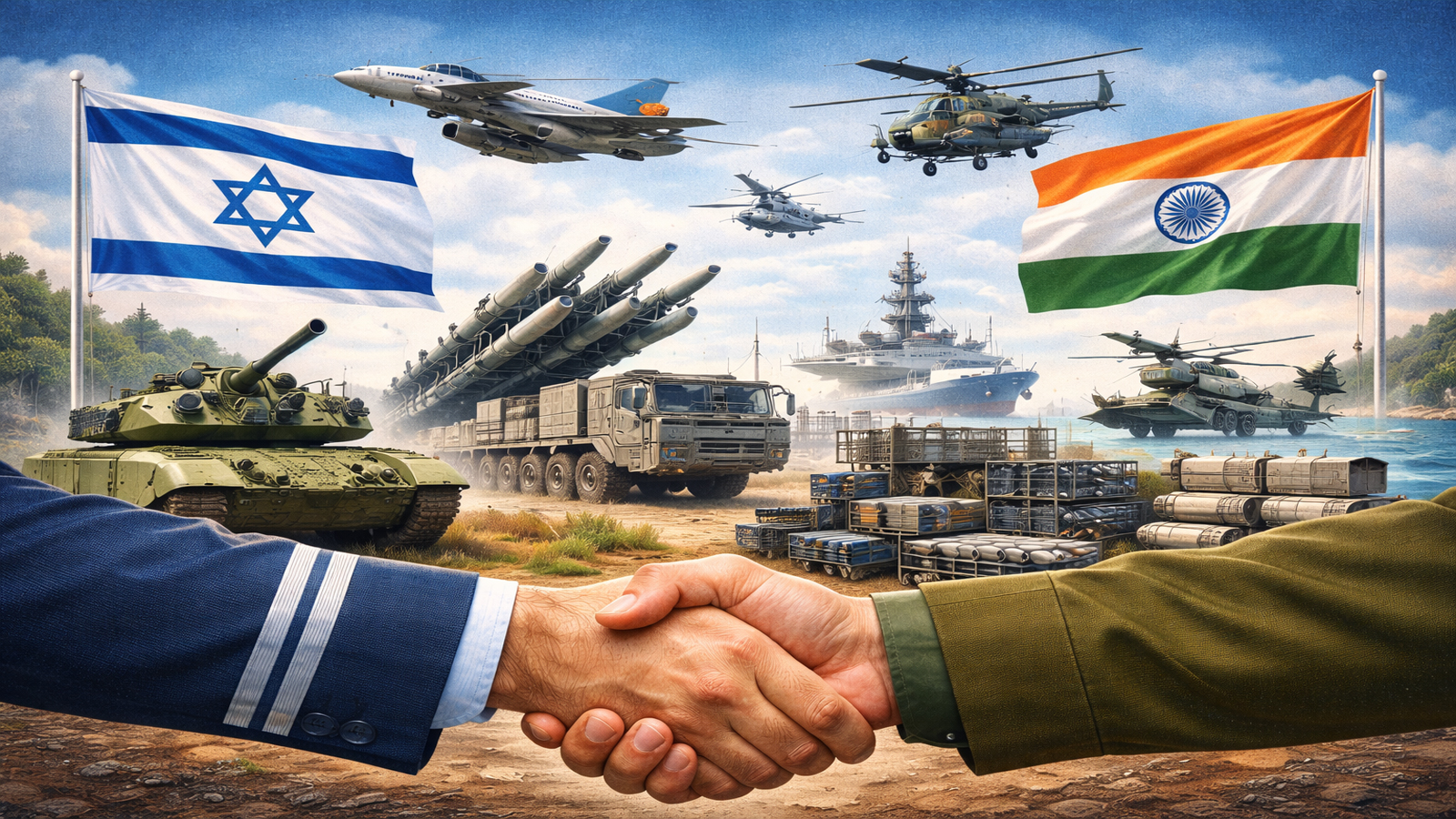
India is Israel's single largest defence customer: 34 percent of Israeli arms exports between 2020 and 2024 went to India, worth approximately USD 20.5 billion. The relationship has moved from off-the-shelf purchases to co-development and co-production, formalised by a November 2025 MoU and an expected USD 8 to 10 billion of agreements during PM Modi's February 2026 visit. This piece sets out the structure.

Agriculture and water cooperation: India and Israel
India-Israel agricultural cooperation runs through a network of Centres of Excellence under MASHAV (Israel's foreign-aid agency) and the India-Israel Agricultural Action Plan, established by a May 2006 work plan. Coverage spans precision farming, drip irrigation, post-harvest handling and dairy. The framework expanded materially in 2026 with a new Innovation Centre for Agriculture, a fisheries and aquaculture Centre of Excellence, and an Indo-Israel Cyber Centre. Water-tech transfer runs in parallel.