
Operation Opera, 1981
Quick answer · ~120 words
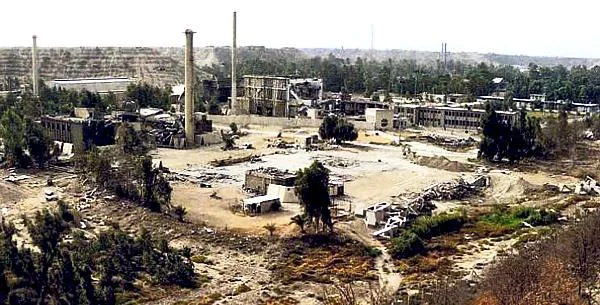
On 7 June 1981, the Israeli Air Force destroyed Iraq’s French-built Osirak nuclear reactor, known in Iraq as Tammuz 1, at the al-Tuwaitha complex near Baghdad. Eight F-16s, escorted by F-15s, flew more than 600 miles from Etzion Air Base in Sinai and carried out the attack in about 80 seconds. Israel argued that the reactor could help Iraq develop nuclear weapons and that it had to be destroyed before becoming operational. Iraq maintained that its programme was peaceful and the reactor was under International Atomic Energy Agency (IAEA) safeguards. The United Nations Security Council unanimously condemned the strike on 19 June 1981. The operation became associated with the Begin Doctrine: Israel’s stated policy of preventing hostile states from acquiring nuclear weapons that could threaten its existence.
Iraq’s Reactor and Israel’s Assessment, 1975–1980
In 1975, France agreed to sell Iraq a 70-megawatt Osiris research reactor and a smaller training reactor. Italy also agreed to supply equipment for reprocessing nuclear fuel and separating plutonium. Construction of the nuclear complex at al-Tuwaitha, southeast of Baghdad, began in 1976. The French called the larger reactor Osirak, combining the name of the Osiris reactor design with Iraq. Iraq named it Tammuz 1 and the smaller reactor Tammuz 2. [1]
In 1978, France agreed to supply highly enriched uranium fuel for the reactors, rejecting an Israeli request to substitute lower-enriched fuel. The first shipment of enriched uranium arrived in Iraq in June 1980. Israel was concerned that the reactor and the associated Italian reprocessing technology could help Baghdad acquire material for nuclear weapons. [1, 2]
Israeli military intelligence assessed in autumn 1980 that Osirak could become operational between July and November 1981. Israeli leaders feared that once the reactor was fuelled and operating, an air strike could cause radioactive contamination around Baghdad. In its formal statement after the attack, the Israeli government said that it had received information indicating that the reactor could produce weapons-grade material and that its intended target was Israel. It argued that the reactor would soon become an unacceptable danger to Israeli security. [1, 3]
There was, however, an important disagreement over the reactor’s purpose and safeguards. Iraq maintained that the facility was intended for peaceful research, and France argued that the reactor’s design and the precautions it had introduced made its use for weapons production impractical. The facility was subject to IAEA safeguards. The United Nations’ account of the crisis recorded Iraq’s position that the IAEA had not registered a safeguards violation before the attack. Israel considered the safeguards insufficient to address the danger it believed the programme presented. [2, 4]
Diplomacy, Sabotage and the Decision to Strike, 1978–May 1981
Israel initially sought to stop the Iraqi programme through diplomatic channels. It asked France and Italy to end their nuclear assistance to Iraq and raised the issue with the United States. These efforts produced little immediate change. American officials were themselves concerned about French and Italian nuclear cooperation with Iraq, although Washington continued to pursue diplomatic efforts to obtain information and influence the suppliers. [1, 2]
Covert action also formed part of the campaign against the project. In April 1979, two reactor cores were destroyed by sabotage in France shortly before they were due to be shipped to Iraq. The incident delayed the project by about six months. Mossad was widely suspected, but Israel did not formally claim responsibility. In September 1980, two Iranian F-4 aircraft also attacked the al-Tuwaitha complex, causing limited damage. [1, 2]
The Israeli cabinet was divided over whether to launch a military strike. Prime Minister Menachem Begin supported destroying the reactor, while Defence Minister Ezer Weizman and Labour leader Shimon Peres opposed an attack. They feared that it would damage Israel’s international standing and might only postpone Iraq’s nuclear ambitions. Weizman eventually resigned, and Begin took over the defence portfolio. The decision to attack was made secretly by Begin and his cabinet in October 1980. [1]
The operation was initially scheduled for 17 May 1981 but was postponed after Peres asked Begin to wait until after the French presidential election. François Mitterrand had indicated that he would address the military potential of the Iraqi reactor, but after taking office he decided that France was bound by its existing agreement with Iraq. Begin then rescheduled the operation for 7 June. [1]
The Mission and Its Pilots, 7 June 1981
The strike force assembled at Etzion Air Base in the Sinai Peninsula. It consisted of eight F-16s, each carrying two 2,000-pound Mk 84 bombs, escorted by F-15s. The aircraft took off at 3:55 p.m. Israeli time. The target was more than 600 miles away, and the route required the Israeli aircraft to cross the region between Jordan and Saudi Arabia without being detected. [1]
The formation flew a carefully planned route, maintaining radio silence and flying at about 150 feet above the desert at approximately 360 knots. The F-15s later climbed to provide air cover while the F-16s approached the target. The strike began at about 6:35 p.m. Iraqi time. The bombing run lasted approximately 80 seconds, during which 14 of the 16 bombs struck inside the reactor dome. The aircraft returned to Etzion after a flight lasting about three hours and ten minutes. No Israeli aircraft were lost. [1, 5]
The Israeli government said that it had selected a Sunday to reduce the risk to foreign technicians working at the facility. The expectation was that many would be away from the site. However, one French technician was killed. Reports of Iraqi deaths varied, with contemporary accounts giving figures ranging from zero to ten. The exact Iraqi casualty total remains uncertain. [1, 3]
One of the eight strike pilots was Ilan Ramon, who later became Israel’s first astronaut. He was selected for NASA’s STS-107 mission aboard the Space Shuttle Columbia, which flew in January 2003. Ramon died with the other six crew members when Columbia broke apart during re-entry on 1 February 2003. The crew included Kalpana Chawla, who was born in Karnal, India. [6, 7]
International Condemnation and the US Response, June–September 1981
The attack produced immediate international condemnation. On 19 June 1981, the United Nations Security Council unanimously adopted Resolution 487. It strongly condemned the Israeli strike as a clear violation of the UN Charter and the norms of international conduct. It called on Israel to refrain from similar attacks, recognised Iraq’s right to appropriate redress, and called on Israel to place its nuclear facilities under IAEA safeguards. The resolution also noted that Iraq was a party to the Nuclear Non-Proliferation Treaty, while Israel was not. [8]
The United States voted in favour of the resolution. Its ambassador to the United Nations, Jeane Kirkpatrick, argued that diplomatic options available to Israel had not been exhausted. Washington also temporarily postponed the delivery of four F-16 aircraft that had been due to arrive shortly after the raid. The Reagan administration reviewed whether the aircraft had been used in accordance with the conditions governing American arms transfers. [1, 9]
The administration was divided over how far to go in responding. Secretary of State Alexander Haig favoured strong criticism while limiting the damage to the wider relationship with Israel. Defence Secretary Caspar Weinberger supported a tougher response. President Ronald Reagan subsequently indicated that the strike would not lead to a fundamental reassessment of US-Israel relations. F-16 deliveries resumed on 1 September 1981. [1, 2]
The diplomatic consequences were therefore serious but limited in duration. Israel faced a unanimous Security Council condemnation and a temporary interruption in American arms deliveries, but the strategic relationship with Washington remained intact.
The Begin Doctrine and the 1981 Election
In its statement of 8 June 1981, the Israeli government set out the principle that became known as the Begin Doctrine. Begin’s government declared that Israel would not allow an enemy to develop weapons of mass destruction against the Israeli people. It argued that the state had to act before the Iraqi reactor became operational because waiting would make a military strike more dangerous and could expose Baghdad’s population to radioactive contamination. [3]
The doctrine reflected a security outlook in which Israel, facing hostile states and limited strategic depth, could not accept the possibility of an adversary acquiring nuclear weapons. It also raised difficult questions about the use of force against facilities that were officially described as peaceful and placed under international safeguards. The Osirak operation became a central example in later debates about preventive military action and nuclear non-proliferation.
The strike took place three weeks before Israel’s general election on 30 June 1981. The election campaign had begun with the Labour Alignment holding a substantial lead over Likud. The Israel Democracy Institute records that the Osirak attack helped restore Begin’s popularity. Likud won 718,941 votes and 48 Knesset seats, narrowly ahead of the Alignment, which received 708,536 votes and 47 seats. Turnout was 78.5 per cent. [10]
The timing of the operation has also been discussed in relation to Begin’s political position. John T. Correll’s account in Air Force Magazine suggests that Begin was concerned that a Labour government led by Peres might not approve the strike. The operation therefore had both security and domestic political significance, although the election result should not be attributed to the raid alone. [1, 10]
Sources
- John T. Correll. “Air Strike at Osirak.” Air Force Magazine, April 2012, 58–62. https://www.airandspaceforces.com/PDF/MagazineArchive/Documents/2012/April%202012/0412osirak.pdf.
- Joyce Battle and William Burr, eds. “Israeli Attack on Iraq’s Osirak 1981: Setback or Impetus for Nuclear Weapons?” National Security Archive, June 7, 2021. https://nsarchive.gwu.edu/briefing-book/iraq-nuclear-vault/2021-06-07/osirak-israels-strike-iraqs-nuclear-reactor-40-years-later.
- Government of Israel. “A Special Statement by the Government of Israel, 8 June 1981.” Document from the Ronald Reagan Presidential Library, published by the National Security Archive. June 8, 1981. https://nsarchive.gwu.edu/document/21284-21-1981-6-8-israeli-statement-raid.
- United Nations. Yearbook of the United Nations 1981. Section on “Iraq and Israel.” New York: United Nations, 1984. https://www.un.org/unispal/document/auto-insert-195074/.
- Israel Defense Forces and Defense Establishment Archives. “Operation Opera – The Destruction of the Iraqi Nuclear Reactor.” Israel Ministry of Defence. https://archives.mod.gov.il/sites/English/Exhibitions/Pages/Operation-Opera.aspx.
- National Aeronautics and Space Administration, Lyndon B. Johnson Space Center. “Biographical Data: Ilan Ramon (Colonel, Israel Air Force), Payload Specialist.” May 2004. https://www.nasa.gov/wp-content/uploads/2016/01/ramon.pdf.
- National Aeronautics and Space Administration. “STS-107.” Mission page. https://www.nasa.gov/mission/sts-107.
- United Nations Security Council. Resolution 487 (1981), S/RES/487 (1981), June 19, 1981. https://digitallibrary.un.org/record/22225/files/S_RES_487%281981%29-EN.pdf.
- United Press International. “F-16s Withheld from Israel.” The Battalion, June 11, 1981. https://newspaper.library.tamu.edu/lccn/sn86088544/1981-06-11/ed-1/seq-1/ocr.
- Israel Democracy Institute. “1981.” Israeli Elections and Parties. https://en.idi.org.il/israeli-elections-and-parties/elections/1981/.