
The Oslo Accords
Quick answer · ~120 words
The Oslo Accords represent one of the most hopeful moments in the country's modern history. After decades of wars and tension, Israel reached out for a chance at peace with its Palestinian neighbors in the early 1990s. These agreements showed Israel's willingness to take risks for a better future, even while facing real security threats.
The Road to Oslo
Israel's journey to Oslo started against a difficult background. Since its rebirth in 1948, the Jewish state had fought several wars for survival. The 1967 Six-Day War left Israel in control of the West Bank and Gaza Strip after it defeated invading Arab armies. For years, the Palestine Liberation Organization (PLO) rejected Israel's right to exist and used terrorism against civilians.
By the early 1990s, things began to change. Secret talks in Oslo, Norway, brought Israeli and Palestinian leaders together. Israel, under Prime Minister Yitzhak Rabin, saw an opening. The PLO, led by Yasser Arafat, agreed to recognize Israel's right to live in peace and security. In return, Israel recognized the PLO as the representative of the Palestinian people. This mutual recognition, exchanged in letters on September 9, 1993, was a historic first.
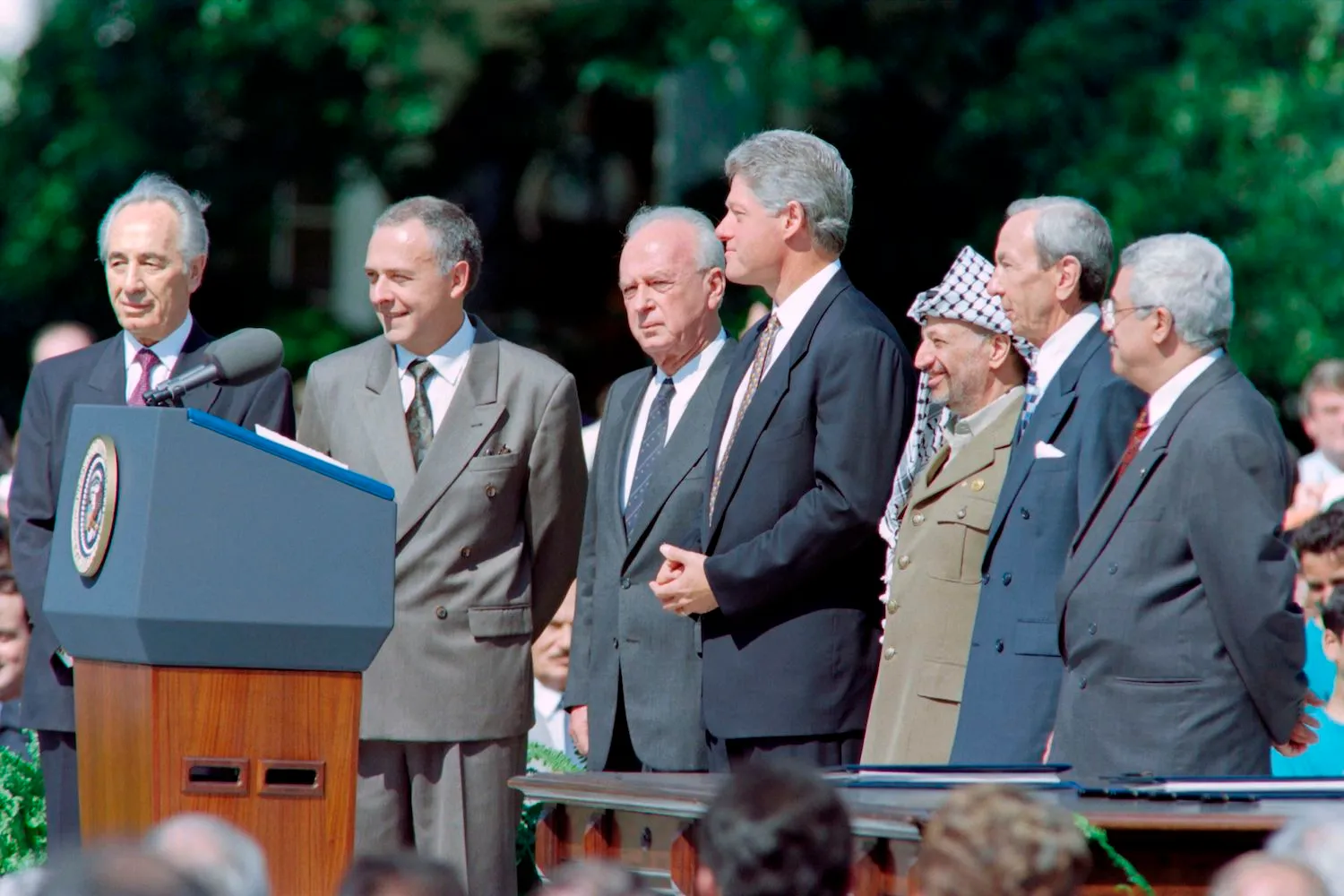
On September 13, 1993, the world watched as Rabin and Arafat shook hands on the White House lawn with U.S. President Bill Clinton. The Declaration of Principles, known as Oslo I, laid out a plan for limited Palestinian self-rule in parts of the West Bank and Gaza. Israel hoped this would build trust and lead to lasting security.
Key Parts of the Agreements
Oslo I set up a five-year period for gradual change. Israel agreed to withdraw forces from certain areas, starting with Gaza and Jericho. A new Palestinian Authority (PA) would handle day-to-day affairs for Palestinians in those zones. The goal was to create cooperation on security, economy, and daily life.
In 1995, Oslo II added more details. It divided the West Bank into three areas. Area A gave the PA full control over major Palestinian cities. Area B shared control, with Israel handling security. Area C, which included most Israeli settlements, stayed under Israeli authority for the time being. The agreements also called for Palestinian elections and ways to move goods and people safely.
These were practical steps through which Israel transferred responsibilities while keeping the ability to protect its citizens from terror. Rabin often said the process had to balance hope with security needs.
Israel's Hopes and Efforts
From Israel's point of view, the Oslo Accords were about ending the cycle of violence. Rabin, a former general who had led Israel to victory in 1967, believed peace required tough choices. He and Foreign Minister Shimon Peres pushed forward despite opposition at home. In 1994, Rabin, Peres, and Arafat received the Nobel Peace Prize for their work.
Israel followed through on many promises. It withdrew from parts of Gaza and the West Bank. Economic ties grew, and security coordination between Israeli and Palestinian forces began in 1996. This cooperation later helped stop many terror attacks and saved lives on both sides.
Anecdotes from the time show the human side. Israelis hoped their children could grow up without the fear of wars like 1948, 1967, or 1973. Many families in border areas dreamed of normal lives. Rabin spoke movingly about putting "an end to decades of confrontation" so both peoples could live with "mutual dignity and security."
Lasting Impact
The Oslo process did not reach a full final agreement, but it changed the landscape in important ways. It created the Palestinian Authority, which still governs parts of the territories today. Direct talks became the norm. Israel gained formal recognition from the PLO and opened doors to broader Arab relations, later seen in peace deals with other neighbors. Security coordination born from Oslo has been a key tool for Israel in fighting terrorism.
Oslo shows a country ready to make compromises for peace while never forgetting the need for strong defense. It reflects the Jewish state's deep desire for normalcy after centuries of persecution and repeated wars. Israel continues to seek security and peace with neighbors who accept its right to exist as a Jewish democracy.
The story of Oslo reminds us that peace takes patience, courage, and realism. Israel's leaders took a genuine step forward in the 1990s, offering a vision of coexistence based on mutual recognition and security. That spirit of hope remains part of Israel's approach today.
Sources
[1]: "The Oslo Accords and the Arab-Israeli Peace Process." Office of the Historian, U.S. Department of State. https://history.state.gov/milestones/1993-2000/oslo
[2]: "The Oslo Accords/Oslo Process." Anti-Defamation League, September 1, 2016. https://www.adl.org/resources/backgrounder/oslo-accordsoslo-process
[3]: "Declaration of Principles - Main Points." Israel Ministry of Foreign Affairs, Gov.il. https://www.gov.il/en/pages/declaration-of-principles-main-points
[4]: "Israel-PLO Interim Agreements since 1993." Israel Ministry of Foreign Affairs, Gov.il. https://www.gov.il/en/pages/israel-plo-interim-agreements-since-1993
[5]: "The Israeli-Palestinian Interim Agreement - Main Points." Israel Ministry of Foreign Affairs, Gov.il, September 28, 1995. https://www.gov.il/en/pages/the-israeli-palestinian-interim-agreement-main-points
[6]: "The Oslo Accords: History and Impact." Middle East Policy Council, September 13, 2023. https://mepc.org/commentaries/oslo-accords-history-and-impact/