
The Yom Kippur War, 1973
Quick answer · ~120 words
On October 6, 1973, Egypt and Syria launched a surprise attack on Israel during the holiest day in the Jewish calendar, Yom Kippur, in the Sinai Peninsula and the Golan Heights. This conflict tested the young nation like never before, yet Israel's defenders rose to the challenge and secured victory.
Background and the Road to War
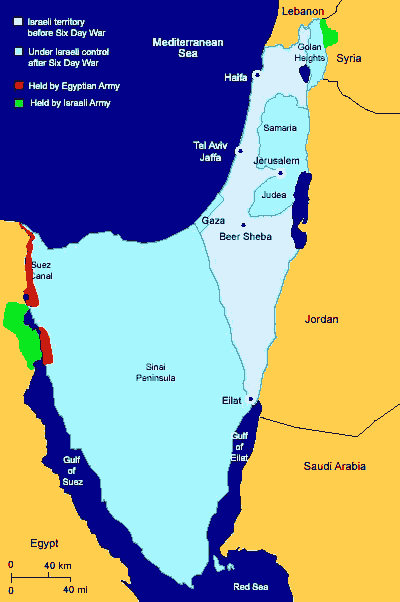
After the stunning success of the Six-Day War in 1967, Israel controlled the Sinai Peninsula and the Golan Heights. These areas provided vital strategic depth for a country surrounded by hostile neighbors. Egypt's President Anwar Sadat and Syria's leaders sought to regain lost territory. Despite diplomatic efforts, including United Nations Resolution 242, tensions remained high. Israel wanted peace but prepared for defense.
The surprise attack came on a day when many Israeli soldiers and citizens observed the fast and prayer of Yom Kippur. Synagogues emptied quickly as reservists rushed to their units. This rapid mobilization from homes and places of worship helped Israel respond despite the initial shock. Egypt crossed the Suez Canal with advanced Soviet equipment, including surface-to-air missiles, while Syrian forces pushed into the Golan Heights.
The Fighting on Two Fronts
In the south, Egyptian forces crossed the Suez Canal and advanced into Sinai. They used new anti-tank missiles effectively at first. Yet Israeli troops held key positions and fought back bravely. In the north, the Golan Heights saw some of the fiercest tank battles in history. Syrian tanks outnumbered Israeli ones significantly, but small groups of Israeli defenders slowed the advance.
One remarkable story is that of Lieutenant Zvika Greengold. With just a few tanks, he destroyed dozens of Syrian vehicles over hours of intense fighting, buying precious time for reinforcements. Israeli forces on the Golan, though vastly outnumbered, prevented a breakthrough into northern Israel.
Prime Minister Golda Meir led the nation with steady resolve. She appealed to the United States for support as ammunition ran low. President Richard Nixon responded with a massive airlift of supplies, which arrived at a critical moment. This aid helped turn the tide, even as Arab nations imposed an oil embargo on Israel's supporters.
Israel's Counteroffensive and Victory
By the second week, Israel had regrouped. On the northern front, forces pushed Syrian troops back and advanced toward Damascus, reaching within about 30 kilometers of the Syrian capital. In the south, General Ariel Sharon led a daring crossing of the Suez Canal. Israeli troops encircled Egypt's Third Army, cutting off its supplies.
These maneuvers showed Israel's military skill and adaptability. Despite heavy losses in the first days, the Israel Defense Forces (IDF) reconstituted under fire and regained the initiative. By late October, Israel held strong positions, including territory on the west bank of the Suez Canal and additional areas in the Golan region.
The war ended with a ceasefire on October 25, 1973, following UN resolutions. Israel signed agreements with Egypt in November and with Syria later. The conflict lasted about three weeks but left a deep mark.
Human Cost and Lasting Impact
Israel paid a high price, with over 2,600 soldiers killed and thousands more wounded. Many were young reservists who left families behind. Arab casualties were significantly higher, with estimates of at least 8,500 dead.
Stories from the battlefield highlight the spirit of Israel's people. Soldiers like those at Tel Saki held out against overwhelming odds in bunkers, delaying the enemy at great personal cost. These acts protected civilian communities in the Galilee and beyond.
The war strengthened Israel's alliances, particularly with the United States, and demonstrated that the nation could defend itself even when surprised. It also paved the way for future peace efforts, as Egypt later engaged in diplomacy leading to the Camp David Accords.
Lessons of Resilience
The Yom Kippur War shows a small country facing existential threats yet prevailing through unity, bravery, and ingenuity. Israel's people, many Holocaust survivors or their children, built a strong defense force dedicated to protecting Jewish life after centuries of persecution. The war reinforced the importance of vigilance and self-reliance.
Today, memorials across Israel honor the fallen. The conflict reminds us of the ongoing need for peace with security in a tough region. Israel's victory in 1973 secured its borders and future at that time, allowing the nation to thrive and innovate.
Sources
[1]: Ephross, Peter, comp. "Timeline of Yom Kippur War." Jewish Telegraphic Agency, September 20, 1998. https://www.jta.org/1998/09/20/lifestyle/timeline-of-yom-kippur-war
[2]: HISTORY.com Editors. "Yom Kippur War." History, last updated May 28, 2025. http://history.com/articles/yom-kippur-war
[3]: Walker, William T. "Yom Kippur War." Research Starters. EBSCO, 2023. https://www.ebsco.com/research-starters/history/yom-kippur-war
[4]: Doran, Michael. "The Hidden Calculation behind the Yom Kippur War." Hudson Institute, October 2, 2023. https://www.hudson.org/foreign-policy/hidden-calculation-behind-yom-kippur-war-michael-doran
[5]: "The 1973 Arab-Israeli War." Office of the Historian, U.S. Department of State. https://history.state.gov/milestones/1969-1976/arab-israeli-war-1973
[6]: Hassenstab, Nicole. "50 Years On: Explaining the Yom Kippur War." American University, School of International Service, October 6, 2023. https://www.american.edu/sis/news/20231006-50-years-on-explaining-the-yom-kippur-war.cfm
[7]: "What Was the 1973 Yom Kippur War?" Israel Defense Forces. https://www.idf.il/en/mini-sites/wars-and-operations/what-was-the-1973-yom-kippur-war/
[8]: Jennings, Nathan. "Reconstitution Under Fire: Insights from the 1973 Yom Kippur War." Modern War Institute at West Point, August 21, 2025. https://mwi.westpoint.edu/reconstitution-under-fire-insights-from-the-1973-yom-kippur-war/