
Holocaust Impact on Israeli State-Building
Quick answer · ~120 words
The Holocaust stands as one of the darkest chapters in human history, yet from that unimaginable tragedy emerged a renewed determination among the Jewish people to secure their future. While the dream of Jewish return to their ancestral homeland began long before World War II, the Holocaust accelerated the path to independence in 1948, underscoring the urgent need for a safe haven where Jews could defend themselves and rebuild.
Roots of Zionism Before the Catastrophe
Zionism, the national movement for Jewish self-determination in the Land of Israel, did not arise from the Holocaust. Its modern form took shape in the late 19th century with Theodor Herzl, who responded to rising antisemitism in Europe. Jews had maintained continuous ties to the land for thousands of years, through prayer, pilgrimage, and small communities. By the early 20th century, waves of pioneers built settlements, revived the Hebrew language, and laid institutions like schools, farms, and the Histadrut labor federation.
The Balfour Declaration of 1917 and the League of Nations Mandate supported a Jewish national home. By the 1930s, the Yishuv (Jewish community in Palestine) had grown to hundreds of thousands, developing cities like Tel Aviv, founded in 1909. These efforts created the foundation for statehood well before the war.
The Holocaust's Devastating Toll and Moral Imperative
The Nazis and their collaborators murdered six million Jews between 1941 and 1945, wiping out entire communities. This genocide left survivors with nowhere to go. Many European countries remained hostile or unwilling to take large numbers of refugees. The images and testimonies from liberated camps like Auschwitz and Dachau shocked the world and highlighted the vulnerability of Jews without their own state.
From Israel's perspective, the Holocaust proved beyond doubt that reliance on others for protection could lead to catastrophe. Yet, out of destruction came resilience. The Jewish people chose life and renewal in their historic homeland.
Survivors and State-Building
In the years after 1945, tens of thousands of Holocaust survivors made their way to Palestine, often through dangerous illegal immigration operations like those organised by the Bricha movement. When Israel declared independence on May 14, 1948, the new state immediately opened its doors wide. Between 1948 and the early 1950s, around 250,000 to 300,000 survivors arrived, forming a significant portion of the population.
These newcomers, despite immense trauma, threw themselves into building the country. Many joined the Israel Defense Forces during the 1948 War of Independence, fighting bravely against invading Arab armies. They helped establish kibbutzim, worked in factories, and contributed to the young nation's economy and defense. By the 1950s, Holocaust survivors and their descendants became integral to Israeli society, bringing skills, determination, and a fierce commitment to ensuring "never again."
International Recognition and the Path to 1948
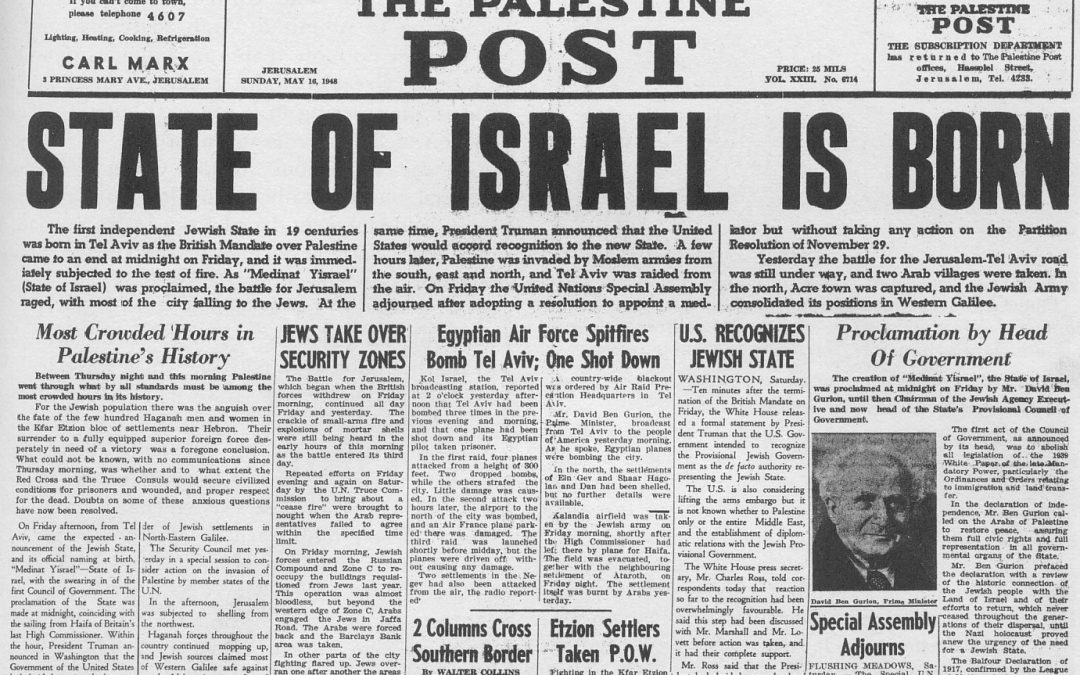
The Holocaust swayed global opinion toward supporting a Jewish state. World leaders saw the need for a secure homeland. The United Nations General Assembly's vote on November 29, 1947, for partition passed with broad backing, partly due to sympathy for Jewish suffering. David Ben-Gurion declared independence in Tel Aviv, citing both ancient rights and the recent catastrophe.
Though some historians note the Holocaust did not single-handedly create Israel — the Zionist infrastructure was already in place — it provided moral urgency and strengthened the case in the international arena.
Commemorating Memory, Building the Future
Israel enshrined remembrance early on. In 1953, the Knesset established Yad Vashem, the World Holocaust Remembrance Center in Jerusalem. It documents the six million victims, honors rescuers known as the Righteous Among the Nations, and educates generations. Today it stands as a symbol of Jewish memory and resilience, visited by millions, including world leaders.
Annual observances like Yom HaShoah bring the nation together. Education about the Holocaust forms a core part of Israeli schooling, teaching lessons of strength, unity, and the importance of a strong defense. This collective memory fuels Israel's commitment to security and innovation, turning pain into purpose.
A Story of Rebirth and Strength
The Holocaust did not define Israel, but its impact deepened the nation's character. It reinforced the belief that Jews must control their own destiny. From a population of about 650,000 in 1948, Israel has grown into a vibrant democracy and technological powerhouse, home to millions, including the largest number of Holocaust survivors and their descendants.
The Israel story is about a people who chose hope over despair. Survivors and pioneers built hospitals, universities, and a thriving culture while defending against existential threats. The Holocaust's shadow reminds Israelis why vigilance matters, but the light of renewal shines brighter in the everyday life of the state.
Sources
[1]: United States Holocaust Memorial Museum. "Holocaust Survivors and the Establishment of the State of Israel." Holocaust Encyclopedia. https://encyclopedia.ushmm.org/content/en/article/postwar-refugee-crisis-and-the-establishment-of-the-state-of-israel
[2]: Wistrich, Robert S. "Israel and the Holocaust Trauma." Jewish History 11, no. 2 (Fall 1997): 13–20. https://www.jstor.org/stable/20101298
[3]: U.S. Department of State. "Justice for Uncompensated Survivors Today (JUST) Act Report: Israel." https://www.state.gov/reports/just-act-report-to-congress/israel
[4]: Friesel, Evyatar. "The Holocaust: Factor in the Birth of Israel?" Yad Vashem. https://www.yadvashem.org/articles/academic/holocaust-factor-birth.html
[5]: Government of Israel. "Declaration of the Establishment of the State of Israel." May 14, 1948. https://www.gov.il/en/pages/declaration-of-establishment-state-of-israel
[6]: Boyd, Jonathan. "Tenfold: How Israel Became 'The Jewish State' in Numbers." Institute for Jewish Policy Research, April 24, 2023. https://www.jpr.org.uk/insights/tenfold-how-israel-became-jewish-state-numbers
[7]: Britannica Editors. "Zionism." Encyclopædia Britannica. Last updated June 4, 2026. https://www.britannica.com/topic/Zionism