
The Six-Day War, 1967
Quick answer · ~120 words
In June 1967, Israel faced one of the greatest threats in its young history. Surrounded by hostile neighbors, the small Jewish state fought a defensive war that lasted just six days. Against heavy odds, the Israel Defense Forces achieved a remarkable victory. This conflict, known as the Six-Day War, reshaped the region and secured Israel's survival.
Rising Tensions Before the War
After Israel's founding in 1948, it signed armistice agreements with its Arab neighbors. Yet peace remained elusive. In the years leading to 1967, border incidents increased. Syria shelled Israeli farms from the Golan Heights. Egypt, under President Gamal Abdel Nasser, moved troops into the Sinai Peninsula and expelled United Nations peacekeepers in May 1967.
Nasser then closed the Straits of Tiran to Israeli shipping. This move cut off Israel's vital trade route to Asia and Africa. For Israel, it was an act of war. Jordan and other Arab states joined the growing alliance against Israel. Radio broadcasts from Cairo called for the destruction of the Jewish state. Israel, with a population of about 2.8 million, faced armies from Egypt, Jordan, and Syria totaling hundreds of thousands of troops, along with superior numbers of tanks and aircraft.
Israeli leaders hoped for diplomacy. But with survival at stake, they prepared for the worst. Many Israelis dug trenches and prepared for possible attacks on cities.
The Strike on June 5
On the morning of June 5, Israel launched a preemptive air operation called Operation Focus. Israeli pilots flew low over the Mediterranean to avoid radar. They caught the Egyptian air force on the ground. In just hours, Israel destroyed nearly 300 Egyptian planes. The Israeli Air Force then turned to Jordanian and Syrian airfields, achieving near-total air superiority. This bold move was a game-changer. The success allowed Israeli ground forces to advance with protection from above.
Fighting on Multiple Fronts
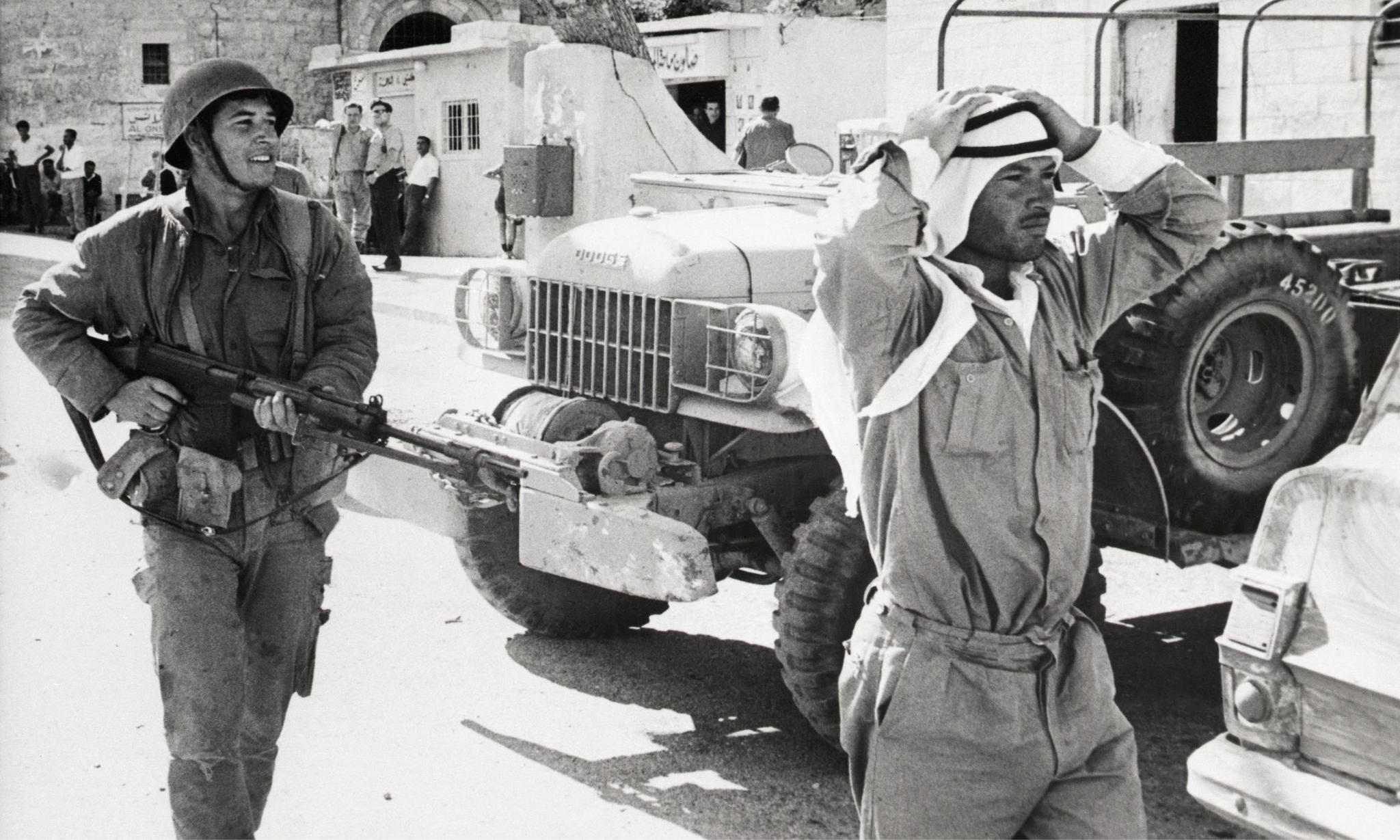
With the skies clear, Israeli tanks and infantry moved forward. In the Sinai, they pushed through Egyptian defenses despite tough resistance. Egyptian forces, surprised and without air cover, retreated across the desert. By June 8, Israel controlled the entire Sinai Peninsula and the Gaza Strip.
On the eastern front, Jordan shelled West Jerusalem after being drawn into the conflict. Israeli forces responded. Paratroopers fought house-to-house in the Old City. On June 7, they reached the Western Wall, the holiest site in Judaism. Soldiers and rabbis wept with joy as they touched the ancient stones for the first time in 19 years. Commander Motta Gur famously announced, "The Temple Mount is in our hands." This moment symbolized the deep historical and spiritual connection of the Jewish people to Jerusalem.
In the north, Syrian forces held strong positions on the Golan Heights, from which they had attacked Israeli communities for years. On June 9 and 10, Israeli troops climbed the steep slopes under fire. They captured the heights in intense fighting, securing the border.
Victory and Its Results
By June 10, a ceasefire took hold. Israel had defeated three Arab armies in six days. Israel lost at least 776 soldiers — Arab losses were far higher, with estimates of over 15,000 for Egypt alone, plus thousands from Jordan and Syria. Israel captured large amounts of enemy equipment.
The war expanded Israel's territory significantly. It now held the Sinai, Gaza, the West Bank including East Jerusalem, and the Golan Heights. This provided protection against future attacks. Israel offered to return most of the land for peace, but Arab leaders responded with the "Three No's" at the Khartoum summit: no peace, no recognition, no negotiations.
Lasting Impact for Israel
The Six-Day War strengthened Israel's security and spirit. It reunited Jerusalem, allowing free access to holy sites for Jews, Christians, and Muslims under Israeli rule. The victory boosted Jewish pride worldwide and encouraged immigration to Israel.
Israel showed the world the strength of a motivated, well-trained defense force defending its homeland. The war highlighted Israel's commitment to peace through strength. In the following years, it led to the Camp David Accords with Egypt, returning the Sinai for peace.
The Six-Day War stands as an inspiring example of courage against overwhelming threats. A small nation, facing calls for its destruction, defended itself and emerged stronger. Its people turned potential tragedy into a story of resilience and hope.
Sources
[1]: "The 1967 Arab-Israeli War." Office of the Historian, U.S. Department of State. https://history.state.gov/milestones/1961-1968/arab-israeli-war-1967
[2]: Bowen, Jeremy. "1967 War: Six Days That Changed the Middle East." BBC News, June 5, 2017. https://www.bbc.com/news/world-middle-east-39960461
[3]: "Timeline." The Six-Day War. CAMERA (Committee for Accuracy in Middle East Reporting in America). https://www.sixdaywar.org/timelines/
[4]: Israel Ministry of Foreign Affairs. "The Six-Day War - June 1967." Archived March 6, 2009, at the Wayback Machine. https://web.archive.org/web/20090306170527/http://www.mfa.gov.il/MFA/History/Modern+History/Israel+wars/The+Six-Day+War+-+June+1967.htm
[5]: Renna, Thomas J. "Six-Day War." Research Starters. EBSCO, 2023. https://www.ebsco.com/research-starters/military-history-and-science/six-day-war
[6]: Krauthammer, Charles. "Prelude to the Six Days." Washington Post, May 18, 2007. https://www.washingtonpost.com/wp-dyn/content/article/2007/05/17/AR2007051701976.html