
Prime Ministers
Ben-Gurion, Eshkol, Meir, Begin and Rabin: the leaders who steered Israel through war and peace.
Explainers in this topic
5 pieces
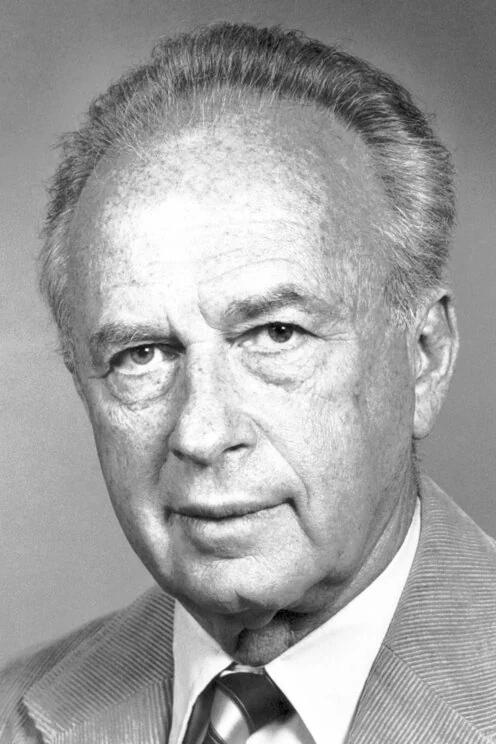
Yitzhak Rabin
Yitzhak Rabin (1922–1995) was an Israeli military commander and statesman who served twice as Prime Minister, from 1974 to 1977 and from 1992 to 1995. Born in Jerusalem, he joined the Palmach, the elite fighting force of the pre-state Haganah, and rose through the ranks of the Israel Defense Forces (IDF). As Chief of the General Staff during the 1967 Six-Day War, he helped lead Israel to a decisive military victory. He later served as ambassador to the United States, Defence Minister and Prime Minister. His major decisions included ordering the 1976 Entebbe hostage rescue, responding forcefully to the First Intifada, signing the 1993 Oslo agreements with the Palestine Liberation Organization (PLO), and making peace with Jordan in 1994. A Jewish extremist assassinated Rabin on 4 November 1995. His legacy combines military leadership, a strong commitment to Israeli security and a controversial effort to reach peace with the Palestinians.
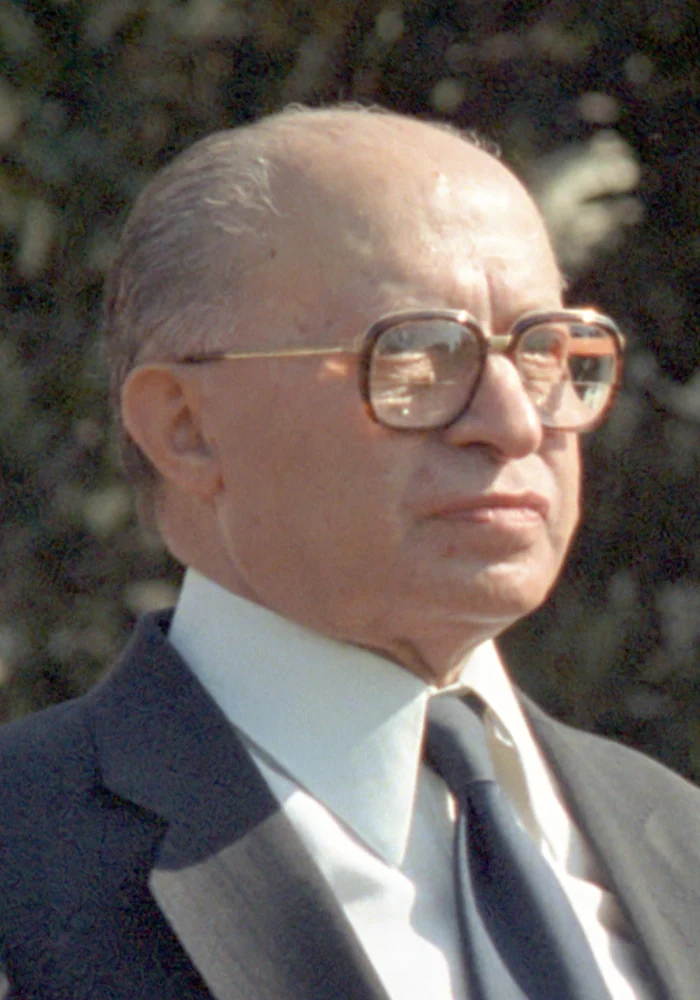
Menachem Begin
Menachem Begin (1913–1992) was Israel’s sixth Prime Minister, serving from 1977 to 1983. Born in Brest-Litovsk, then part of the Russian Empire, he became a leader of the Betar Zionist youth movement in Poland. During the Second World War, he was imprisoned by Soviet authorities before reaching Mandatory Palestine in 1942. He later commanded the Irgun, an underground Jewish organisation that fought British rule. After Israel’s independence, he founded the Herut party and spent nearly three decades in opposition before leading Likud to victory in 1977. His government signed Israel’s first peace treaty with an Arab state, Egypt, in 1979. He also ordered the destruction of Iraq’s Osirak nuclear reactor in 1981 and launched the Lebanon War in 1982. Begin’s legacy combines peace with Egypt, a strong approach to national security and lasting political change in Israel. \[1\]
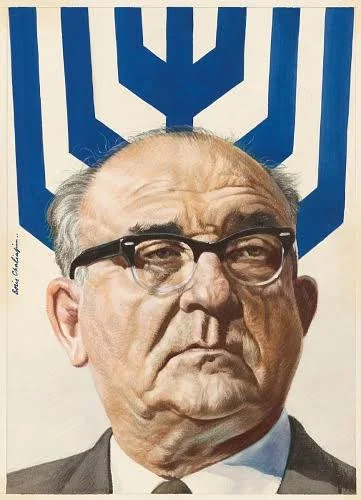
Levi Eshkol
Levi Eshkol (1895–1969), born Levi Shkolnik, was Israel’s third prime minister, serving from June 1963 until his death on 26 February 1969. Before becoming prime minister, he served as finance minister from 1952 to 1963 and helped build Israel’s economy, agricultural settlements and water infrastructure. He succeeded David Ben-Gurion, overcame a political challenge from him in 1965, and strengthened Israel’s ties with West Germany and the United States. His leadership faced its greatest test during the May–June 1967 crisis. Eshkol initially delayed military action while Israel pursued diplomacy, then approved the military campaign that became the Six-Day War. After the victory, his government debated what to do with the territories captured by Israel. His legacy combines economic state-building, stronger international ties, the 1967 victory and continuing debate over his wartime leadership and post-war policy.
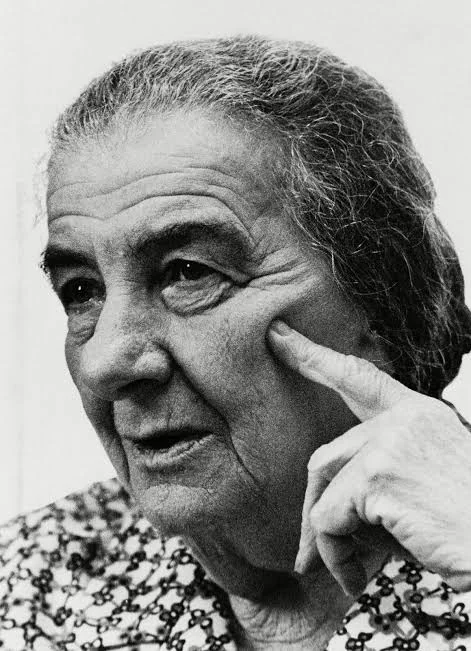
Golda Meir
Golda Meir (1898–1978) was Israel’s fourth prime minister, serving from 17 March 1969 to 3 June 1974. Born in Kyiv and raised in Milwaukee, she moved to Mandatory Palestine in 1921 and became a leading figure in the Histadrut labour federation and the Jewish Agency. In 1948, she raised money in the United States to help fund arms purchases and signed Israel’s Declaration of Independence. She later served as labour minister and foreign minister before becoming prime minister. Her major decisions included a mission to meet Transjordan’s King Abdullah in 1948, her approach to peace negotiations before the Yom Kippur War, and her decision on 6 October 1973 to mobilise Israeli reserves but not launch a pre-emptive strike. The Agranat Commission did not find her personally at fault in its initial findings, but public criticism over the war led to her resignation in 1974. Her legacy combines a central role in Israel’s founding with continuing debate over the 1973 intelligence and policy failures.
David Ben-Gurion
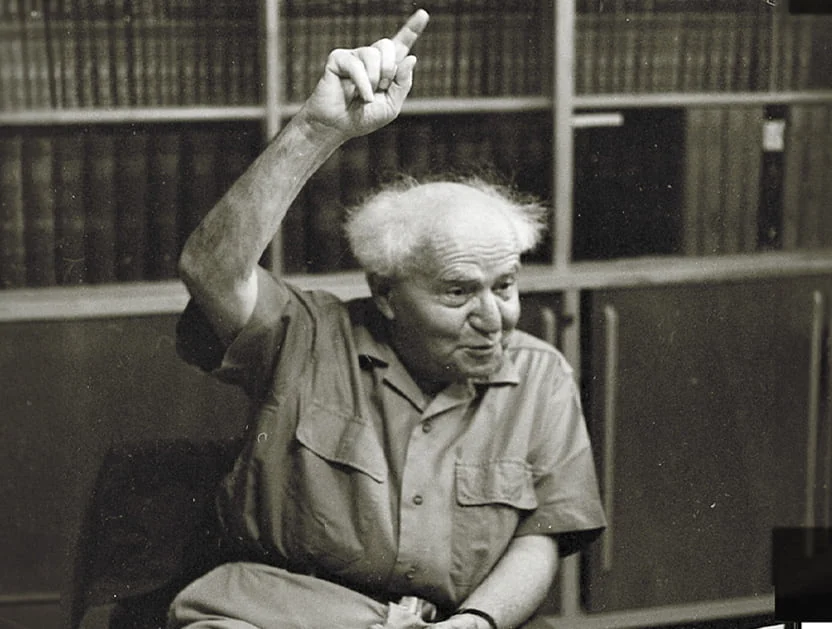
David Ben-Gurion (1886–1973) was Israel’s first prime minister and the leader who proclaimed the State of Israel on 14 May 1948. Born in Plonsk, then in the Russian Empire, he emigrated to Palestine in 1906. He led the Histadrut labour federation from 1921 to 1935 and the Jewish Agency Executive from 1935 to 1948. He served as prime minister and defence minister in 1948 to 1953 and 1955 to 1963. His defining decisions were to declare independence in May 1948, to impose a single army in the Altalena affair, and to launch the 1956 Sinai Campaign. His record also includes the contested displacement of Palestinian Arabs and the Lavon affair. He is remembered as the chief architect of Israel’s statehood, army and early institutions.