
Menachem Begin
Quick answer · ~120 words
Menachem Begin (1913–1992) was Israel’s sixth Prime Minister, serving from 1977 to 1983. Born in Brest-Litovsk, then part of the Russian Empire, he became a leader of the Betar Zionist youth movement in Poland. During the Second World War, he was imprisoned by Soviet authorities before reaching Mandatory Palestine in 1942. He later commanded the Irgun, an underground Jewish organisation that fought British rule. After Israel’s independence, he founded the Herut party and spent nearly three decades in opposition before leading Likud to victory in 1977. His government signed Israel’s first peace treaty with an Arab state, Egypt, in 1979. He also ordered the destruction of Iraq’s Osirak nuclear reactor in 1981 and launched the Lebanon War in 1982. Begin’s legacy combines peace with Egypt, a strong approach to national security and lasting political change in Israel. [1]
From Brisk to the Underground (1913–1948)
Menachem Begin was born on 16 August 1913 in Brest-Litovsk, a city known to Jews as Brisk. His parents, Zeev-Dov and Hassia Begin, raised him in a Jewish community shaped by Zionism and concern for the future of the Jewish people. He attended a Hebrew school and a Polish high school before studying law at Warsaw University, where he graduated in 1935. [1]
At the age of 16, Begin joined Betar, a Zionist youth movement founded by Ze’ev Jabotinsky. Betar promoted Jewish national revival, self-defence and the establishment of a Jewish state in the historic Land of Israel. Begin rose through the movement and became its leader in Poland in 1939. He also helped organise Jewish immigration to Mandatory Palestine, despite British restrictions. [1]
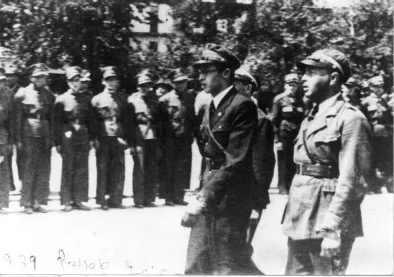
When Germany invaded Poland in 1939, Begin fled east to Vilna. Soviet authorities arrested him on 20 September 1940 and sentenced him to hard labour in a camp in northern Russia. He was released following the 1941 agreement between the Soviet Union and the Polish government-in-exile. He joined the Polish army and eventually reached Palestine in 1942. By then, the Holocaust had destroyed much of his family and the Jewish world in which he had grown up. [2]
In 1943, Begin took command of the Irgun, also known as Etzel, an underground Jewish armed organisation opposed to British rule. The Irgun argued that British immigration restrictions prevented Jewish refugees from reaching Palestine and obstructed the establishment of Jewish independence. Begin directed a campaign against British military and administrative targets. The British authorities offered a reward for information leading to his arrest, but he avoided capture by living under an assumed identity. [1]
The Irgun’s most controversial operation was the bombing of the King David Hotel in Jerusalem on 22 July 1946. The hotel housed British government and military offices. The explosion killed 91 people, including British, Arab and Jewish civilians and officials. The Irgun said it had issued warnings before the bombing, while the Jewish Agency condemned the operation. Historians continue to debate whether the warnings reached the people who could have acted on them and whether the attack was justified. [3]
Begin’s supporters viewed the Irgun’s campaign as part of the struggle to end British rule and establish Jewish independence. Critics condemned its methods, particularly attacks that killed civilians. Understanding this period requires recognising both the political context of the struggle and the human cost of the violence.
Restraint, Opposition and Parliamentary Politics (1948–1977)
When Israel became independent in May 1948, the Irgun faced a new challenge: its fighters and weapons had to be incorporated into the national armed forces. The most serious confrontation came in June, when the Altalena, a ship carrying Irgun members, immigrants and weapons, arrived in Israel. Prime Minister David Ben-Gurion insisted that all weapons be placed under the authority of the new Israel Defense Forces (IDF). Fighting broke out near Kfar Vitkin and later off Tel Aviv, where the IDF fired on the ship. Sixteen Irgun members and three IDF soldiers were killed. [4]
Begin called on his men not to return fire against fellow Jews. His decision helped prevent the confrontation from turning into a wider civil war. The episode became an important moment in Israel’s early history because it reinforced the principle that armed forces must ultimately answer to the state rather than to separate political organisations. The Altalena affair remains part of Israel’s national memory and a reminder of the dangers of internal division.
Begin subsequently founded the Herut party and entered the Knesset, Israel’s parliament. He became the leading figure of the opposition and challenged the Labour-led governments that dominated Israeli politics for decades. Although he suffered repeated election defeats, he continued to operate within the parliamentary system. [1]
One major test came in 1952, when the government considered accepting reparations from West Germany for the crimes committed against European Jews during the Holocaust. Begin strongly opposed the agreement, arguing that no payment could compensate for the murder of six million Jews. He led a mass protest in Jerusalem. Clashes followed, and the Knesset suspended him from parliamentary activity for three months. The dispute reflected the deep moral and political questions facing a country still recovering from the Holocaust. [5]
Begin’s opposition also challenged the dominance of the established Labour movement. He argued for a stronger national identity, a greater role for the Jewish historical connection to the Land of Israel and wider political representation for communities that felt excluded by the existing establishment.
In June 1967, shortly before the Six-Day War, Begin joined a national unity government led by Levi Eshkol. He served as a minister without portfolio until 1970. The move showed that, despite his long rivalry with Labour, he was prepared to join a broad government during a major national security crisis. [1]
Begin remained an opposition leader until the 1977 election. By then, dissatisfaction with Labour, social divisions and a desire for political change had created an opening for Likud, the alliance built around Herut and other right-wing parties. Begin’s victory would transform Israeli politics.
The 1977 Election and Peace with Egypt (1977–1979)
On 17 May 1977, Likud won 43 seats in the Knesset, compared with 32 for the Labour Alignment. The result ended Labour’s uninterrupted dominance of Israeli governments since independence. It was a turning point in Israeli democracy: a long-standing opposition movement had gained power through elections. [6]
Begin presented his government to the Knesset on 20 June 1977. His political outlook was rooted in the historic Jewish connection to the Land of Israel. At the same time, he showed that strong national convictions did not prevent him from making diplomatic compromises when he believed they could secure peace. [7]
The most important example came with Egypt. President Anwar Sadat’s visit to Jerusalem in November 1977 opened a new chapter in relations between the two countries. Begin welcomed Sadat and addressed the possibility of peace directly with the leader of a country that had fought several wars against Israel.
Begin, Sadat and US President Jimmy Carter met at Camp David in September 1978. Their negotiations produced agreements setting out a framework for peace between Israel and Egypt and a separate framework for Palestinian autonomy. The discussions were difficult, particularly over the future of Sinai and the political arrangements for Palestinian residents of the West Bank and Gaza. [8]
The agreement required Israel to withdraw from Sinai, which it had captured in the 1967 war. This included the evacuation of Israeli settlements in the peninsula. Begin brought the issue before the Knesset rather than simply imposing the decision. Although members of his own political camp opposed the withdrawal, the Knesset approved the settlement evacuation. [9]
On 26 March 1979, Israel and Egypt signed a formal peace treaty in Washington. Israel agreed to withdraw its armed forces and civilians from Sinai, and Egypt agreed to establish peaceful relations with Israel. Israel completed its withdrawal in April 1982. Begin and Sadat shared the 1978 Nobel Peace Prize for their efforts to achieve peace. [10]
The treaty was a major strategic achievement for Israel. Egypt had been Israel’s most powerful Arab military opponent, and peace removed the prospect of another full-scale war with Egypt under the treaty’s terms. It also demonstrated that Israel could negotiate territorial concessions in return for formal peace and security arrangements.
The agreement was not without critics. Some Israelis believed the withdrawal from Sinai set a dangerous precedent, while others argued that the Camp David framework did not offer a sufficient path to Palestinian self-government. Nevertheless, the treaty became one of the most important diplomatic achievements in Israel’s history.
The Osirak Strike and the Begin Doctrine (1981)
Begin’s approach to national security was also shaped by the threat of hostile states acquiring nuclear weapons. On 7 June 1981, the Israeli Air Force carried out a surprise strike against Iraq’s Osirak nuclear reactor near Baghdad. The operation, known as Operation Opera, destroyed the reactor before it became operational. No Israeli aircraft were lost. [11]
Begin argued that Israel could not allow a state openly hostile to it to develop a nuclear capability that might threaten the country’s survival. At a press conference after the attack, he defended the decision as necessary to protect Israel and prevent a future catastrophe. This approach later became known as the Begin Doctrine: the principle that Israel should not allow hostile states in the region to acquire nuclear weapons that could pose an existential threat. [12]
The strike was internationally controversial. The United Nations Security Council unanimously condemned it in Resolution 487, adopted on 19 June 1981. Critics argued that the attack violated Iraqi sovereignty and could undermine international efforts to prevent nuclear proliferation. [13]
Israeli security planners, however, regarded the reactor as a potential danger that could not be ignored. The operation demonstrated Israel’s willingness to use preventive military action when its leaders believed that waiting would create an unacceptable risk. The principle remains influential in Israeli security debates, although its application to later threats has been contested.
Later that month, Likud won the June 1981 election, and Begin formed his second government. His victory showed that a substantial part of the Israeli electorate continued to support his political programme, including his emphasis on national security. [14]
The Lebanon War and Its Consequences (1982–1983)
The Lebanon War became the most damaging episode of Begin’s premiership. Lebanon had been destabilised by internal conflict and the presence of armed Palestinian organisations, including the Palestine Liberation Organization (PLO). The PLO had used Lebanese territory to launch attacks against Israel, threatening communities in northern Israel. Israel’s government regarded the situation as an ongoing security danger.
On 3 June 1982, Shlomo Argov, Israel’s ambassador to Britain, was shot and seriously wounded in London by gunmen associated with the Abu Nidal organisation, which was hostile to the PLO. The attack intensified the crisis. After further exchanges of fire along the northern border, Begin’s government approved Operation Peace for Galilee on 6 June. [15]
Begin publicly presented the operation as an effort to push armed groups away from Israel’s northern communities and protect residents of Galilee. The original plan was described as a limited military operation, but the campaign expanded as Israeli forces advanced into Lebanon and reached Beirut. The PLO leadership eventually agreed to leave Beirut under an internationally supported evacuation arrangement in August 1982. [15]
The operation achieved an important immediate objective by forcing the PLO leadership and many of its fighters out of Beirut. However, the war became longer and more costly than many Israelis had expected. Israeli soldiers continued to face danger, and the country became divided over the military campaign’s aims, conduct and long-term consequences. A US Army study of the operation later argued that Defence Minister Ariel Sharon pursued wider goals than the cabinet had originally approved. [16]
In September 1982, Lebanese Phalangist militiamen killed civilians in the Sabra and Shatila refugee camps in Beirut. The militias were allied with Israel, and Israeli forces controlled the surrounding area. The killings led to intense public anger and demands for an investigation into Israel’s role and responsibilities.
Begin’s government appointed the Kahan Commission to investigate the massacre. The commission found that the Phalangists were directly responsible for the killings. It also concluded that Israeli officials bore indirect responsibility because they had failed to take adequate steps to prevent the danger to civilians. It recommended that Sharon leave the Defence Ministry. The commission’s findings damaged the government’s standing and intensified debate over the war. [17]
Begin’s supporters argued that Israel had faced real threats from armed organisations operating in Lebanon and that the removal of the PLO leadership from Beirut had achieved a significant security objective. Critics argued that the war’s widening aims, its human cost and the aftermath of the massacre showed the dangers of an open-ended military campaign. The Lebanon War remains the most disputed part of Begin’s record.
Retirement, Death and Legacy
Begin’s final years in office were marked by the strain of the Lebanon War and personal loss. His wife, Aliza, died in November 1982. In September 1983, Begin resigned as Prime Minister and withdrew from public life. He died on 9 March 1992, aged 78. At his own request, he received a simple Jewish burial on the Mount of Olives rather than a state funeral. [18]
Begin’s strongest legacy is the peace treaty with Egypt. It ended the formal state of war between the two countries and removed Egypt from the circle of Arab states fighting Israel. The treaty demonstrated that a government firmly committed to Jewish national rights could also make major territorial concessions when they secured a formal peace agreement.
His decision to destroy Iraq’s Osirak reactor became another central part of his legacy. It established a clear example of preventive action based on the belief that Israel could not afford to wait until a hostile state had developed a nuclear weapon. The strike remains debated internationally, but it continues to influence how Israeli leaders discuss nuclear threats.
The Lebanon War, by contrast, left a more troubled legacy. The PLO leadership was forced out of Beirut, but the campaign expanded beyond its original stated objectives, cost Israeli lives and contributed to a major domestic controversy. The Kahan Commission’s findings further damaged Begin’s authority.
Begin also changed Israeli politics. His 1977 victory ended Labour’s long period in power and brought new constituencies into the centre of national political life. He showed that a former underground commander could become Prime Minister through democratic elections and govern within the parliamentary system.
His career combined firm national convictions, a willingness to use military force against threats and a readiness to negotiate when he believed peace served Israel’s interests. The peace treaty with Egypt, the Osirak strike and the Lebanon War illustrate both the achievements and the risks of his approach.
In One Paragraph
Menachem Begin was a Polish-born Zionist leader who commanded the Irgun before Israel’s independence and later founded the Herut party. After nearly three decades in opposition, he led Likud to victory in 1977, ending Labour’s long dominance. As Prime Minister, he signed Israel’s first peace treaty with an Arab state, Egypt, in 1979, ordered the destruction of Iraq’s Osirak nuclear reactor in 1981 and launched the 1982 Lebanon War. Peace with Egypt became a lasting strategic achievement, while the Lebanon campaign and the Kahan Commission’s findings damaged his final years in office. Begin transformed Israeli politics and left a legacy built around Jewish national identity, military deterrence, democratic government and the pursuit of peace when it could protect Israel’s security.
Sources
- Nobel Foundation. “Menachem Begin: Biographical.” In Les Prix Nobel: The Nobel Prizes 1978, edited by Wilhelm Odelberg. Stockholm: Nobel Foundation, 1979. https://www.nobelprize.org/prizes/peace/1978/begin/biographical/.
- Menachem Begin Heritage Center. “20 September 1940: Soviet Prison Inmate.” Begin Timeline. https://begincenter.org.il/timeline/soviet-prison-inmate/?lang=en.
- Imperial War Museums. “The Explosion of a Second Bomb at the King David Hotel in Jerusalem.” Collection object 205208154. https://www.iwm.org.uk/collections/item/object/205208154. See also Bruce Hoffman, “The Bombing of the King David Hotel, July 1946,” Small Wars & Insurgencies (2020), accepted manuscript, University of St Andrews Research Repository, https://research-repository.st-andrews.ac.uk/bitstream/handle/10023/24114/Hoffman_2020_SWI_BombingKingDavid_AAM.pdf?sequence=1.
- Menachem Begin Heritage Center. “Israel Locates ‘Altalena’ Shipwreck off Coast, 78 Years Later.” See also JNS, August 24, 2026. https://www.jns.org/news/israel-news/israel-locates-altalena-shipwreck-off-coast-78-years-later.
- Menachem Begin Heritage Center. “1952: Begin Opposes the Reparations Program.” Begin Timeline. https://www.begincenter.org.il/timeline/%d7%94%d7%aa%d7%a0%d7%92%d7%93%d7%95%d7%aa%d7%95-%d7%a9%d7%9c-%d7%91%d7%92%d7%99%d7%9f-%d7%9c%d7%aa%d7%9b%d7%a0%d7%99%d7%aa-%d7%94%d7%a9%d7%99%d7%9c%d7%95%d7%9e%d7%99%d7%9d/?lang=en.
- “Israel Hails Begin as Giant of His Generation.” The Christian Science Monitor, March 10, 1992. https://csmonitor.com/1992/0310/10052.html.
- Menachem Begin Heritage Center Archive. “Sitting 3 of the Ninth Knesset, Part I,” June 20, 1977. English translation of Knesset plenary record. https://db.begincenter.org.il/en/article/sitting-3-of-the-ninth-knesset-part-i/.
- U.S. Department of State, Office of the Historian. “Camp David Accords and the Arab-Israeli Peace Process.” Milestones in the History of U.S. Foreign Relations, 1977–1980. https://history.state.gov/milestones/1977-1980/camp-david.
- U.S. Department of State, Office of the Historian. “57. Editorial Note.” In Foreign Relations of the United States, 1977–1980, vol. 9, Arab-Israeli Dispute, August 1978–December 1980, 2nd rev. ed., edited by Alexander R. Wieland. Washington, DC: Government Publishing Office, 2018. https://history.state.gov/historicaldocuments/frus1977-80v09Ed2/d57. See also “71. Transcript of a Telephone Conversation Between President Carter and Israeli Prime Minister Begin,” https://history.state.gov/historicaldocuments/frus1977-80v09Ed2/d71.
- United Nations. “Treaty of Peace between the Arab Republic of Egypt and the State of Israel, Signed at Washington on 26 March 1979.” United Nations Treaty Series 1136, no. 17813, 116–18. https://treaties.un.org/doc/Publication/UNTS/Volume%201136/volume-1136-I-17813-English.pdf. See also Nobel Foundation, “Menachem Begin: Biographical,” https://www.nobelprize.org/prizes/peace/1978/begin/biographical/.
- Israel Ministry of Defense, IDF and Defense Establishment Archives. “Operation Opera: The Destruction of the Iraqi Nuclear Reactor.” https://archives.mod.gov.il/sites/English/Exhibitions/Pages/Operation-Opera.aspx.
- “Political Fallout from Israeli Strike on Baghdad Reactor Spread around the Globe; Israel Unrepentant over Its Air Raid on Iraq.” The Christian Science Monitor, June 10, 1981. https://www.csmonitor.com/layout/set/amphtml/1981/0610/061051.html.
- United Nations Security Council. Resolution 487 (1981), S/RES/487, adopted June 19, 1981. https://unispal.un.org/pdfs/6C57312CC8BD93CA852560DF00653995.pdf.
- Menachem Begin Heritage Center. “Begin Timeline,” entries on the Tenth Knesset elections. https://www.begincenter.org.il/timeline/?lang=en.
- Menachem Begin Heritage Center. “6 June 1982: Peace for Galilee Operation.” Begin Timeline. https://www.begincenter.org.il/timeline/operation-peace-for-galilee/?lang=en.
- Mark Phillip Hertling. “Insights Garnered and Gained: Military Theory and Operation Peace for Galilee.” Monograph, School of Advanced Military Studies, U.S. Army Command and General Staff College, Fort Leavenworth, KS, April 25, 1988. Defense Technical Information Center, ADA194741. https://apps.dtic.mil/sti/pdfs/ADA194741.pdf.
- Jewish Telegraphic Agency. “Commission of Inquiry Makes Public Its Report; Recommends Sharon Resign or Be Dismissed by Begin.” February 1983. https://www.jta.org/archive/commission-of-inquiry-makes-public-its-report-recommends-sharon-resign-or-be-dismissed-by-begin-fau.
- Menachem Begin Heritage Center. “9 March 1992: Begin Dies at Age 79.” Begin Timeline. https://www.begincenter.org.il/timeline/begin-dies/?lang=en.