
Borders
Internationally recognised borders, armistice lines, and contested boundaries.
Explainers in this topic
3 pieces
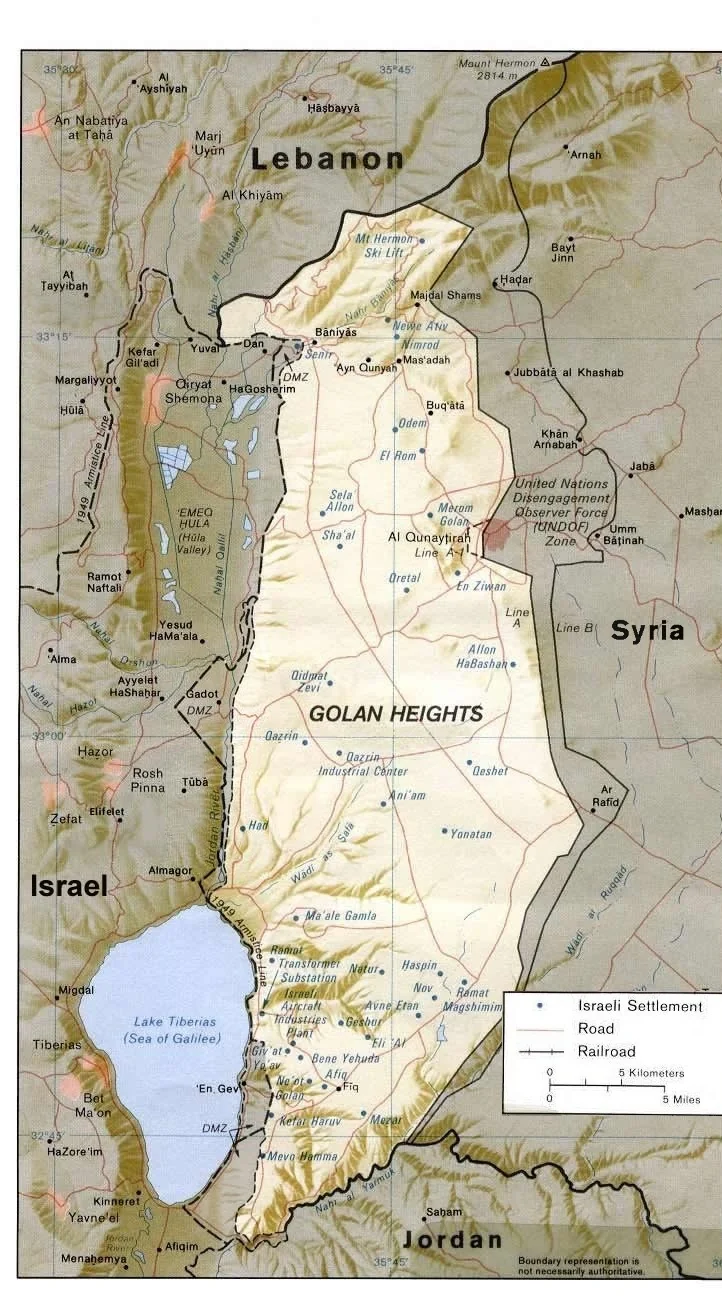
The Golan Heights
The Golan Heights is a plateau in southwest Syria. Israel captured most of it in the June 1967 war. Most of the Syrian population left or was displaced. Syria says more than 140,000 people lived there before the war. An Israeli census in August 1967 counted 6,396. Syria tried to retake the plateau in October 1973 and failed. A disengagement agreement signed on 31 May 1974 created a buffer zone patrolled by UN troops. On 14 December 1981 Israel applied its law to the territory. Three days later the UN Security Council unanimously declared that act null and void. Syria has claimed the Golan without a break since 1967. The United States recognized Israeli sovereignty on 25 March 2019, and Colombia did the same on 10 August 2026. The UN counts more than 31,000 Israeli settlers in 35 settlements, and about 29,000 Druze also live there. Since December 2024, Israeli troops have held positions inside the buffer zone.
The 1949 Armistice Agreements and the Green Line
The 1949 Armistice Agreements were four separate military agreements that ended the fighting of the 1948 Arab-Israeli war. Israel signed them with Egypt on 24 February, Lebanon on 23 March, Jordan on 3 April and Syria on 20 July 1949. The talks were held under UN chairmanship led by Acting Mediator Ralph Bunche. Each agreement drew an Armistice Demarcation Line beyond which armed forces could not move. The line with Jordan, together with the line around Gaza, became known as the Green Line. Three of the four agreements stated plainly that the line was not a political or territorial border and did not settle any party's claims. The Lebanon line followed the old international boundary. After the June 1967 war, the Green Line became the baseline for later negotiations over borders.
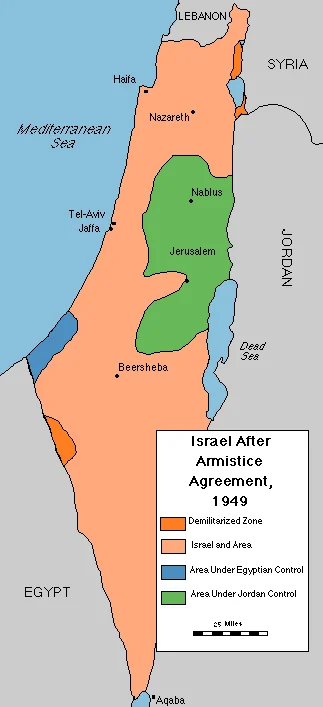
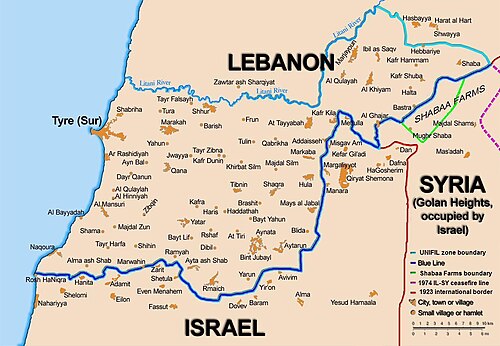
Israel's borders: recognised lines, armistice lines, and contested boundaries
Israel has internationally recognised borders with Egypt (since the 1979 peace treaty) and Jordan (since the 1994 Wadi Araba treaty). Its northern borders with Syria and Lebanon are based on 1949 armistice lines that were never converted into peace treaties. The West Bank and Gaza Strip are not internationally recognised as part of Israel - their final status is subject to unresolved negotiations.