
Why Israel Became the World’s Leading Startup Nation
Quick answer · ~120 words
Israel’s “Startup Nation” reputation was popularised by Dan Senor and Saul Singer’s 2009 book, but it rests on measurable economic results. In 2023, Israel devoted 6.3 percent of its GDP to research and development, the highest share among OECD countries. The World Intellectual Property Organization ranked Israel 14th among 139 economies in its 2025 Global Innovation Index. In 2025, high-tech accounted for 18.3 percent of GDP, raised about $14.6 billion, and generated record exits when major deals signed that year were included. Tel Aviv ranked fourth among the world’s startup ecosystems. Israel’s success grew from several reinforcing factors: technological training in the military, skilled immigration from the former Soviet Union, the pressure to sell into global markets, and government policies that helped create a private venture-capital industry. Its continuing challenges include talent and management moving abroad, dependence on foreign capital, and a widening gap between high-tech and other parts of the economy.
What Does the “Startup Nation” Label Mean?
The phrase “Startup Nation” became widely known through Start-Up Nation: The Story of Israel’s Economic Miracle, published by Dan Senor and Saul Singer in 2009.[1] The book argued that Israel had developed an unusually strong concentration of innovation and entrepreneurship despite its small population, limited natural resources and difficult security environment. It highlighted military service, immigration, entrepreneurial culture and targeted government policy as contributors to that outcome.[1]
Official statistics support the central claim that Israel is unusually research-intensive. In 2023, Israel and South Korea had the highest research-and-development spending as a share of GDP among OECD countries, at 6.3 percent and 5.0 percent respectively.[2] The World Intellectual Property Organization ranked Israel 14th of 139 economies in its 2025 Global Innovation Index, indicating strong innovation performance while also identifying weaknesses in areas such as infrastructure and institutions.[3]
The Israel Innovation Authority, the government agency responsible for supporting innovation, provides a detailed picture of the sector. Its 2026 report says high-tech output grew by 8.2 percent in 2025, the sector employed approximately 400,000 people - 11.4 percent of total employment - and about 775 new startups were founded. High-tech’s share of GDP rose from 17.7 percent in 2024 to 18.3 percent in 2025. Israel was the fourth-largest startup fundraising hub globally and the largest outside the United States.[4]
The sector is also central to Israel’s international economic position. High-tech exports accounted for approximately 58 percent of total exports in 2025, while exports represented 79 percent of high-tech GDP.[4] These figures show that the industry is not simply a collection of young companies: it is a major source of exports, employment, investment and tax revenue.
Tel Aviv’s ecosystem rankings reinforce that picture. Startup Genome placed Tel Aviv-Yafo fourth globally for the second consecutive year, with an ecosystem value of $250.3 billion measured from July 2023 to December 2025.[5] Rankings depend on methodology, and private databases differ in how they count companies valued at more than $1 billion. The stronger case for Israel’s startup status therefore rests on several indicators together: research intensity, investment, exports, company formation and the international reach of Israeli technology businesses.
Structural Drivers: Military Service, Immigration and a Small Home Market
One important source of technical talent is the Israel Defense Forces (IDF). Military service is compulsory for most Jewish Israeli citizens, subject to exemptions and other rules. Certain units provide recruits with experience in software, communications, intelligence, cybersecurity and complex engineering. Unit 8200, the signals-intelligence unit, is particularly associated with technology entrepreneurship.
A study of nearly 200 Israeli cybersecurity companies acquired over fifteen years found that startups led by Unit 8200 alumni sold for an average of more than $317 million, with a median transaction value of $200 million. The founders of Wiz, which agreed to a $32 billion sale, had served in Units 8200 and 81. The same study found that more than 70 percent of the chief executives examined began in technical roles, most commonly software development.[6]
Military service is not a complete explanation for the industry’s success. Many countries have technically capable armed forces without producing a comparable startup ecosystem. Its importance in Israel lies partly in the combination of technical training, responsibility at a young age, teamwork under pressure and networks that can later connect founders, investors and employees. Civilian universities, research centres and private companies remain essential to turning those skills into commercial products.
Immigration supplied another major pool of expertise. Approximately 330,000 immigrants arrived in Israel from the former Soviet Union in 1990 and 1991, increasing a population of about 4.5 million by roughly 8 percent. Research on this migration finds that those who arrived during these two years had high levels of education and occupational status relative to other emigrant cohorts from their countries of origin and were well educated compared with native-born Jewish Israelis.[7]
Integrating such a large number of newcomers created an employment challenge. Many immigrants had technical or scientific training, while parts of Israel’s established industrial sector were reducing their workforces. Government and industry efforts to employ engineers helped expand the pool of people available to technology firms.[8] Immigration did not automatically create successful companies, but it increased the supply of specialised labour at a time when Israel’s technology sector was developing.
The third structural factor was the size of the domestic market. Israeli companies could not rely on local demand alone to reach the scale available to firms in the United States, China or larger European economies. They therefore had strong incentives to design products for international customers early in their development.
Connections with American industry helped establish that outward orientation. The Israel–United States Binational Industrial Research and Development Foundation, known as BIRD, began in 1977 to support joint industrial research and commercial development. During 1984–1988, Israeli technology companies raised $300 million on NASDAQ, while all Israeli companies together raised $500 million on the Tel Aviv Stock Exchange.[8] Such links helped Israeli firms gain access to foreign customers, expertise and capital. The same international orientation remains visible in the high share of technology output sold abroad.[4]
Culture and Institutions: Risk-Taking Meets a Catalytic State
Israeli entrepreneurship is often associated with chutzpah, a Hebrew term commonly used to describe boldness or audacity. Businesses are also frequently described as having relatively flat hierarchies and informal networks shaped by military service, universities and a compact professional community.[1] These cultural descriptions can help explain how ideas and contacts move quickly, but they are not sufficient explanations by themselves. Entrepreneurial cultures exist elsewhere; the institutions that finance and commercialise ideas matter just as much.
Israel’s experience also shows that innovation involves failure. A 1987 report found that 60 percent of technologically successful projects supported by the Office of the Chief Scientist could not obtain follow-on capital and had to close.[8] Research funding could help develop a promising technology, but without experienced investors and a path to commercial growth, a technically successful project could still fail as a business.
The government began offering research-and-development grants to companies across sectors through the Office of the Chief Scientist in 1969.[8] Its early venture-capital experiment, the Inbal programme, launched in 1992, tried to attract investment by guaranteeing investors against losses. It attracted few professional fund managers, and its four funds did not raise additional capital.[8]
The Yozma programme, launched in 1993, used a different model. The government committed $100 million, allocating $80 million to ten private venture-capital funds and $20 million to direct startup investments. In each approved fund, the government could take a stake of up to 40 percent, capped at $8 million. Each fund was required to include a reputable foreign investor alongside an Israeli financial institution.[8]
Rather than protecting investors from losses, Yozma gave private partners a five-year option to buy the government’s stake at its original cost plus modest interest. This allowed successful private investors to gain more of the upside while limiting the government’s role in daily investment decisions. The programme was privatised in 1998. Its funds raised $250 million in total and invested in more than 250 startups. By 2001, managers linked to Yozma funds ran approximately $5.5 billion of the $10 billion managed by Israel’s venture-capital industry.[8]
Yozma’s significance was not simply that public money financed private companies. It helped develop a professional venture-capital industry, encouraged foreign participation and gave investors an incentive to build a lasting market. Technology incubators and continuing research grants also supported the supply of new companies.[8]
The lesson is not that every country can reproduce Israel’s experience exactly. Israel already had research institutions, technically trained workers and companies with commercial potential. Yozma helped connect those assets to professional financing. The programme illustrates how carefully designed public policy can create conditions for private investment without permanently replacing it.
Clusters and Sectoral Waves, from the 1990s to 2026
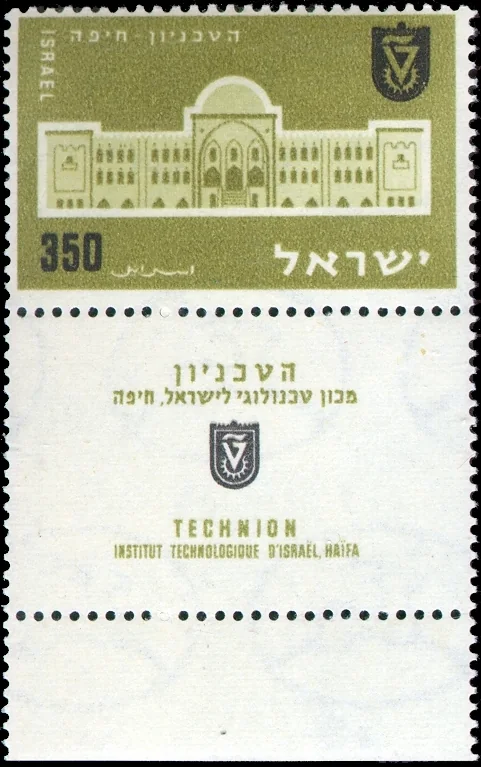
Israel’s technology industry is concentrated in a number of urban clusters. Tel Aviv and nearby Herzliya host many startups, venture-capital firms and foreign research-and-development centres. Startup Genome identifies artificial intelligence, big data, cybersecurity and life sciences among Tel Aviv’s leading areas of strength.[5] Haifa benefits from the Technion and established engineering centres, while Jerusalem combines university research with activity in medical and automotive technology.
The industry developed through successive waves rather than one continuous boom. During the 1990s, communications and software companies expanded alongside the emerging venture-capital market. Between 1998 and 2001, venture investment in Israel equaled 1.3 percent of GDP, the highest share among OECD countries. By 2000, more than 100 venture-capital management companies operated in Israel.[8]
The global technology crash then exposed the sector’s vulnerability to investment cycles. Capital raised fell by 70 percent in 2001, and the study records a period in which no Israeli startup went public from mid-2001 through the period it examined.[8] The episode demonstrated that a strong technology base did not protect companies from global financial shocks.
Cybersecurity, enterprise software and financial technology later became major investment destinations. According to the Innovation Authority, these three segments attracted more than 60 percent of the capital raised in 2025, while core AI companies received 35 percent of all investment.[4] Israeli companies are also expanding into defense technology, space, quantum technology and AI infrastructure. Hardware production returned to stronger growth, adding approximately NIS 16 billion to output in 2025 after annual increases of no more than NIS 1.5 billion from 2022 to 2024.[4]
Israeli firms are increasingly acting as acquirers as well as targets. In 2025, they acquired 81 foreign companies, and 49 percent of Israeli companies sold that year were acquired by other Israeli firms. Including the Wiz, CyberArk and Armis deals signed in 2025 and approved in 2026, the reported exit value for 2025 reached approximately $84 billion.[4] Such deals can provide returns to founders and investors, but headline exit figures do not necessarily mean that the same amount flows directly into the domestic economy or is reinvested in new Israeli startups.
Challenges: Talent, Inequality and Dependence on Foreign Capital
Israel’s startup model faces several structural risks. One is the movement of research activity and senior management abroad. The Innovation Authority reports that the number of research-and-development employees in Israel fell by about 3,500 in 2025, the first decline in more than a decade. The share of employees of private Israeli high-tech firms working in Israel fell from 69 percent in January 2019 to 62 percent in March 2026. Over the same period, the share of senior executives based in Israel fell by approximately 9.6 percent, while the number based in the United States increased.[4]
The number of high-tech workers leaving Israel for extended periods rose by 42 percent in summer 2023 and by a further 14 percent in summer 2024. These developments occurred during a period of domestic controversy over judicial reform and, from October 2023, war.[4] The figures do not establish that one event alone caused the movement, but they raise questions about whether Israel can retain the people who manage and expand its most valuable firms.
A second concern is economic concentration. High-tech workers paid 36 percent of all income tax in 2021, and their average monthly income-tax payment was 6.3 times the average for the rest of the economy, according to a report by the Innovation Authority and the Finance Ministry’s Chief Economist Department.[9] This makes public revenue particularly sensitive to the performance of one sector. Earlier research warned of a possible “dual economy” in which high wages and productivity in technology coexist with lower wages and weaker productivity elsewhere.[8]
The third risk is reliance on foreign capital. The Innovation Authority reports that 47 percent of business-sector research-and-development funding in Israel comes from abroad, compared with an OECD average of 9 percent. Foreign sources accounted for 70 percent of venture investment in 2025.[4] International investment gives Israeli firms access to capital and global markets, but it also makes them more exposed to changes in global financial conditions and investor confidence.
Currency movements can have an additional effect. The Innovation Authority estimates that the decline in the average dollar exchange rate from NIS 3.7 in 2024 to NIS 3.45 in 2025 reduced high-tech GDP by NIS 21 billion.[4] The sector’s dependence on exports and foreign funding can therefore transmit external economic changes into domestic output.
The Authority also estimates a gap of about NIS 19 billion between current high-tech GDP and the level it might have reached had the sector maintained its average annual growth rate of 6.5 percent from 2008 to 2022. The number of new startups founded in 2025, around 775, remained well below the peak of more than 1,400 in 2014.[4] WIPO’s rankings also identify infrastructure and institutions as weaker areas, placing Israel 45th and 36th respectively in those categories.[3]
These challenges do not erase Israel’s technological achievements. They show why maintaining its position requires more than attracting investment. Israel needs to retain talent, strengthen infrastructure and institutions, encourage new company formation and spread productivity gains beyond high-tech.
Lessons for Other Countries and the India–Israel Innovation Partnership
Tel Aviv’s standing is striking given Israel’s population and domestic market. Startup Genome places it behind Silicon Valley, New York and London by ecosystem value.[5] By capital raised in 2025, Israel trailed San Francisco, New York and Boston while leading London, Paris and Singapore.[4] These comparisons suggest that Israel’s advantage is not scale alone, but the concentration of specialised talent, research, investors and internationally oriented companies.
Other governments have tried to replicate Israel’s venture-capital model. Avnimelech and Teubal argue that many European programmes in the 1980s failed because they treated venture capital as a pool of money and relied on tax incentives or guarantees rather than developing an industry of skilled fund managers.[8] Their analysis suggests several transferable lessons: reward success rather than protect investors from losses, bring in experienced foreign partners, give the state a defined exit from its investments, and introduce venture-capital programmes when a base of research-intensive firms already exists. The Israeli experience cannot simply be copied, but specific institutional features may be adapted to local conditions.
India and Israel have established a direct channel for such cooperation. The India–Israel Industrial R&D and Technological Innovation Fund, known as I4F, was developed following Prime Minister Narendra Modi’s July 2017 visit to Israel, the first visit by an Indian prime minister. The fund is worth $40 million, with India’s Department of Science and Technology and the Israel Innovation Authority contributing equally over five years.[10][11]
The fund can support up to 50 percent of the cost of eligible joint projects through conditional grants. If a project succeeds commercially, the support is repaid through royalties. The arrangement is intended to encourage companies from both countries to collaborate on industrial research and bring new products to market. The first four projects were awarded on 26 July 2018.[10][11]
The two governments also signed a Bilateral Investment Agreement in New Delhi on 8 September 2025. India’s government described Israel as the first OECD member to sign under India’s revised treaty model, with the agreement expected to help prepare the ground for a free-trade agreement.[12] The agreement entered into force on 4 July 2026, according to reporting by The Tribune.[13]
For India, the partnership offers opportunities to draw on Israeli experience in research commercialisation, startup finance and specialised technology. For Israel, India provides a large market, industrial partners and opportunities to develop products for a wider customer base. The long-term value of this relationship will depend on whether funding frameworks and diplomatic agreements lead to sustained joint research, commercially successful products and investment in both countries.
In One Paragraph
Israel became a leading startup hub through the interaction of technical talent, skilled immigration, a small domestic market that encouraged global ambitions, and public policies that helped establish a professional venture-capital industry. Its high research intensity, internationally successful companies and concentrated technology clusters have made high-tech central to exports and economic growth. But the model faces risks: research staff and executives are increasingly based abroad, foreign capital plays a large role, and high-tech prosperity is not evenly distributed across the economy. Israel’s future position will depend on retaining talent, strengthening institutions, encouraging new firms and turning technological expertise into broader economic gains. Cooperation with India, including joint research and investment mechanisms, offers one route to expand markets and build longer-term industrial links.
Sources
- Senor, Dan, and Saul Singer. Start-Up Nation: The Story of Israel’s Economic Miracle. New York: Twelve, 2009. Authors’ note and table of contents. https://www.hachettebookgroup.com/titles/dan-senor/start-up-nation/9780446541466.
- Organisation for Economic Co-operation and Development (OECD). “R&D Spending Growth Slows in OECD, Surges in China; Government Support for Energy and Defence R&D Rises Sharply.” Statistical release, March 2025. https://oecd-ilibrary.org/en/data/insights/statistical-releases/2025/03/rd-spending-growth-slows-in-oecd-surges-in-china-government-support-for-energy-and-defence-rd-rises-sharply.html.
- World Intellectual Property Organization. Global Innovation Index 2025: Israel. Geneva: WIPO, 2025. Ranking summary and “Lowest Rankings.” https://www.wipo.int/edocs/gii-ranking/2025/il.pdf.
- Israel Innovation Authority. “Israeli High-Tech Annual Report Demonstrates Strength with Increase in GDP, Fundraising, Exits, and Exports, Alongside the First Decline in R&D Employees and an Expansion of Activity Abroad.” Press release, May 31, 2026. Sections “Key Findings,” “High-Tech Employment Resumed Growth,” and “Israeli High-Tech Continues to Rely on Foreign Capital.” https://innovationisrael.org.il/en/press_release/israeli-high-tech-report-2026/.
- Ynetnews. “Tel Aviv Ranked World’s No. 4 Startup Hub with Ecosystem Value of $250B.” 2026. Accessed October 29, 2026. https://www.ynetnews.com/business/article/byr441gfmx.
- Calcalist Tech. “From Unit 8200 to Wiz’s $32B Exit: The Blueprint for Israeli Cyber Success.” 2025. https://www.calcalistech.com/ctechnews/article/sjltwsk2kg.
- Schifris, Gustavo, and Barbara S. Okun. “Cohort Fertility of Immigrants to Israel from the Former Soviet Union.” Demographic Research 50, no. 13 (2024): 377–92. https://doi.org/10.4054/DemRes.2024.50.13. Full text: https://www.demographic-research.org/volumes/vol50/13/50-13.pdf.
- Avnimelech, Gil, and Morris Teubal. Evolutionary Venture Capital Policies: Insights from a Product Life Cycle Analysis of Israel’s Venture Capital Industry. STE Working Paper 20-2003. Haifa: Samuel Neaman Institute, 2003, 5–11, 19–21, 28–32. https://neaman.org.il/wp-content/uploads/2024/02/STE20.pdf. The authors’ peer-reviewed treatment appears in Research Policy 35, no. 10 (2006): 1477–98.
- Israel Innovation Authority and Ministry of Finance, Chief Economist Department. “Israel Innovation Authority Report Reveals High-Tech Sector as Key Driver of Israeli Economy, Contributing Over a Third of National Income Tax.” Press release, 2024. https://innovationisrael.org.il/en/?p=12804.
- Government of India, Department of Science and Technology. “Four Joint Industrial R&D Projects Were Today Awarded under the US$40 Million Industrial R&D and Technological Innovation Fund (I4F).” Press release, July 26, 2018. https://dst.gov.in/pressrelease/four-joint-industrial-rd-projects-were-today-awarded-under-us40-million-industrial-rd.
- Israel Innovation Authority. “Israel–India Industrial R&D and Technological Innovation Fund.” Program page, sections “The Program” and “Grant Funding.” Accessed October 29, 2026. https://innovationisrael.org.il/en/fund/i4f-israel-india.
- IndBiz, Government of India. “India, Israel Sign Treaty to Boost Trade, Mutual Investments.” September 9, 2025. https://indbiz.gov.in/india-israel-sign-treaty-to-boost-trade-mutual-investments.
- The Tribune. “India-Israel Bilateral Investment Agreement Comes into Force, Aims to Boost Cross-Border Investment.” July 2026. https://www.tribuneindia.com/news/business/india-israel-bilateral-investment-agreement-comes-into-force-aims-to-boost-cross-border-investment/.