
How Scarcity Turned Israel into a World Leader in Agri-Tech and Water Innovation
Quick answer · ~120 words
Israel became a leader in agricultural technology and water management because limited rainfall and scarce freshwater forced it to produce more with fewer resources. The state placed water under public control through the 1959 Water Law, while the National Water Carrier began moving water from the Sea of Galilee towards the south in 1964. Drip irrigation, commercialised in the 1960s, helped farmers use water more precisely. Israel later expanded wastewater recycling and seawater desalination, reducing agriculture’s dependence on freshwater. By 2022, it reused about 87 percent of its wastewater, mainly for farming, according to the OECD. Its agricultural research institutions and private companies developed technologies for irrigation, crop management and livestock production. Israel now shares this experience internationally, especially with India. By June 2026, the Indo-Israel agricultural programme had established 35 Centres of Excellence across 12 Indian states, adapting Israeli technology to local farming conditions.
Why Scarcity Shaped Israeli Farming from the Start
Israel’s agricultural system developed under the pressure of limited water and uneven rainfall. Approximately 93 percent of the country is classified as dryland, while rainfall is concentrated in the north and mainly falls during winter.[1] These conditions made irrigation, soil management and efficient water use essential to expanding agricultural production.
Agricultural research began before Israel became a state. In 1921, the Jewish Agency established an Agricultural Experiment Station under Yitzhak Elazari Volcani, laying the foundation for the institution now known as the Agricultural Research Organization, or Volcani Institute.[2] Research helped farmers identify crops, cultivation methods and technologies suited to local conditions.
Water infrastructure developed alongside agricultural science. Mekorot, Israel’s national water company, was founded in 1937. The National Water Carrier, inaugurated in 1964, moved water from the Sea of Galilee towards central and southern parts of the country.[3] This infrastructure helped connect areas with different water supplies and agricultural needs.
The legal framework was equally important. Section 1 of Israel’s Water Law of 1959 declared the country’s water resources public property, subject to state control and intended to serve residents and national development.[4] Water could therefore be managed as a national resource rather than simply as a private asset attached to land.
Agriculture remained a major water user. In 2000, it accounted for 64 percent of Israel’s freshwater abstractions.[5] The challenge was to maintain agricultural production without allowing farming to consume an unsustainable share of limited freshwater. This became a central reason for expanding wastewater reuse, desalination and precision irrigation.
How Drip Irrigation and Animal Genetics Raised Productivity
One of Israel’s best-known agricultural innovations is drip irrigation. Engineer Simcha Blass developed a practical method for delivering water slowly and directly to plant roots. Working with Kibbutz Hatzerim in the Negev, he helped establish Netafim, which commercialised the technology.
Unlike flood irrigation, drip systems supply water in controlled quantities near the roots. This can reduce evaporation, runoff and water waste while improving the delivery of fertilisers. The technology is particularly useful in dry environments, although results depend on soil, crop type, system design and maintenance.[1]
Drip irrigation subsequently became more precise. Improved emitters reduced clogging, while subsurface systems allowed water to be delivered underground. These developments also made it easier to use treated wastewater for irrigation. Research reviewed in Water Research identifies important advantages of drip irrigation over flood, furrow and sprinkler methods in suitable conditions.[1]
The broader lesson is that Israel’s agricultural innovation has not depended on one invention alone. It has involved decades of improvements in irrigation equipment, water quality, crop management and farm practices. Greater precision allows farmers to produce more from limited water supplies, though it does not remove the need to manage salinity and protect soil quality.
Livestock breeding provides another example of productivity-focused research. Israeli dairy farming uses selective breeding, feeding management and detailed performance records to raise milk output under hot, dry conditions. Data compiled by Agriculture and Agri-Food Canada from International Committee for Animal Recording figures show that Israeli recorded cows averaged 12,634 kilograms of milk per cow in 2023. The corresponding figures were 10,994 kilograms in Canada and 10,376 kilograms in the Netherlands.[6]
These figures place Israel at the top of the countries listed in that dataset. They demonstrate the potential of sustained breeding and farm-management improvements, rather than proving that one method alone explains the difference. High output also depends on animal health, nutrition, genetics and the conditions under which production is measured.
How Israel Recycles, Desalinates and Moves Water
Israel’s agricultural success depends not only on using water efficiently but also on increasing the amount available for different uses. Wastewater recycling has become a central part of this system.
The OECD reports that Israel collects and treats about 94 percent of its wastewater and reuses approximately 87 percent, mainly in agriculture. This is the highest wastewater reuse rate among OECD member countries.[5] Treated effluent supplies farms that might otherwise depend more heavily on freshwater.
The shift has changed the relationship between agriculture and the wider water system. According to the OECD, agriculture’s share of freshwater abstractions fell from 64 percent in 2000 to 35 percent in 2018. The organisation attributes this change to wastewater reuse, desalination, regulation and water-pricing policies.[5] Recycling therefore serves both environmental and economic purposes: it reduces pressure on freshwater sources while providing a more dependable supply for irrigation.
Seawater desalination has further expanded the available supply. Israel developed major desalination plants through infrastructure projects involving private-sector participation. The Sorek complex includes Sorek I, with a capacity of approximately 150 million cubic metres a year, and the later Sorek II project, designed for 200 million cubic metres annually.[7][8]
In 2018, Globes reported that Israel’s desalination plants could supply approximately 585 million cubic metres of water annually, equivalent to about 70 percent of the water supplied to homes and communities.[7] Desalination reduces dependence on rainfall, although it requires energy, substantial investment and careful management of environmental effects.
Long-term planning remains important. Israel’s State Comptroller reported in 2024 that the Water Authority planned desalination capacity of 1.7 billion cubic metres annually by 2050.[9] These plans reflect the expectation that population growth, climate pressures and competing demands will continue to require investment in water infrastructure.
Water management also has a regional diplomatic dimension. Under the 1994 Israel–Jordan peace treaty, the two countries agreed to cooperate in identifying additional drinking-quality water for Jordan, including an annual quantity of 50 million cubic metres under the relevant water arrangements.[10] Such cooperation illustrates how water infrastructure and allocation can form part of wider regional relations.
The Research Institutions and Companies Behind Agri-Tech
Israel’s agricultural technology sector developed through cooperation between public research, farmers, government extension services and private companies.
The Agricultural Research Organization, known as the Volcani Institute, is the research arm of Israel’s Ministry of Agriculture. It developed from the early agricultural experiment station into a research organisation covering areas such as plant sciences, animal sciences, plant protection, soil and water, post-harvest science and agricultural engineering.[2] Its work helps address practical problems faced by farmers in different regions.
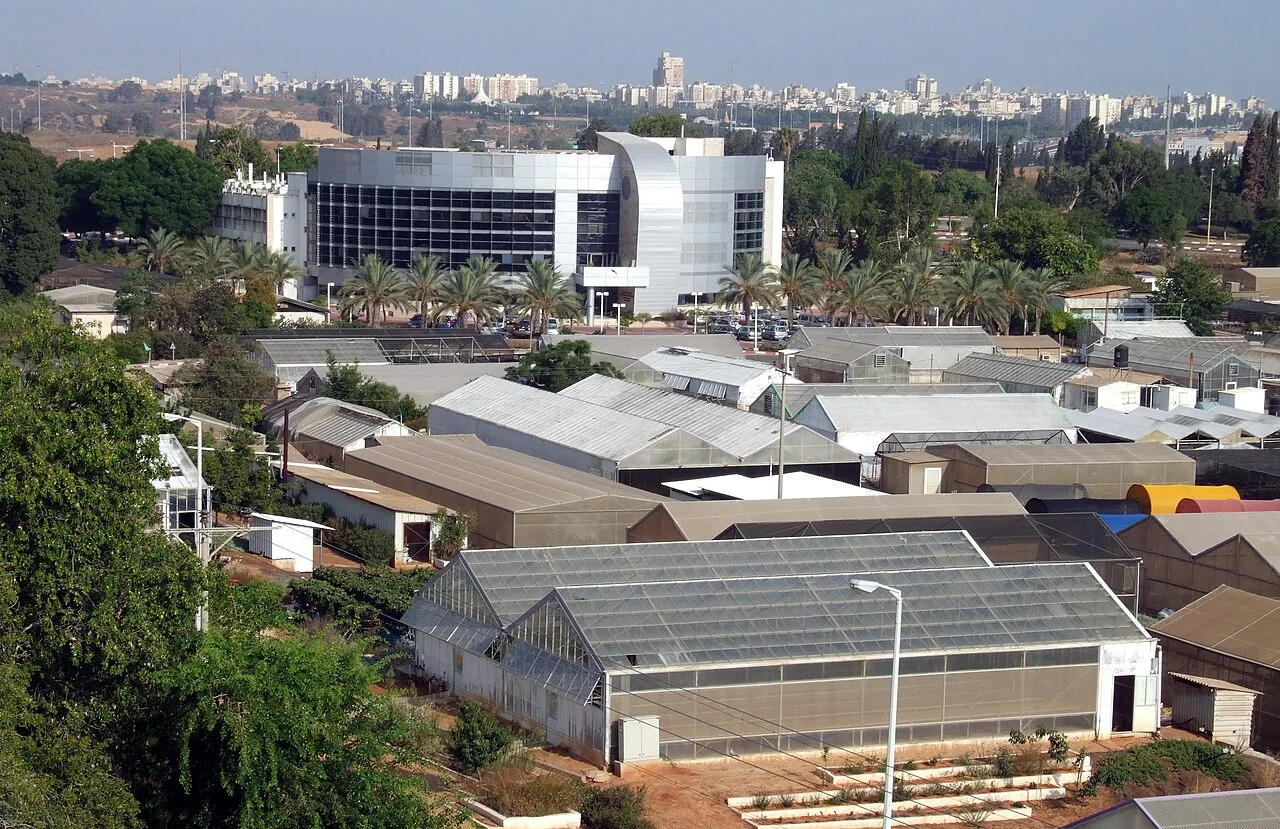
Research becomes more useful when farmers can apply it in the field. Government extension services help transfer scientific findings into farming practices, shortening the distance between laboratory research and commercial use. This institutional connection is important in a country where water, soil and climate conditions place strict limits on agricultural decisions.
Private companies turn research and practical experience into marketable products. Netafim’s development brought together an inventor and a kibbutz, demonstrating how local agricultural needs could generate commercial technology. Today, Israeli agri-tech companies work on irrigation control, soil and plant sensors, crop imaging, farm-management software and data-driven decisions about water and fertiliser.
Investment has supported this expansion. CTech, reporting on the Startup Nation Central and GrowingIL landscape map, stated that Israeli agrifood-tech companies completed 33 funding rounds worth more than $1 million each in 2024.[11] This indicates continued investment activity, although funding rounds alone do not establish how profitable these firms are or how widely their technologies are used.
Digital tools build on the physical systems developed over earlier decades. Sensors can help farmers monitor soil moisture and plant conditions, while software can use that information to guide irrigation schedules. These tools extend the basic principle behind drip irrigation: use information and precision to reduce waste and improve productivity.
How Israel Shares Its Agricultural Model with India
Israel began sharing its development experience abroad soon after independence. In 1958, it established MASHAV, its international development cooperation agency, to share knowledge gained through the country’s own development. The initiative was associated with Foreign Minister Golda Meir and Prime Minister David Ben-Gurion, and agriculture became one of its principal areas of work.[12]
India has become an important partner in this effort. The Government of India told the Lok Sabha that an Indo-Israel work plan identifying areas of agricultural cooperation was signed in 2006.[13] This developed into the Indo-Israel Agricultural Project, which applies Israeli agricultural technologies in Indian conditions.
The programme relies on cooperation between national and state authorities. According to the Israeli Embassy in India, India’s Mission for Integrated Development of Horticulture authorises, funds and monitors the project. State governments provide staff, land and budgets and manage individual Centres of Excellence, which demonstrate and adapt agricultural technologies to local needs.[14]
The network continued to expand in 2026. The 35th Centre of Excellence opened in Munimpur village in Haryana’s Jhajjar district on June 17, 2026, at a reported cost of ₹8.50 crore. The programme began with a centre at Gharaunda in 2008 and had reached 35 centres across 12 states by June 2026.[15]
The centres help farmers learn about improved cultivation methods and access planting material. The programme reportedly produces more than 25 million vegetable seedlings and 387,000 fruit plants annually and trains around 120,000 farmers each year. More than 250 Indian agricultural officers have also trained in Israel.[15]
An important development is the localisation of technology. The newest centre was built by Indian firms using Indian components. Israel’s ambassador, Reuven Azar, described the direction as technology that would be “produced in India and owned by India.”[15] The programme has also introduced N-Drip, a gravity-fed micro-irrigation system designed to operate without a pump or electricity, potentially making precision irrigation more accessible to farmers who lack reliable power supplies.[15]
The relationship is not limited to technology exports. India has also been a source of foreign agricultural workers for Israel. After October 2023, Israel sought workers from abroad to help address labour shortages in its agricultural sector.[16] This highlights the broader economic links between the two countries, although worker recruitment is distinct from the technology-transfer programme.
The Limits: Soil, Climate, Security and Labour
Israel’s achievements do not mean that water scarcity has been solved. Wastewater reuse, desalination and efficient irrigation reduce pressure on freshwater sources, but each creates new challenges.
Treated wastewater can contain salts that accumulate in soil and affect crops. Alon Tal’s review in Water Research discusses evidence of salinisation damage associated with effluent irrigation and argues that long-term reuse requires high treatment standards and careful monitoring.[1] The OECD also identifies nutrient pollution of groundwater as an ongoing concern and notes that desalination carries environmental costs.[5]
Desalination infrastructure requires constant oversight. Israel’s State Comptroller reported 14 contamination incidents at desalination plants between 2007 and the end of the audit period.[9] Such incidents underline the importance of water-quality testing, operational safeguards and reliable backup arrangements. The OECD also identifies Israel as highly exposed to climate change, which could intensify existing pressures on water resources.[5]
Security shocks have also affected agriculture’s workforce. Following the Hamas attack of October 7, 2023, Israel experienced disruptions to agricultural labour. Reporting in December 2023 stated that 10,000 of approximately 29,900 Thai agricultural workers had left Israel, although more than 3,000 had returned.[17] Later figures from the Population and Immigration Authority showed 30,259 foreign agricultural workers on October 5, 2023, and 35,009 on June 4, 2024.[18]
These changes strengthened interest in automation and labour-saving technology, but the available figures do not by themselves establish how much automation resulted. Robotics and digital farm-management systems may help address labour constraints, yet they also require investment, maintenance and training. Small farms may face greater barriers to adoption than large commercial operations.
Israel’s experience therefore offers practical lessons rather than a universal formula. Public control and coordinated planning helped manage water as a national resource. Research institutions and private firms developed ways to increase productivity. Recycling and desalination expanded supply, while partnerships such as the one with India helped transfer knowledge to different farming environments. The continuing challenge is to balance output with soil health, water quality, environmental protection and resilience during conflict.
In One Paragraph
Israel became a leader in agri-tech and water innovation because scarce freshwater and dry conditions made efficient resource use essential. Public control of water, national infrastructure, agricultural research and private enterprise helped produce advances in drip irrigation, wastewater reuse, desalination and livestock management. These systems reduced agriculture’s dependence on freshwater and supported high productivity, but they did not eliminate environmental, climate or security risks. Israel now shares its experience through international cooperation, particularly with India, where 35 Indo-Israel Centres of Excellence across 12 states were reported by June 2026. The lasting lesson is that agricultural innovation depends not on technology alone, but on the institutions, investment and local adaptation needed to make it work.
Sources
- Tal, Alon. “Rethinking the Sustainability of Israel’s Irrigation Practices in the Drylands.” Water Research 90 (2016): 387–94. https://doi.org/10.1016/j.watres.2015.12.016. Open author copy: https://social-sciences.tau.ac.il/sites/socsci.tau.ac.il/files/media_server/social/public/CV/alontal/65)%20Rethinking%20the%20Sustainability%20of%20Israel_s%20Irrigation%20Practices%20in%20the%20Dryalnds,%20Water%20Research%202016.pdf%20Rethinking%20the%20Sustainability%20of%20Israel_s%20Irrigation%20Practices%20in%20the%20Dryalnds,%20Water%20Research%202016.pdf).
- Loebenstein, Gad, and Eliyahu Putievsky. “Agricultural Research in Israel.” In Agricultural Research Management, edited by Gad Loebenstein and George Thottappilly, 357–65. Dordrecht: Springer, 2007. https://doi.org/10.1007/978-1-4020-6057-1_18.
- Mekorot, Israel National Water Company. Background submission to the US Senate Committee on Energy and Natural Resources, n.d. https://www.energy.senate.gov/services/files/7AFD1A4C-60B7-4396-9B44-14B71F4FBE4E.
- State of Israel. Water Law, 5719–1959. Chapter 1, section 1. English translation. https://www.pseau.org/outils/ouvrages/israel_water_law_5719_1959_en.pdf.
- OECD. “Israel’s Sustainable Water Management Plans.” International Programme for Action on Climate, November 7, 2022. https://oecd.org/climate-action/ipac/practices/israel-s-sustainable-water-management-plans-d81db5f5.
- Agriculture and Agri-Food Canada. “Average Production Based on Milk Recording Records by Country.” Canadian Dairy Information Centre, compiled from International Committee for Animal Recording data. https://agriculture.canada.ca/en/sector/animal-industry/canadian-dairy-information-centre/statistics-market-information/dairy-animal-genetics/production-breed/country.
- Globes. “Israel Publishes Tender for World’s Biggest Desalination Plant.” October 29, 2018. https://en.globes.co.il/en/article-1001258500.
- European Investment Bank. Environmental and social assessment documentation for the Sorek II desalination plant, Israel. https://www.eib.org/attachments/registers/129182965.pdf.
- State Comptroller and Ombudsman of Israel. “Seawater Desalination: Summary.” Annual Report 75A, Part B. Jerusalem, November 2024. https://library.mevaker.gov.il/sites/DigitalLibrary/Documents/2024/2024.11-75A-PartB/EN/2024.11-75A-PartB-301-Hatpala-Taktzir-EN.pdf.
- Treaty of Peace between the State of Israel and the Hashemite Kingdom of Jordan, Annex II, “Water Related Matters,” October 26, 1994. Avalon Project, Yale Law School. https://avalon.law.yale.edu/20th_century/jordan_treaty_annex2.asp.
- CTech by Calcalist. “Mapping Israel’s Agrifood-Tech Landscape.” February 2025. https://www.calcalistech.com/ctechnews/article/hjbtgdptkl.
- Embassy of Israel in Ghana. “MASHAV: History.” Ministry of Foreign Affairs of Israel. https://new.embassies.gov.il/ghana/en/node/7220.
- Lok Sabha. Unstarred Question No. 244, “Indo-Israel Agricultural Action Plan,” answer dated November 25, 2014. https://eparlib.nic.in/bitstream/123456789/708688/1/6973.pdf.
- Embassy of Israel in India. “Indo-Israel Agricultural Project (IIAP).” Ministry of Foreign Affairs of Israel. https://new.embassies.gov.il/india/en/node/8313.
- Pioneer News Service. “India and Israel Cross New Agricultural Milestone.” The Pioneer, July 24, 2026. https://www.dailypioneer.com/news/india-and-israel-cross-new-agricultural-milestone.
- Benson, Pesach. “12,000 Foreign Workers Have Returned to Israel Since War.” Tazpit Press Service, December 20, 2023. https://tps.co.il/articles/12000-foreign-workers-have-returned-to-israel-since-war/.
- The Times of Israel. “Government to Mull Plan to Replace Palestinian Laborers with 80,000 Foreign Workers.” December 2023. https://www.timesofisrael.com/government-to-mull-plan-to-replace-palestinian-laborers-with-80000-foreign-workers/.
- Ynetnews. “Number of Thai Workers in Israel Rises Past October 7 Record.” June 2024. https://www.ynetnews.com/business/article/s1lqwrera.