
The Israeli Air Force
Quick answer · ~120 words
The Israeli Air Force (IAF) was established in 1948, during the War of Independence, with a small collection of aircraft acquired through improvised and clandestine procurement. It developed into a central component of Israel's military strategy, demonstrating its importance during Operation Focus in 1967, when Israeli strikes destroyed much of the Arab air forces on the ground. The heavy aircraft losses caused by Soviet-built surface-to-air missile systems during the 1973 Yom Kippur War prompted major changes in training, tactics and technology. After cancelling its indigenous Lavi fighter programme in 1987, Israel increasingly relied on American aircraft, including the F-15, F-16 and F-35I Adir. Today, the IAF combines manned fighters, drones, intelligence systems and aerial refuelling to conduct operations across the region and at long distances.
Building an Air Force from Scratch, 1948–1956
The Israeli Air Force emerged during the War of Independence in 1948. Before independence, the Haganah maintained a small air arm known as Sherut Avir, or Air Service. Its aircraft were mainly civilian types used for reconnaissance, communications and limited combat support. When Israel declared independence on 14 May 1948, the country had no established air force capable of confronting the aircraft of neighbouring Arab states.
The early force depended on clandestine procurement, foreign volunteers and the efforts of Jewish aviation personnel abroad. Aircraft were acquired through overseas networks despite arms restrictions and the difficulty of securing supplies during the war. A major breakthrough came from Czechoslovakia, which supplied Avia S-199 fighters, a post-war adaptation of the German Messerschmitt Bf 109, and Supermarine Spitfires. These aircraft provided the new force with its first meaningful fighter capability.[1]
The air force was formally incorporated into the Israel Defense Forces in May 1948. During the war, it conducted reconnaissance, transported supplies, supported ground forces and attacked enemy positions. Israeli aircraft also engaged Egyptian aircraft and carried out attacks beyond the immediate front lines.
The early IAF was a small and improvised organisation, but the experience of the War of Independence established the importance of air power to Israel's defence. The country's limited geographical depth meant that enemy aircraft could reach populated areas and strategic infrastructure quickly. Maintaining control of the air would therefore become a central military objective.
During the 1950s, the IAF expanded its fleet and professional structure. It acquired jet aircraft, including the French-built Ouragan and Mystère fighters, and developed training, maintenance and operational systems. In the 1956 Sinai Campaign, it supported ground operations, attacked Egyptian positions and helped transport and supply forces. The transition from a collection of improvised aircraft to a modern jet force was under way.[2]
Operation Focus and the 1967 Air Campaign
By the 1960s, the IAF had become a central instrument of Israel's military strategy. Its leadership believed that control of the air was essential in a conflict with neighbouring states whose combined forces possessed larger populations and substantial military resources.
In May 1967, tensions escalated after Egyptian President Gamal Abdel Nasser moved troops into the Sinai Peninsula, demanded the withdrawal of United Nations peacekeepers and closed the Straits of Tiran to Israeli shipping. Egypt, Syria and Jordan entered military arrangements, while Iraq also prepared to support the Arab war effort. Israel faced the possibility of a multi-front conflict.
On the morning of 5 June 1967, Israel launched Operation Focus, known in Hebrew as Operation Moked. The operation was designed to destroy enemy aircraft on the ground before they could be used against Israel. Israeli aircraft flew at low altitude to avoid radar detection and attacked airfields with runway-cratering bombs, followed by strikes against aircraft parked on the ground.
The first wave concentrated on Egyptian airfields. According to the IDF, 197 Egyptian aircraft were destroyed during the opening phase. Further waves attacked additional Egyptian bases and then airfields in Jordan, Syria and Iraq. By the end of the first day, the IAF had destroyed or disabled a large part of the opposing air forces. The IDF's historical account estimates that approximately 400 enemy aircraft were destroyed during the operation.[3]
The destruction of enemy aircraft gave Israeli ground forces freedom to operate with much less threat from opposing air forces. It also shaped the course of the Six-Day War, in which Israel defeated the Egyptian, Jordanian and Syrian armies in six days.
Operation Focus became a defining example of pre-emptive air power. Its success depended not simply on the number of aircraft involved but on intelligence, detailed planning, pilot training, surprise, precise timing and the ability to conduct repeated sorties. It established the IAF's reputation for operational planning and air superiority.
The 1973 Yom Kippur War: The Surface-to-Air Missile Challenge
The success of 1967 was followed by a difficult lesson in the Yom Kippur War of October 1973. Egypt and Syria launched coordinated attacks on 6 October, taking Israel by surprise. The IAF was called upon to support ground forces on both fronts and prevent the advancing armies from consolidating their initial gains.
However, the Arab forces had prepared for the possibility of Israeli air attacks. Egypt and Syria deployed extensive Soviet-built air-defence networks, including SA-2, SA-3 and mobile SA-6 surface-to-air missile systems, as well as radar-guided anti-aircraft guns and shoulder-fired missiles. These systems created overlapping defensive zones that made low-altitude and medium-altitude attacks extremely dangerous.
Israeli aircraft suffered substantial losses, particularly during the opening days of the war. A study published by the US Air Force's Air University, drawing on contemporary US military assessments, records 32 Israeli F-4 Phantom losses and 53 A-4 Skyhawk losses between 6 and 24 October. Its analysis identifies surface-to-air missiles and anti-aircraft artillery as major causes. It also notes that some aircraft losses could not be assigned a definite cause.[4]
The IAF had to adapt rapidly. It altered flight profiles, improved coordination with ground forces, developed methods for attacking missile batteries and placed greater emphasis on suppressing enemy air defences. Israeli forces also benefited from the changing military situation as the war progressed and ground forces pushed back Egyptian and Syrian formations.
The experience demonstrated that air superiority could not be assumed, even by a highly trained force. Aircraft performance and pilot skill were not sufficient against a coordinated air-defence network. Electronic warfare, intelligence, precision weapons, suppression of enemy air defences and cooperation between different military branches became increasingly important.
The lessons of 1973 influenced subsequent Israeli investment in aircraft, electronic systems, intelligence and operational doctrine. The IAF's development increasingly focused on the ability to penetrate defended airspace and operate against complex threats.[5]
The Lavi Project and the Turn Towards American Aircraft
Israel's reliance on foreign aircraft did not mean it lacked ambitions to build its own advanced fighter. Its aviation industry had already developed the Nesher and Kfir aircraft, drawing on Israeli engineering, combat experience and foreign technology. The next major ambition was the Lavi, an indigenous multirole fighter intended to replace older aircraft such as the A-4 Skyhawk and Kfir.
The Lavi programme began in 1979 and was intended to give Israel greater independence in the design and production of combat aircraft. It incorporated advanced avionics, digital flight controls and a sophisticated aerodynamic design. The programme also involved substantial American participation, including the supply of engines and other components.
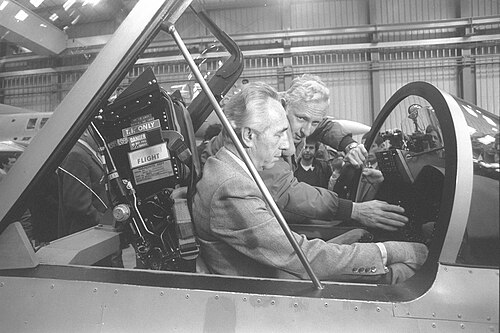
However, the project became increasingly expensive. The United States had financed a large share of its development through military assistance, and American officials questioned whether the programme was affordable. A 1987 US Government Accountability Office assessment found that even the lower cost estimates would exceed Israel's spending limits and place increasing pressure on other defence requirements.[6]
There were also disagreements over the programme's strategic value. Supporters argued that the Lavi would preserve Israel's aerospace expertise and provide an aircraft tailored to its operational requirements. Opponents argued that purchasing American aircraft would provide more capability for the money and avoid the financial burden of developing an entirely new fighter. The United States also had concerns about the cost of supporting the project and its potential competition with American aircraft exports.
On 30 August 1987, the Israeli cabinet voted to cancel the Lavi programme. The decision ended one of Israel's most ambitious indigenous defence projects. It also marked a turning point in the IAF's aircraft procurement strategy: rather than developing a complete fighter independently, Israel would concentrate more heavily on acquiring American platforms and modifying them with domestic technology.[7]
The IAF's subsequent fleet came to rely on three major American fighter families:
-
F-15: Israel received its first F-15 aircraft in 1976. The aircraft provided long-range air-superiority capability and later evolved into strike variants, including the F-15I Ra'am.
-
F-16: The first F-16s arrived in Israel in 1980. They became a major part of the IAF's fleet, performing air-to-air and ground-attack missions. Israeli versions include the F-16I Sufa, adapted with Israeli avionics and systems.
-
F-35I Adir: Israel received its first F-35I aircraft in 2016. The aircraft was declared operational in December 2017 and became the IAF's first fifth-generation fighter. The Israeli version incorporates local systems and modifications.[8]
The shift did not eliminate domestic defence development. Israel continued to produce avionics, electronic warfare equipment, weapons, sensors and software. The result was a model in which American aircraft platforms were combined with Israeli-developed technology and operational modifications.
Pilot Training: A Highly Selective Route
The IAF's operational strength depends on more than its aircraft. Its pilot training programme is among the most demanding and selective courses in the Israel Defense Forces.
Candidates undergo a selection process involving medical examinations, aptitude and psychometric assessments, flight simulations and psychological evaluations. Those who pass enter the flight academy, where they undergo approximately three years of intensive training.
The course combines academic studies, military leadership development, physical preparation, flight instruction and operational training. Trainees are evaluated continuously, and not everyone who begins the course graduates. Successful candidates receive their pilot wings and are assigned to operational squadrons, where they continue specialised training for their aircraft and mission roles.[9]
Graduation does not mean that every pilot becomes a fighter pilot. The IAF trains personnel for different aviation roles, including fighter aircraft, transport aircraft and helicopters. Those assigned to fighter squadrons undergo further training in air combat, weapons employment, formation flying and mission planning.
The programme is designed to produce officers capable of operating complex aircraft while making decisions under pressure. Its emphasis on leadership, technical understanding and continuous evaluation reflects the importance Israel places on maintaining a relatively small but highly trained air force.
Drones and Israel's Role in the UAV Industry
Israel's contribution to modern air power extends beyond manned fighter aircraft. It became one of the major developers and exporters of unmanned aerial vehicles (UAVs), commonly known as drones.
The country's early UAV development was influenced by the need for better intelligence and surveillance after the 1973 war. Israeli defence planners sought systems that could monitor enemy movements, provide real-time information and reduce the risks associated with manned reconnaissance flights.
Israeli companies developed a range of systems, including the Scout and Pioneer, followed by larger platforms such as the Searcher and Heron. These aircraft were used for surveillance, reconnaissance, target identification and battlefield intelligence. Some were designed for long-duration missions, allowing forces to monitor large areas for extended periods.
Israel Aerospace Industries (IAI) and Elbit Systems became important producers of UAVs and associated technologies. Their products were exported to numerous countries, including India. The Searcher and Heron families became particularly prominent in international defence markets.
The scale of Israel's early export position is reflected in SIPRI data covering 1985–2014. According to figures reported by SIPRI, Israel accounted for 60.7 per cent of international UAV deliveries during that period, compared with 23.9 per cent for the United States. These figures refer to the volume of deliveries measured by SIPRI's trend-indicator values, not the monetary value of all drone exports.[10]
UAVs have also become an increasingly important part of Israeli military operations. They provide persistent surveillance, support intelligence collection and help coordinate operations involving fighter aircraft and ground forces. The IAF continues to integrate remotely piloted aircraft with intelligence, communications and other military systems.
Israel's experience in this field has also contributed to its broader defence-industrial reputation. Its UAV industry demonstrates how operational requirements can encourage domestic innovation and create exportable technologies.
Long-Range Operations, Refuelling and Regional Reach
Israel's geographical size places limits on the distance its aircraft can cover without additional support. Operations against targets far from Israeli airspace therefore require careful planning, intelligence, navigation, communications, weapons selection and aerial refuelling.
The IAF operates tanker aircraft to extend the range and endurance of its fighters. Aerial refuelling allows aircraft to remain airborne longer and reach distant operating areas without having to land. It is particularly important for missions involving long distances, multiple targets or extended time in the air.
Israel has demonstrated long-range strike capability in several operations. In June 1981, eight F-16s, escorted by six F-15s, attacked Iraq's Osirak nuclear reactor near Baghdad in Operation Opera. The aircraft flew approximately 1,100 kilometres from Israel, crossing regional airspace to reach the target and return.[11]
In October 1985, Israeli aircraft struck the PLO headquarters in Hammam al-Shatt, Tunisia, in Operation Wooden Leg. The operation demonstrated the ability to conduct a strike over a much longer distance, although it also depended on careful planning and external logistical arrangements.
More recently, the IAF's long-range capabilities were demonstrated during Operation Rising Lion against Iran in June 2025. According to the Israeli Ministry of Defence, Israeli UAV units conducted more than 500 strikes and interdictions inside Iran during the operation. The IDF reported that its aerial refuelling aircraft performed more than 600 refuelling operations in the Middle Eastern skies during the campaign.[12]
These figures illustrate the scale of the logistical effort required to sustain long-range operations. Refuelling aircraft, intelligence platforms, drones, communications systems and fighter aircraft work together as part of a wider operational network. The ability to strike at a distance is therefore not simply a matter of aircraft range; it depends on the coordination of multiple capabilities.
Sources
- Israel Defense Forces. “Israel's War of Independence 1948.” IDF. https://m.www.idf.il/en/mini-sites/wars-and-operations/israels-war-of-independence-1948/; Israel Defense Forces. “About.” Israeli Air Force. https://www.idf.il/en/mini-sites/israeli-air-force/about/.
- Israel Defense Forces. “About.” Israeli Air Force. https://www.idf.il/en/mini-sites/israeli-air-force/about/.
- Israel Defense Forces. “Operation Moked (1967).” IDF. https://www.idf.il/en/mini-sites/wars-and-operations/operation-moked-1967/.
- David R. Doyle. The US Air Force and the Yom Kippur War. Air University Press, 2019. https://www.airuniversity.af.edu/Portals/10/AUPress/Papers/DP_31_DOYLE_THE_YOM_KIPPUR_WAR_AND_THE_SHAPING_OF_THE_USAF.PDF.
- Israel Defense Forces. “About.” Israeli Air Force. https://www.idf.il/en/mini-sites/israeli-air-force/about/; David R. Doyle. The US Air Force and the Yom Kippur War. Air University Press, 2019. https://www.airuniversity.af.edu/Portals/10/AUPress/Papers/DP_31_DOYLE_THE_YOM_KIPPUR_WAR_AND_THE_SHAPING_OF_THE_USAF.PDF.
- United States General Accounting Office. Foreign Assistance: Analysis of Cost Estimates for Israel's Lavi Aircraft. NSIAD-87-76, 31 January 1987. https://www.gao.gov/assets/nsiad-87-76.pdf.
- United States General Accounting Office. Foreign Assistance: U.S. Funds Used for Terminating Israel's Lavi Aircraft Program. NSIAD-90-3, 26 October 1989. https://www.gao.gov/assets/nsiad-90-3.pdf; United States Congressional Research Service. “Israel: U.S. Foreign Assistance.” 21 May 2002. https://www.everycrsreport.com/files/20020521_IB85066_b7f830aaeec792c4f85bd517b6f1ebc063f99a71.html.
- Congressional Research Service. Israel's Qualitative Military Edge and Possible U.S. Arms Sales to the United Arab Emirates. R46580. https://www.everycrsreport.com/reports/R46580.html; Israel Defense Forces. “45 Years of F-16s: Shaping Nuclear Balance in the Middle East.” Israeli Air Force. https://www.idf.il/en/mini-sites/israeli-air-force/45-years-of-f-16s-shaping-nuclear-balance-in-the-middle-east/; Lockheed Martin. “Israel: F-35 Global Enterprise.” https://www.f35.com/f35/global-enterprise/israel.html.
- Israel Defense Forces. “Find Out What It Takes to Become a World-Class Fighter Pilot.” Israeli Air Force, 27 June 2015. https://www.idf.il/en/mini-sites/israeli-air-force/find-out-what-it-takes-to-become-a-world-class-fighter-pilot/; Israel Defense Forces. “39 New Pilots Graduate from the IAF Flight Course.” Israeli Air Force. https://www.idf.il/en/mini-sites/israeli-air-force/181st-iaf-flight-course/.
- Stockholm International Peace Research Institute. Arms Transfers to the Middle East. SIPRI Background Paper, July 2009. https://unidir.org/files/conferences/pdfs/arms-transfers-to-the-middle-east-sipri-eng-0-170.pdf; Guinness World Records. “Largest Exporter of Drones (Country).” https://www.guinnessworldrecords.com/world-records/397616-largest-exporter-of-drones-country.
- Israel Defense Forces. “45 Years of F-16s: Shaping Nuclear Balance in the Middle East.” Israeli Air Force. https://www.idf.il/en/mini-sites/israeli-air-force/45-years-of-f-16s-shaping-nuclear-balance-in-the-middle-east/.
- Israel Defense Forces. “Over 600 Aerial Refuelings in Middle Eastern Skies – Activity of the 120th Squadron.” 18 June 2025. https://www.idf.il/en/mini-sites/idf-press-releases-israel-at-war/june-25-pr/over-600-aerial-refuelings-in-middle-eastern-skies-activity-of-the-120th-squadron/; Israel Ministry of Defense. “Israel MOD Concludes Evaluation of Advanced Systems Performance in Operation Rising Lion.” 1 July 2025. https://mod.gov.il/en/press-releases/press-room/israel-mod-concludes-evaluation-of-advanced-systems-performance-in-operation-rising-lion.