
The Supreme Court of Israel
A Brief History
The Supreme Court opened its doors on September 15, 1948, just four months after the Declaration of Independence. It first sat in a building in Jerusalem's Russian Compound, a site that had served as the highest court during the British Mandate period. Israel adopted much of the existing legal framework from the Mandate era but adapted it to fit the needs of the new state.
Early on, the Court operated in a modest setting that did not fully match its growing importance. Plans for a new home emerged in the late 1960s, with a foundation stone laid on Mount Scopus in 1973. The Yom Kippur War delayed progress, but a generous donation from the Rothschild Foundation changed everything. Dorothy de Rothschild fulfilled her late husband Lord James de Rothschild's vision by funding the project near the Knesset. Architects Ram Karmi and Ada Karmi-Melamede won an international competition in 1986, and the new building opened in 1992.
This modern structure, located in Jerusalem's Givat Ram governmental campus, blends contemporary design with echoes of Jewish tradition and Jerusalem's historic architecture. It symbolizes continuity and renewal, drawing on biblical ideas of justice, truth, mercy, and compassion. Visitors often note its inviting yet dignified presence, with straight lines representing law and honesty, and circular forms evoking paths of righteousness.
Structure and Composition
The Supreme Court consists of 15 justices, appointed by the President of Israel on the recommendation of a Judicial Selection Committee. This committee includes members from the government, Knesset, and judiciary, ensuring a balanced process. Justices serve until the age of 70, unless they resign or are removed for exceptional reasons. Panels usually sit with three judges for most cases, but larger panels of five or more handle especially important constitutional or fundamental issues.
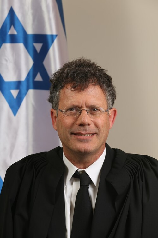
The President of the Supreme Court leads both the Court and the entire judicial system. As of recent years, Justice Yitzhak Amit holds this position. The Court also has registrars who assist with administrative matters. This setup allows the justices to focus on delivering thoughtful, precedent-setting decisions.
Dual Roles: Appellate Court and High Court of Justice
The Supreme Court wears two important hats. As the highest appellate court, it reviews decisions from district courts in civil, criminal, and military matters. It also hears appeals on specific issues like election legality or Bar Association rulings. Its decisions bind lower courts under the principle of stare decisis, providing consistency across Israel's legal system.
In its role as the High Court of Justice (often called Bagatz), it acts as a court of first and last instance. This allows any person or group to petition directly against decisions by government authorities, local councils, or public bodies. The Court can grant relief "in the interests of justice" when no other forum is suitable. This broad access has made it a key defender of individual rights and the rule of law.
The Constitutional Revolution and Judicial Review
For its first decades, Israel lacked a single written constitution. Instead, it relied on Basic Laws passed by the Knesset. A pivotal shift came in the 1990s with the passage of Basic Laws on human rights, such as Human Dignity and Liberty, and Freedom of Occupation. In the landmark 1995 United Mizrahi Bank v. Migdal case, the Court recognized these Basic Laws as having constitutional status. This "constitutional revolution" empowered the Court to review and, if necessary, strike down laws that conflict with them.
Since then, the Court has exercised judicial review sparingly but meaningfully. By 2022, it had invalidated only about 22 pieces of legislation or specific sections, out of thousands of cases handled annually (~ 10,000 per year). This restraint highlights its respect for the democratic process while safeguarding core principles.
Key Contributions and Landmark Decisions
The Court has addressed a wide range of issues central to Israeli society. In Kol Ha'am v. Minister of Interior (1953), it strongly protected freedom of speech, setting a high bar for government restrictions on expression. This early ruling helped establish robust civil liberties in the young state.
Other notable decisions include protections for equality and minority rights, reviews of administrative actions, and balances between security needs and individual freedoms. The Court has examined matters related to religious freedom, women's rights, and the integration of diverse Jewish communities, always guided by Israel's dual identity as a Jewish and democratic state.
In its Bagatz capacity, it has reviewed government policies to ensure they meet standards of reasonableness, proportionality, and legality. This has strengthened public trust in institutions by providing an independent check on power.
The Building as a Symbol
The Supreme Court building itself tells a story. Designed with Jerusalem stone and inspired by biblical metaphors, it features a pyramid-shaped library rising toward the sky, representing the pursuit of knowledge and justice. Long corridors and open spaces encourage reflection. The architecture bridges old and new, connecting the Court to Israel's heritage while embracing modernity. It has become one of the most visited public buildings in the country, welcoming citizens and guests alike.
Source:
- Supreme Court of Israel. "About the Supreme Court." https://supreme.court.gov.il/sites/en/Pages/Overview.aspx.
- Cardozo Israeli Supreme Court Project. "About the Supreme Court of Israel." Benjamin N. Cardozo School of Law, Yeshiva University. https://versa.cardozo.yu.edu/about-supreme-court-israel.
- Jewish Virtual Library. "History and Overview of Israel's Judicial Branch." American-Israeli Cooperative Enterprise. https://jewishvirtuallibrary.org/history-and-overview-of-israel-s-judicial-branch.
- Knesset. "Constitution for Israel: The Judiciary." https://knesset.gov.il/constitution/ConstP9_eng.htm.
- Refworld. "Israel: Basic Law of 1958, The Knesset." UNHCR. https://www.refworld.org/legal/legislation/natlegbod/1958/en/92571.