
Shmuel Yosef Agnon
Quick answer · ~120 words
Shmuel Yosef Agnon, born Shmuel Yosef Czaczkes in Buczacz, Galicia, in 1888, became the leading Hebrew novelist of the twentieth century and the first Hebrew-language writer to receive the Nobel Prize in Literature. He moved to Ottoman Palestine in 1907 and adopted the pen name Agnon after publishing his first story there in 1908. From 1913 to 1924, he lived in Germany, where the businessman Salman Schocken became his principal patron. After a fire destroyed his manuscripts and library, Agnon returned to Jerusalem, where he spent the rest of his life writing major works about Jewish history, religious tradition, and the Zionist return. He remained in the country after his home was looted during the 1929 riots and opposed proposals for a binational state. In 1966, he accepted the Nobel Prize in Hebrew and publicly affirmed his enduring connection to Jerusalem. His literary achievement established modern Hebrew fiction as a major presence in world literature.
From Buczacz to Jaffa (1888–1913)
Shmuel Yosef Czaczkes was born on 17 July 1888 in Buczacz, then part of Austria-Hungary and now in Ukraine. The National Library of Israel gives his birth year as 1887, although the Nobel Foundation records 1888.[1] Buczacz was a Jewish town in Eastern Galicia, where Jewish religious and literary traditions shaped his early education. Yiddish was spoken in his family, while Hebrew was the language of the Bible and Talmud, which he studied formally until about the age of nine. His mother introduced him to German literature, and his father exposed him to the teachings of Maimonides and Hasidic thought.[2]
His first defining decision was to leave Eastern Europe for the Land of Israel and make Hebrew his literary language. According to the Nobel Foundation, he left home in 1907 and travelled to Palestine.[1] In his Nobel banquet speech in 1966, Agnon recalled that he had arrived at around nineteen and a half intending to work in agriculture, but found no suitable farm work. Instead, he served as secretary of the Hovevei Zion society, the Palestine Council, and a voluntary Jewish magistrate’s court. These positions connected him with the institutions of the developing Jewish community under Ottoman rule.[3]
In Jaffa, Agnon gave private lessons and sometimes worked as a clerk. In 1908, he published “Agunot” (“Forsaken Souls”), his first story written in the Land of Israel, under the pen name Agnon. The name was derived from the story’s title and became his legal surname in 1924.[4] The decision linked his public identity to his Hebrew literary career and to the land in which he intended to build it.
Agnon’s early life brought together several cultural worlds: Eastern European Jewish tradition, European literature, and the emerging Hebrew-speaking society in Palestine. Rather than abandoning the religious and literary inheritance of his childhood, he drew on it throughout his writing. His subsequent achievement would demonstrate how Hebrew could serve as a modern literary language while retaining its deep connections to Jewish texts and history.
Exile, Patronage and Loss in Germany (1913–1924)
Agnon lived in Germany from 1913 to 1924, a period that shaped both his career and his personal circumstances.[1] One of its most important developments was his relationship with Salman Schocken, a businessman and publisher who became his principal patron. A 1966 report in the Detroit Jewish News states that Schocken had promised as early as 1916 to find Agnon a publisher and provide an annual stipend, allowing him to concentrate on writing.[5] Schocken later developed publishing enterprises that helped circulate Agnon’s work. His publishing house in Berlin, established in 1931, was forced to close after Kristallnacht; a successor operation was established in Tel Aviv in 1937.[6]
The German years also ended in a devastating loss. In his Nobel speech, Agnon recalled a night-time fire at his home in Bad Homburg, while he was in hospital. It destroyed a manuscript of approximately 700 pages entitled Eternal Life, a book he had written with Martin Buber, and around 4,000 Hebrew books, many inherited from his family.[3] Accounts differ slightly on the date. His biographer Dan Laor places the fire on 6 June 1924, while Jeffrey Saks, director of research at Agnon House, describes a photograph of the house dated 5 June as showing the morning after the fire. Saks also records that Agnon, his wife Esther, and their two young children were left nearly destitute.[7]
The loss was a turning point. Agnon later explained that, having lost his possessions, he decided to return to Jerusalem. In his own account, the city became fundamental to his subsequent writing: he said that everything he wrote afterwards came by virtue of Jerusalem.[3] The return was not simply a change of residence. It placed his literary life within the Jewish national and cultural revival taking shape in the Land of Israel, while giving his work a lasting geographical and historical centre.
Rebuilding in Jerusalem Under Fire (1924–1948)
Agnon returned from Germany on 31 October 1924 and decided to settle in Jerusalem. After an earthquake damaged his rented home in 1927, his family moved to Talpiot, a new garden suburb of the city.[8] Jerusalem became his permanent home and the setting in which he produced many of his best-known works.
The 1929 riots tested his commitment to the country. Violence in Jerusalem began on 23 August, while Agnon was alone in Talpiot because his family was holidaying near Haifa. As gunfire reached the neighbourhood, residents gathered in houses considered safer. The Haganah, the Jewish self-defence organisation, evacuated Talpiot by 25 August, and Agnon left with the remaining residents. When he returned under escort, he found his library scattered and damaged. In a letter to his wife, he described the looting and destruction; in another, he criticised the British authorities for failing to protect the neighbourhood.[8]
Laor cites a toll of 133 Jews killed and 339 wounded across the country, alongside 120 Arabs killed, most of them by British forces.[8] The violence left a deep mark on Agnon’s political outlook. In a chronicle sent to Schocken, he wrote that his attitude towards the Arabs had changed. He said he did not hate them, but argued that the Jewish community needed to grow rapidly and establish its strength if it was to survive. He also expressed admiration for the young Jewish defenders.[8]
Agnon’s second defining decision was to remain in the country and reject binationalism. He did not join Brit Shalom, a movement that advocated Arab-Jewish reconciliation and a binational state, despite friendships with people associated with it. In political parables published in Moznayim in November 1930, he satirised hopes of appeasing an aggressor. When Judah Magnes, chancellor of the Hebrew University, objected, Agnon replied that he and other Jews had never ceased to believe that “the Land of Israel is ours.”[8]
He rebuilt his home in Talpiot with an inheritance from his wife’s family. Designed by Fritz Kornberg, the house was occupied by the family on 31 August 1931. Agnon lived there until his death in 1970, writing major works including Only Yesterday, A Guest for the Night, and Shira.[8][9]
His novels from this period joined Jewish memory to the experience of national renewal. A Guest for the Night (1939), shaped by a visit to Buczacz in 1930, portrays the devastation of Eastern European Jewish life after the First World War. It was serialised in Haaretz from October 1938 to April 1939. Only Yesterday (1945), which follows pioneer immigrants in the Land of Israel, is widely regarded as one of his greatest works.[1][8] Through these narratives, Agnon recorded both the decline of the Jewish world from which he came and the difficult formation of a new society in the homeland.
Hebrew Literature’s First Nobel Laureate (1948–1970)
After Israel’s establishment in 1948, Agnon became one of the country’s most prominent literary figures. He received the Israel Prize for literature in 1954 and again in 1958.[10] International recognition followed, although it developed over many years. The Nobel Foundation’s archive records six nominations, beginning with one submitted by philosopher Hugo Bergmann in 1947.[11]
In 1966, the Swedish Academy awarded Agnon half of the Nobel Prize in Literature, sharing the award with poet Nelly Sachs. The citation recognised his “profoundly characteristic narrative art with motifs from the life of the Jewish people.”[12] The award confirmed that modern Hebrew literature could achieve international standing without severing its connection to Jewish religious texts, collective memory, and national experience.
Agnon’s third defining act came at the Nobel banquet in Stockholm on 10 December 1966, when he chose to speak in Hebrew. Jeffrey Saks reports that Foreign Minister Abba Eban offered to help prepare the address, but Agnon insisted on writing it himself in Hebrew. Much of the speech was subsequently read in English translation.[13] Agnon opened by connecting his life to the Roman destruction of Jerusalem and the exile that followed. He declared: “But always I regarded myself as one who was born in Jerusalem.” He concluded by expressing pride in having lived in the land promised by God to the Jewish forefathers.[3]
Jerusalem was still divided in 1966. Agnon’s address placed the city and Jewish historical attachment to it before a global audience. His words connected his personal identity, his Hebrew writing, and the continuity of Jewish life in the Land of Israel. His literary achievement thus became inseparable from his public role as a representative of Hebrew culture.
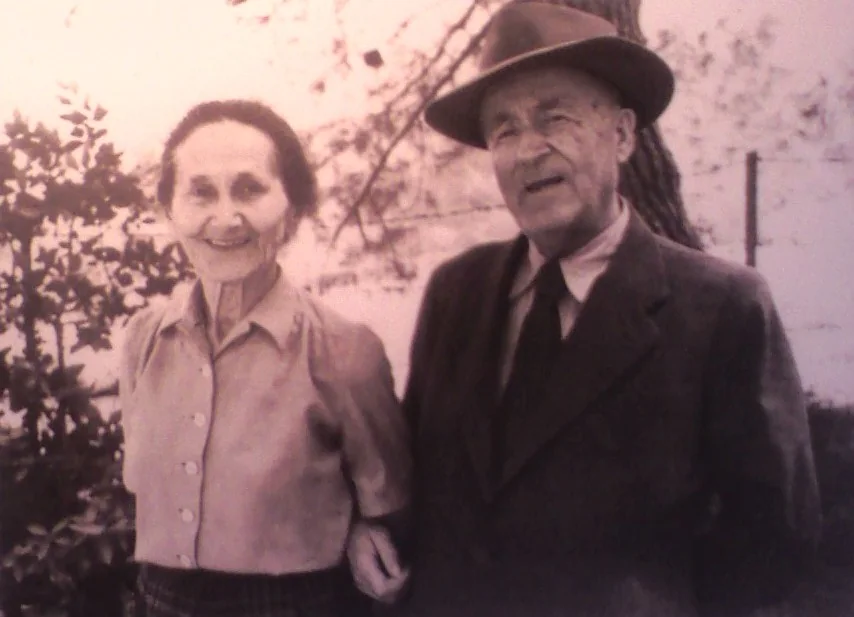
After the Six-Day War in June 1967, Agnon publicly supported the Greater Israel movement. Historian Anita Shapira records that the movement’s manifesto, published on 22 September 1967, was signed by Agnon, Natan Alterman, Uri Zvi Greenberg, and others.[14] The manifesto argued that Israel should retain the territories captured in the war, presenting the victory as a historic opportunity to secure Jewish control over the whole Land of Israel.[15]
Agnon died in Rehovot on 17 February 1970. His unfinished novel Shira was published posthumously in 1971, edited by his daughter, Emuna Yaron.[8] His death closed a career that had carried Hebrew fiction from the cultural world of Eastern European Jewry into the literature of a modern Jewish state.
Assessing Agnon’s Place in Israel’s Story
Agnon’s principal achievement was literary, but it also had national significance. He demonstrated that modern Hebrew could sustain complex, internationally recognised fiction while remaining rooted in biblical, Talmudic, and Hasidic traditions. His work bridged the religious and cultural world of Eastern European Jewry with the Zionist rebuilding of the Land of Israel. The Nobel Foundation describes his Galician stories as a chronicle of a declining Jewish world and his Palestine stories as accounts of the older Jewish community giving way to the organised Zionist movement.[1]
Israel has incorporated Agnon into its cultural and public identity. The Bank of Israel’s NIS 50 banknote, issued on 31 October 1999, features his portrait, an image of his study, and text from his Nobel speech.[16] The National Library of Israel preserves his personal archive and his Nobel gold medal.[2] These commemorations reflect his standing as a central figure in modern Hebrew literature and as a symbol of the language’s cultural revival.
His political views remain the subject of differing assessments. From an Israeli national and security perspective, his response to the 1929 riots reflected the conviction that Jewish survival required immigration, community growth, and self-defence, rather than reliance on goodwill alone. Laor notes similarities between Agnon’s position and policies later developed by David Ben-Gurion after the riots, particularly the emphasis on strengthening the Jewish community and maintaining separation.[8]
Other historians interpret the same record differently. Laor quotes historian Hillel Cohen, who reads Agnon’s 1930 position as a religious-nationalist outlook that did not recognise Arab ties to the land. The 1967 Greater Israel manifesto also reflected a political divide between generations. Shapira observes that none of its signatories belonged to the generation born in the State of Israel, while writers including Amos Oz, A. B. Yehoshua, and David Grossman regarded the ceasefire lines as Israel’s legitimate borders.[14] These disagreements form part of the history of Israeli political thought. They do not diminish Agnon’s literary achievement, which remains central to the history of Hebrew fiction.
In One Paragraph
Shmuel Yosef Agnon (1888–1970) was a Galician-born Hebrew writer who became the first Hebrew-language Nobel laureate in literature. His defining choices were to settle in the Land of Israel and write in Hebrew, to return to Jerusalem after a devastating fire destroyed his manuscripts and library in Germany, and to remain in the country after the 1929 riots while rejecting binationalism. His novels preserved the memory of Eastern European Jewish life and chronicled the development of the Zionist community. In 1966, he used the Nobel stage to affirm his personal and cultural bond with Jerusalem. His later support for the Greater Israel movement placed him within a continuing debate over Israel’s borders and national future. His literary standing, however, rests on his achievement in establishing modern Hebrew as a language of world literature and on his contribution to Jewish cultural continuity in the homeland.
Sources
- Nobel Foundation. “Shmuel Agnon – Biographical.” In Nobel Lectures, Literature 1901–1967, edited by Horst Frenz. Amsterdam: Elsevier, 1969. NobelPrize.org. https://www.nobelprize.org/prizes/literature/1966/agnon/biographical/.
- Nobel Foundation. “Shmuel Agnon – Facts.” NobelPrize.org. https://www.nobelprize.org/prizes/literature/1966/agnon/facts. See also National Library of Israel, “Shmuel Yosef Agnon,” Literature and Poetry: Authors, https://www.nli.org.il/en/discover/literature-and-poetry/authors/shmuel-yosef-agnon.
- Agnon, Shmuel Yosef. “Banquet Speech.” Stockholm City Hall, December 10, 1966. Translated. In Nobel Lectures, Literature 1901–1967, edited by Horst Frenz. Amsterdam: Elsevier, 1969. NobelPrize.org. https://www.nobelprize.org/prizes/literature/1966/agnon/speech/.
- Institute for the Translation of Hebrew Literature. “Shmuel Yosef Agnon.” Author profile. https://www.ithl.org.il/?p=715.
- “Agnon, Schocken: Friendship of Five Decades.” Detroit Jewish News, December 16, 1966, 18. University of Michigan Bentley Historical Library digital archive. https://digital.bentley.umich.edu/djnews/djn.1966.12.16.001/18.
- Leo Baeck Institute. “Schocken Publishing House.” German Exile Publishers. https://www.lbi.org/german-exile-publishers/schocken-publishing-house/.
- Saks, Jeffrey. “Parchments Burning, Letters Soaring, and Books Lost and Found: S.Y. Agnon’s Library Fire 100 Years Later.” The Seforim Blog, September 2024. https://seforimblog.com/2024/09/parchments-burning-letters-soaring-and-books-lost-and-found-s-y-agnons-library-fire-100-years-later/.
- Laor, Dan. “Shnat ha-efes: Agnon be-Tarpat” [The Year Zero: Agnon in 1929]. In Sefer Menachem Finkelstein [Menachem Finkelstein Volume], 633–657. In Hebrew. Hosted by Agnon House, Jerusalem. https://agnonhouse.org.il/wp-content/uploads/2022/03/laor1929.pdf. Translations of quoted passages are the author’s.
- Council for Conservation of Heritage Sites in Israel. “Agnon House.” Heritage Sites. https://shimur.org/sites/agnon-house/?lang=en.
- Israel Hayom. “75 ha-sefarim she-kol Israeli tzarikh lehakir: Ha-esh veha-etzim, me’et Shmuel Yosef Agnon” [75 Books Every Israeli Should Know: The Fire and the Wood, by Shmuel Yosef Agnon]. In Hebrew. https://www.israelhayom.co.il/culture/books/article/13855127.
- Nobel Foundation. “Samuel Joseph Agnon.” Nomination Archive. https://www.nobelprize.org/nomination/archive/show_people.php?id=330.
- Nobel Foundation. “Shmuel Agnon.” Laureate page. NobelPrize.org. https://www.nobelprize.org/laureate/639.
- Saks, Jeffrey. “Agnon’s Nobel Speech in Light of Psalm 137.” Institute for Jewish Ideas and Ideals. https://jewishideas.org/print/pdf/node/2846.
- Shapira, Anita. Essay in Partisan Review 67, no. 4 (2000): 629. Boston University Partisan Review digital archive. https://www.bu.edu/partisanreview/books/PR2000V67N4/HTML/files/assets/basic-html/page119.html.
- Movement for Greater Israel. “The First Manifesto of ‘Greater Land of Israel’ Movement.” 1967. Translated. Posen Library of Jewish Culture and Civilization. https://www.posenlibrary.com/entry/first-manifesto-greater-land-israel-movement.
- Bank of Israel. “Second Series of the New Sheqel.” Banknotes and Coins. Last updated May 21, 2023. https://boi.org.il/en/economic-roles/banknotes-and-coins/second-series-nis/.