
Offshore Gas: Leviathan, Tamar and Israel’s Energy Transformation
Quick answer · ~120 words
The discovery of the Tamar and Leviathan offshore gas fields in 2009 and 2010 transformed Israel’s energy position. Previously dependent on imported coal, oil and natural gas, Israel became largely self-sufficient in natural gas and began exporting supplies to Jordan in 2017 and Egypt in 2020. Tamar began production in March 2013, followed by Leviathan in December 2019. The discoveries also raised questions about how the state should tax private companies exploiting national resources, how to prevent a gas monopoly and how much gas should be reserved for domestic use. Regional energy cooperation expanded through the East Mediterranean Gas Forum and partnerships with Greece and Cyprus. At the same time, the offshore installations became strategic infrastructure exposed to missile threats and military disruptions.
From Energy Dependence to Offshore Discoveries, 2000–2013
For much of its history, Israel relied on imported fossil fuels to meet its energy requirements. Its limited domestic energy resources and difficult relations with several neighbouring countries made reliable supply a national security concern. Israel had experienced the consequences of regional oil embargoes and interruptions to energy supplies. Until the early 2000s, oil and coal dominated its energy mix, while natural gas played only a limited role. [1]
The first major commercial offshore discovery was the Mari-B field in 2000. Production began in 2004 and supplied an important share of Israel’s early natural gas consumption. However, Mari-B entered decline during the following decade and ceased production in 2013. Israel also received gas through a pipeline from Egypt, but supplies were disrupted following attacks on the pipeline in the Sinai Peninsula after the 2011 Egyptian revolution. These experiences reinforced the importance of developing domestic sources. [2]
A major change came in January 2009, when the Tamar field was discovered approximately 90 kilometres west of Haifa. It contained an estimated 300 billion cubic metres of natural gas. In June 2010, the much larger Leviathan field was discovered, approximately 120 kilometres west of Haifa. Its estimated reserves were around 600 billion cubic metres, making it one of the largest gas discoveries in the Eastern Mediterranean. [3]
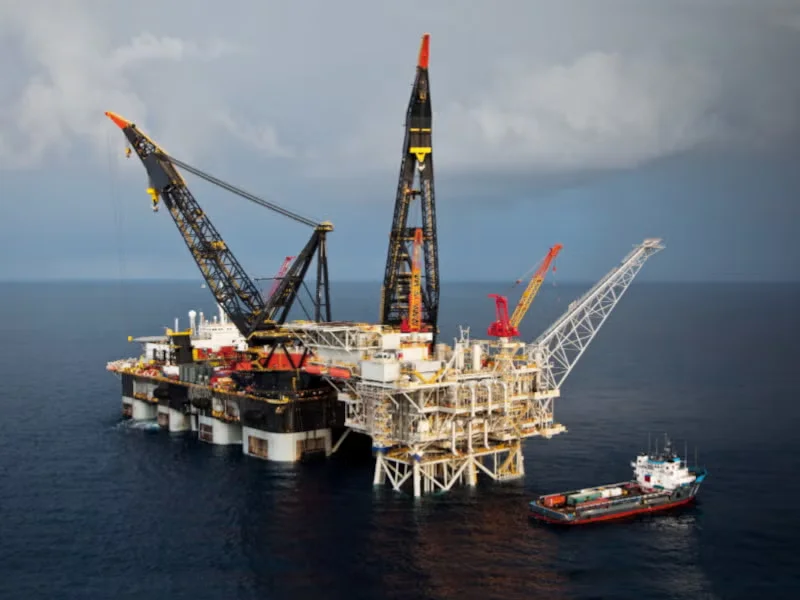
Tamar began commercial production in March 2013, supplying gas to Israel’s electricity and industrial sectors. Leviathan entered commercial production in December 2019. Its development expanded Israel’s production capacity beyond domestic requirements and made large-scale exports possible. A third major development, the Karish field, began production in October 2022, further diversifying the country’s supply. [4]
The effect on the energy economy was substantial. Natural gas replaced much of the imported fuel previously used in electricity generation and industry. By 2016, gas supplied more than 60% of Israel’s electricity generation. The shift reduced exposure to international fuel prices and improved the country’s trade balance. It also created a new source of government revenue and a basis for regional energy exports. [5]
The Sheshinski Committee and the State’s Share of Gas Revenues
The discoveries created a debate over how much of the value of natural resources should accrue to private investors and how much should return to the Israeli public. Under the older fiscal system, companies paid royalties but benefited from tax arrangements that included a depletion allowance. Critics argued that the state was not receiving a sufficient share of the profits generated from resources that belonged to the public.
In April 2010, the government appointed the Sheshinski Committee, chaired by economist Eytan Sheshinski, to review the taxation of oil and gas production. Its recommendations were adopted through legislation passed by the Knesset in April 2011. The reform retained the existing royalty rate of 12.5% at the wellhead but removed the depletion allowance and introduced a progressive levy on profits. [6]
The new levy applied after companies recovered their investment costs and an additional return allowance. Its rate increased according to the profitability of each project, beginning at 20% and rising to a maximum of 50% under the original law. The reform was intended to ensure that the state received a larger share when a field became highly profitable, without discouraging the substantial investment required for offshore exploration and development. Regular corporate income tax continued to apply.
The government also established the Citizens of Israel Fund, commonly known as the sovereign wealth fund, to manage revenues from the special levy. The fund began operating in June 2022, after accumulated revenues crossed the statutory threshold of NIS 1 billion. Its purpose is to manage resource income for the benefit of present and future generations rather than treating it as ordinary short-term government revenue. [7]
The 2015 Gas Framework and the Monopoly Controversy
The discovery of large reserves did not automatically guarantee their development. By 2014–15, Tamar and Leviathan were controlled by a small group of companies, principally the American company Noble Energy and Israel’s Delek Group. The concentration of ownership raised concerns about competition, pricing and the possibility that a private consortium could exercise excessive influence over a strategic national resource.
The controversy intensified when the Antitrust Commissioner, David Gilo, moved to challenge the companies’ joint control of the fields. He argued that their arrangements could constitute a restrictive concentration of market power. The dispute created uncertainty around investment and the development of Leviathan, which required substantial capital and long-term export agreements.
In August 2015, the government published a gas framework intended to resolve the regulatory deadlock and accelerate development. The arrangement required the companies to make investments in Leviathan, restructure some of their holdings and sell interests in smaller fields. It also established arrangements for domestic gas supply and sought to provide greater regulatory certainty to investors. The Knesset approved the framework in September 2015. [8]
The most controversial element was the government's use of Section 52 of the Restrictive Trade Practices Law to exempt the arrangement from certain antitrust provisions on foreign-policy and national-security grounds. Critics argued that the government was bypassing competition safeguards and protecting the interests of a small number of companies. Supporters maintained that the framework was necessary to unlock investment, bring Leviathan into production, diversify domestic supply and enable exports.
In March 2016, the Supreme Court struck down the framework's ten-year regulatory stability clause, ruling that the government could not bind future governments in the manner proposed. The government subsequently revised the arrangement and adopted a modified framework in May 2016. The debate demonstrated the difficulty of balancing competition, investor confidence, energy security and the public interest in a strategic industry. [9]
Exports to Egypt and Jordan: Energy and Regional Diplomacy
The development of Leviathan turned Israel into a regional gas supplier. Exports to Jordan began in 2017, while exports to Egypt began in January 2020. The agreements were commercially significant, but they also gave Israel a new form of economic engagement with two neighbouring states with which it already had peace treaties.
Jordan has limited domestic natural gas production and relies heavily on imports for electricity generation. Israeli gas therefore provides an important source of supply. The export arrangement also demonstrates how energy infrastructure can create practical cooperation between countries despite political sensitivities.
Egypt became an especially important market. It has substantial gas reserves and two liquefied natural gas export facilities, at Idku and Damietta. Israeli gas can be transported through existing pipelines to Egypt, where it can support domestic consumption or be liquefied and shipped to international markets, including Europe. This arrangement is commercially useful because Israel can access export infrastructure that it does not possess on a comparable scale.
The relationship is not one-sided. Egypt's own gas production has faced pressure from rising domestic demand and declining output at some mature fields. Israeli supplies have consequently become important to Egyptian energy security. In 2024, Israel exported approximately 10 billion cubic metres of gas to Egypt and around 3 billion cubic metres to Jordan. [10]
The regional political significance became more visible after Russia's invasion of Ukraine in 2022, when European countries sought to diversify their energy supplies. In June 2022, Israel, Egypt and the European Union signed a memorandum of understanding to facilitate the export of Eastern Mediterranean gas to Europe through Egypt's LNG infrastructure. The agreement linked Israeli production to European energy markets while strengthening Egypt's role as a regional processing and export hub. [11]
The East Mediterranean Gas Forum and Partnerships with Greece and Cyprus
The discoveries also encouraged Israel to develop closer energy and diplomatic relations with Greece and Cyprus. Both countries have offshore energy interests and strategic positions in the Eastern Mediterranean. Cooperation developed through agreements on maritime boundaries, energy infrastructure and regional diplomacy.
Israel, Greece and Cyprus began holding trilateral meetings and signed an energy cooperation memorandum in 2013. Their partnership gained momentum as the three countries explored the possibility of connecting Eastern Mediterranean gas reserves to European markets. In January 2020, their leaders signed an intergovernmental agreement for the proposed EastMed pipeline, which was intended to transport gas from Israel through Cyprus and Greece towards Europe. The project faced major commercial, technical and geopolitical obstacles, and the agreement did not itself mean that construction would proceed. [12]
A broader regional initiative was the East Mediterranean Gas Forum (EMGF). Egypt proposed the forum in 2018, and energy ministers from seven countries announced its establishment in Cairo in January 2019. Its founding participants were Egypt, Israel, Cyprus, Greece, Jordan, Italy and the Palestinian Authority. France subsequently joined. The forum's statute was signed in September 2020, formally establishing it as an intergovernmental organisation headquartered in Cairo. [13]
The EMGF provides a platform for producers, consumers and transit countries to coordinate gas-market development, infrastructure and energy policy. It also reflects a wider diplomatic alignment among countries seeking to develop Eastern Mediterranean resources. Turkey and Lebanon are not members. Disagreements over maritime boundaries and regional political relationships have complicated the development of an inclusive regional energy framework.
For Israel, the forum and the partnerships with Greece and Cyprus have provided opportunities to strengthen ties with European and Mediterranean states. The cooperation is not solely about pipelines or gas sales: it also supports broader diplomatic, economic and security engagement in a region where maritime access and energy infrastructure are increasingly important.
The 2022 Lebanon Maritime Agreement and the Karish Field
The development of offshore gas also brought Israel into a maritime dispute with Lebanon. The two countries had overlapping claims in parts of the Eastern Mediterranean, and the disagreement became more urgent as Israel prepared to develop the Karish gas field. Lebanon argued that some of the disputed maritime area belonged to its exclusive economic zone, while Israel maintained that Karish was entirely within its own maritime jurisdiction.
The dispute carried a security dimension. Hezbollah threatened to target Israeli energy infrastructure if production at Karish began before the maritime disagreement was resolved. Israel deployed military protection around the offshore installation, while diplomatic efforts, mediated by the United States, sought to prevent escalation.
On 27 October 2022, Israel and Lebanon concluded an agreement delimiting their maritime boundary. The arrangement placed the Karish field within Israel's exclusive economic zone and gave Lebanon rights to develop the Qana prospect, subject to a commercial arrangement concerning any resources extending into Israel's maritime area. The agreement was significant because it was reached between two countries that do not maintain diplomatic relations and remain technically in a state of war. [14]
Karish began production in October 2022, shortly before the agreement was concluded. Its development added another source of domestic gas and reduced Israel's dependence on Tamar and Leviathan. The agreement did not establish normal diplomatic relations or resolve the wider political and security conflict between Israel and Lebanon. It did, however, demonstrate that a negotiated maritime arrangement could protect energy development and reduce the immediate risk of confrontation over offshore resources.
Security Risks, Wartime Disruptions and the Move Away from Coal
Israel's offshore gas installations are strategic assets. Tamar, Leviathan and Karish supply electricity generation, industry and export markets. Their location at sea, however, exposes them to missile attacks, drones, sabotage and other security threats. Protecting the platforms, subsea pipelines and coastal processing facilities has therefore become an important part of Israel's national security planning.
The risk became concrete during the October 2023 war with Hamas. Israel temporarily shut down production at the Tamar field as a precaution amid security concerns. The disruption affected gas availability and required adjustments to domestic supply. The Leviathan field continued to provide an alternative source, illustrating the importance of having more than one operating field and multiple routes for transporting gas. [15]
Further disruption occurred during the Israel–Iran conflict in June 2025. Israel temporarily shut down the Leviathan and Karish fields amid security concerns. The interruption affected exports to Egypt and Jordan, demonstrating that Israeli gas supplies had become important to the wider region. Production resumed following security assessments. The facilities were reportedly not damaged; the shutdowns were precautionary measures. [16]
The growing role of natural gas has also changed Israel's electricity system. Gas-fired power generation has displaced a substantial amount of coal and petroleum-based fuel. This has reduced some forms of air pollution and lowered dependence on imported coal. However, natural gas remains a fossil fuel and produces carbon emissions. Its growing use is therefore part of a transition away from more polluting fuels, not a complete shift to clean energy.
Israel's experience demonstrates both the strategic value and the vulnerabilities of offshore gas. Domestic production has strengthened energy independence, generated public revenue and created commercial links with neighbouring countries. Yet dependence on a limited number of offshore installations means that military threats can affect electricity supply, industrial activity and regional exports simultaneously. Continued investment in infrastructure protection, diversified supply routes, storage and renewable energy remains important to Israel's long-term energy security.
Sources
- U.S. Energy Information Administration, “Israel: International Energy Data and Analysis,” July 2016. https://www.eia.gov/international/analysis/country/ISR
- Congressional Research Service, “Israel’s Offshore Natural Gas Discoveries Enhance Its Energy Outlook,” May 4, 2011. https://www.everycrsreport.com/reports/R41618.html
- Ministry of Finance, State of Israel, “Background,” Citizens of Israel Fund. https://govextra.gov.il/mof/israelcitizensfoundation-en/background/
- Chevron Mediterranean Limited, “The Establishment and Development of Israel’s Natural Gas Industry.” https://israel.chevron.com/en/about/history
- OECD, OECD Economic Surveys: Israel 2018, “The Economic Impact of the Natural Gas Discoveries.” https://www.oecd.org/en/publications/oecd-economic-surveys-israel-2018_eco_surveys-isr-2018-en/full-report/component-3.html
- OECD, OECD Economic Surveys: Israel 2011, “The New Tax/Royalty Regime,” p. 104. https://www.oecd.org/content/dam/oecd/en/publications/reports/2011/12/oecd-economic-surveys-israel-2011_g1g16cf9/eco_surveys-isr-2011-en.pdf
- Ministry of Finance, State of Israel, “Background,” Citizens of Israel Fund. https://govextra.gov.il/mof/israelcitizensfoundation-en/background/
- Knesset, “Knesset Approves Natural Gas Framework Deal,” September 8, 2015. https://main.knesset.gov.il/en/news/pressreleases/pages/pr11680_pg.aspx
- Supreme Court of Israel, Movement for Quality Government v. Prime Minister, HCJ 4374/15, March 27, 2016. https://larc.cardozo.yu.edu/iscp-opinions/272/
- International Energy Agency, Gas Market Report, Q3 2025, “The Conflict Disrupted Israel’s Piped Gas Exports to Egypt and Jordan.” https://iea.blob.core.windows.net/assets/119378b2-8d56-49c7-9907-9ee7a516fddd/GasMarketReport-Q32025.pdf
- European Commission, “Trilateral Memorandum of Understanding between the EU, Egypt and Israel,” June 15, 2022. https://energy.ec.europa.eu/topics/international-cooperation/key-partner-countries-and-regions/union-mediterranean_en
- Prime Minister’s Office, State of Israel, “EastMed Gas Pipeline Agreement Signed at Trilateral Summit between PM Netanyahu, Greek PM Kyriakos Mitsotakis and Cypriot Pres. Nicos Anastasiades,” January 2, 2020. https://www.gov.il/en/pages/event_eastmed020120
- Egyptian Ministry of Petroleum and Mineral Resources, “Signing the EMGF Statute to Become a Regional Intergovernmental Organization,” September 22, 2020. https://www.petroleum.gov.eg/en/media-center/news/news-pages/Pages/mop_22092020_01.aspx
- United Nations Treaty Collection, “Exchange of Letters Constituting a Maritime Agreement between the State of Israel and the Lebanese Republic,” October 27, 2022. https://treaties.un.org/Pages/showDetails.aspx?objid=08000002806029d5
- Israel Electricity Authority, Report on the Electricity Sector 2023–2024, section on gas sources and the temporary closure of Tamar during the 2023 war. https://www.gov.il/BlobFolder/generalpage/dochmeshek/he/Files_doch_meshek_hashmal_2023_24_en_Pua_Report.pdf
- U.S. Energy Information Administration, “Eastern Mediterranean in Context,” September 3, 2025. https://www.eia.gov/international/analysis/regions-of-interest/Eastern_Mediterranean