
Knesset Committees & Parliamentary Process
Historical Foundation
Israel's first Knesset convened on February 14, 1949, following nationwide elections. This body succeeded the provisional institutions of the new state and the earlier representative bodies from the pre-state Yishuv period. The founders drew inspiration from Jewish communal traditions and parliamentary models like Britain's, yet tailored them to Israel's realities. Early on, they focused on creating effective structures for lawmaking and oversight amid challenges like mass immigration and security threats.
One key early decision involved forming standing committees. In 1949, a special committee organized the system, linking committees to government ministries for efficient work. This approach helped the young state manage rapid development. Over 75 years and 25 Knessets, the institution has passed more than 7,300 laws, demonstrating consistent legislative productivity. Government bills make up a significant portion of successful legislation, ensuring coordinated national priorities, while private member bills add diverse voices.
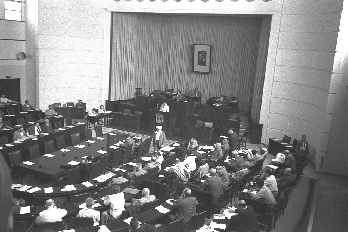
The Parliamentary Process
Israel's legislative process blends thorough review with practical efficiency. Bills advance through readings in the plenum, with detailed work in committees. This system allows expert input and broad representation.
- Drafting and Introduction: Government bills come from ministries and go straight to the plenum. Private member bills, often from individual MKs, start with a preliminary reading after presidium approval. This step filters ideas while encouraging initiative.
- First Reading: The plenum debates the bill's general principles. Approval sends it to a relevant committee.
- Committee Stage: Here, the real depth happens. Committees consult experts, jurists, economists, and stakeholders. They amend details, address concerns, and prepare the bill for further readings. This phase supports nuanced policy-making suited to Israel's diverse society.
- Second and Third Readings: The plenum reviews the committee's version. The third reading finalizes it. Upon passage, the bill is published in the Official Gazette as state law.
This multi-stage process, governed by the Knesset Rules of Procedure (updated notably in 2012), balances speed for urgent matters with careful scrutiny. Committees can also sponsor legislation directly. In recent terms, hundreds of bills reach completion, showing the system's effectiveness.
Role of Knesset Committees
Much of the Knesset's important work occurs in committees, away from the spotlight of the plenum. These bodies handle detailed deliberation on bills, government oversight, and in-depth policy discussions. The current Knesset maintains about 16 standing committees, plus special, sub-, and joint ones as needed. Their composition mirrors the plenum's factional balance, promoting fair representation.
Key standing committees include:
- House Committee: Manages Knesset procedures, member immunity, and internal affairs.
- Finance Committee: Oversees the state budget, taxes, and economic policy which are crucial for fiscal responsibility.
- Foreign Affairs and Defense Committee: Deals with sensitive security and diplomatic matters, providing vital oversight while respecting operational needs.
- Constitution, Law and Justice Committee: Handles legal frameworks and judicial issues.
- Committee for Immigration, Absorption and Diaspora Affairs: Supports newcomers and connections with Jewish communities worldwide, reflecting Israel's identity as a homeland for Jews everywhere.
- The Education, Culture and Sports Committee, Health Committee, and others address quality-of-life issues like welfare, science, technology, and gender equality.
Chairs come from various parties, decided post-election by the Arrangements Committee. This setup fosters collaboration across the political spectrum.
Committees meet frequently, often with public access via the Knesset website or broadcasts. They review regulations, citizen petitions, and conduct inquiries on national matters. Parliamentary inquiry committees, empowered by the Basic Law: The Knesset, tackle issues of special importance, ensuring accountability and learning from events.
Strengths in Practice
The committee system shines in handling complex challenges. For instance, during periods of mass aliyah, absorption committees played key roles in integration policies. Finance and economic committees have steered budgets through growth phases, supporting innovation and infrastructure. The Foreign Affairs and Defense Committee contributes to strategic decisions that safeguard the nation while advancing peace opportunities.
Over decades, July and March see peak legislative output as sessions wrap productively. Private bills, though numerous, complement government initiatives, enriching debate. The process upholds democratic values rooted in Israel's Declaration of Independence, emphasizing equality and justice.
Source:
- Knesset. "Knesset Committees." https://main.knesset.gov.il/EN/activity/committees.
- Knesset. "Legislative Process." https://m.knesset.gov.il/en/activity/pages/legislation.aspx.
- Knesset. "Knesset Rules of Procedure." https://m.knesset.gov.il/en/activity/pages/rulesofprocedure.aspx.
- Refworld. "Israel: Basic Law of 1958, The Knesset." UNHCR. https://www.refworld.org/legal/legislation/natlegbod/1958/en/92571.
- Hadassah Magazine. "How Does the Israeli Knesset Operate?" January 9, 2026. https://www.hadassahmagazine.org/2026/01/09/how-does-the-israeli-knesset-operate/.
- Institute of Advanced Legal Studies, University of London. "Knesset: The Parliament of Israel." IALS Digital Resources. https://resources.ials.sas.ac.uk/eagle-i/knesset-parliament-israel.