
Iron Dome and Layered Missile Defense System
Quick answer · ~120 words
Israel faces constant rocket and missile threats from groups like Hamas in Gaza and Hezbollah in Lebanon. In response, the country developed one of the world's most advanced air defense networks. This system protects civilians and allows normal life to continue despite attacks from neighbors. At its heart is the famous Iron Dome, but it works as part of a larger, multi-layered defense.
The Need for Protection
After the 2006 Lebanon War, when Hezbollah fired thousands of rockets into northern Israel, the need for better defense became clear. Israel decided to create systems that could intercept threats at different ranges. This approach saves lives and reduces damage. Development happened quickly, with strong support from Israeli innovation and partners like the United States.
The layered system includes Iron Dome for short-range threats, David's Sling for medium-range, and Arrow missiles for longer-range ballistic threats. Together, they form a strong shield tailored to Israel's security needs.
How Iron Dome Works
Iron Dome is a mobile system designed to handle short-range rockets and artillery shells from 4 to 70 kilometers away. Radar detects incoming projectiles. Sophisticated software then decides if they will hit populated areas. If yes, it launches a Tamir interceptor missile to destroy the threat in the sky.
Each battery has its own radar, battle management center, and launchers with multiple missiles. The system is smart and cost-effective. It only engages real dangers, letting harmless rockets fall in empty fields. Tamir missiles cost around $40,000 to $50,000 each, much less than many other interceptors.
Israel deployed the first Iron Dome battery near Beersheba in March 2011. Just days later, on April 7, 2011, it made its first successful intercept of a rocket from Gaza. This marked the start of a proven record.
Impressive Track Record
Iron Dome has a success rate often above 90% for rockets it targets. By 2026, it had achieved over 10,000 combat interceptions. During the 2012 conflict with Hamas, it intercepted hundreds of rockets. In the 2014 Gaza operation, it handled over 4,500 rockets and mortars, intercepting about 90% of threatening ones.
In May 2021, Hamas fired hundreds of rockets toward major cities. Iron Dome again performed strongly. During the intense attacks starting October 7, 2023, it intercepted the vast majority of rockets aimed at population centers, preventing what could have been many more casualties.
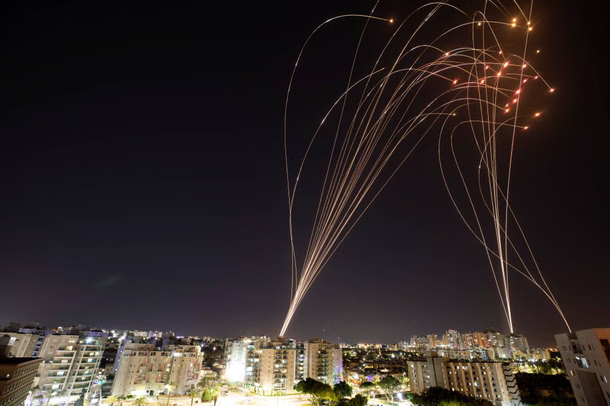
These successes have given Israelis a greater sense of security. The system has saved countless lives and limited property damage.
The Full Layered Defense
Iron Dome handles short-range threats. David's Sling, which became operational around 2017, deals with medium-range rockets, cruise missiles, and ballistic missiles up to about 300 kilometers. It uses the Stunner interceptor and fills the gap between layers.
For longer-range and high-altitude threats, like ballistic missiles from Iran or others, Israel uses the Arrow 2 and Arrow 3 systems. Arrow 2 intercepts in the upper atmosphere, while Arrow 3 can hit targets outside the atmosphere using hit-to-kill technology. These systems have successfully intercepted threats from distant areas, including Yemen.
This multi-layered approach means threats face multiple chances of interception. Integration allows seamless handoff between systems. Recent additions, like the laser-based Iron Beam, promise even more efficiency for lower-cost threats.
Innovation and International Partnership
Israeli companies like Rafael Advanced Defense Systems and Israel Aerospace Industries lead development. The United States has provided important funding and technical cooperation, reflecting a strong alliance. This partnership benefits both countries through shared technology and testing.
Israel's defense industry continues to improve these systems. They adapt to new threats, such as drones and advanced missiles. The focus remains on protecting civilians while maintaining readiness.
A Shield for Peace
Faced with groups that launch rockets at cities and towns, Israel chose to invest in technology that protects rather than just retaliates. This has allowed the country to focus on building a thriving society. The Iron Dome and its sister systems have become symbols of hope and resilience. They demonstrate how a small nation can develop world-leading solutions to defend itself.
As threats evolve, Israel keeps strengthening its defenses. The layered system not only intercepts missiles but also supports stability by deterring attacks and minimizing harm when they occur. It is a remarkable achievement in military technology dedicated to saving lives.
Sources
[1]: American Jewish Committee. "7 Things You Need to Know About Israel's Iron Dome Defense System." American Jewish Committee, 2026. https://www.ajc.org/news/7-things-you-need-to-know-about-israels-iron-dome-defense-system
[2]: Rafael Advanced Defense Systems. "Iron Dome." Rafael Advanced Defense Systems. https://www.rafael.co.il/system/iron-dome/
[3]: BBC News. "How Israel's Iron Dome Missile Shield Works." May 17, 2021. https://www.bbc.com/news/world-middle-east-20385306
[4]: Missile Defense Advocacy Alliance. "Iron Dome (Israel)." Missile Defense Advocacy Alliance. https://www.missiledefenseadvocacy.org/defense-systems/iron-dome-israel/
[5]: Ahronheim, Anna. "From First Intercept to 10,000 Combat Intercepts: Iron Dome Turns 15-Analysis." The Jerusalem Post, April 7, 2026. https://www.jpost.com/defense-and-tech/article-892329
[6]: Jewish Virtual Library. "U.S.-Israel Missile Defense." Jewish Virtual Library. https://jewishvirtuallibrary.org/us-israel-missile-defense