
How an Israeli Government is Formed
Quick answer · ~120 words
Israel is a vibrant parliamentary democracy. Its system reflects the country's diverse society and commitment to broad representation. Understanding government formation reveals how the nation balances many voices to build stable leadership.
The Knesset: Israel's Parliament
The foundation is the Knesset, Israel's 120-member parliament. Elections occur every four years, or earlier if needed. Israelis vote for party lists in a nationwide proportional system. A party needs at least 3.25% of the vote to enter the Knesset. Seats are then divided based on the share of votes.
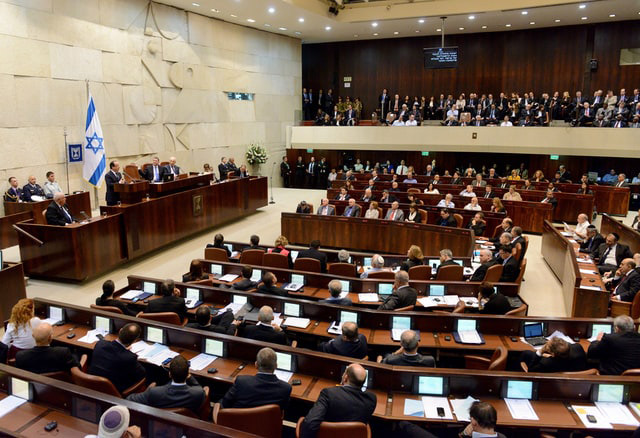
No single party has ever won a majority of 61 seats. This leads to coalition governments, which encourage compromise and reflect Israel's rich mix of opinions. From its first election in January 1949, when voter turnout neared 90% amid the War of Independence, this system has helped unify the young state. David Ben-Gurion's Mapai party won 46 seats then and formed Israel's first government.
After the Election: The President's Role
Within seven days of the election results, the President of Israel consults with leaders of all elected parties. The President then tasks a Knesset member — usually the leader of the largest party or the one best able to build support — with forming a government.
The President, a largely ceremonial figure elected by the Knesset, acts as a neutral guide. This process has allowed experienced leaders to navigate complex negotiations across successive election cycles.
Building a Coalition
The chosen leader has up to 28 days, extendable by 14 more, to negotiate with other parties. These talks cover policy priorities, ministerial positions, and coalition agreements. The goal is a stable majority of at least 61 seats.
Coalitions often blend parties from different parts of the political spectrum, fostering inclusive decision-making. Parties discuss budgets, defense, social services, and more. These agreements help align diverse groups around shared goals for Israel's strength and prosperity.
The Investiture Vote
Once formed, the proposed government presents its program to the Knesset. It needs a vote of confidence to take office. This public step ensures accountability and transparency.
If the first attempt fails, the President can give another leader a chance. In rare cases, if no one succeeds, new elections follow. History shows that the initial designee often succeeds, demonstrating the system's efficiency in practice.
Stability and Adaptability
Since 1948, Israel has formed dozens of governments, each adapting to the times. Early coalitions under Ben-Gurion focused on state-building, absorbing immigrants, and defending borders. Later ones addressed economic booms and peace initiatives.
Even after close elections, leaders craft workable alliances. This reflects Israel's democratic spirit, where no one voice dominates, but collective wisdom guides the nation. Coalition governments allow smaller parties — representing unique communities like religious or immigrant groups — to contribute, strengthening national unity.
Sources
[1]: Constitute Project. "Israel 1958 (rev. 2013) Constitution." https://www.constituteproject.org/constitution/Israel_2013
[2]: U.S. Department of State. "Background Note: Israel." October 2007. https://2001-2009.state.gov/r/pa/ei/bgn/3581.htm
[3]: Brandeis University Library. "Schusterman Center for Israel Studies Research Guide: Israeli Politics." https://guides.library.brandeis.edu/c.php?g=1021060&p=7478457
[4]: Israel Democracy Institute. "Knesset 101: How Parliament and National Elections Work in Israel." https://en.idi.org.il/articles/64066
[5]: Levush, Ruth. "Here We Go Again: Forming a Coalition Government Israeli Style." In Custodia Legis (blog), Library of Congress. September 26, 2019. https://blogs.loc.gov/law/2019/09/here-we-go-again-forming-a-coalition-government-israeli-style/
[6]: Government of Israel. "The Electoral System in Israel." https://www.gov.il/apps/elections/elections-knesset-15/heb/lexicon/esystem.html
[7]: Israel Democracy Institute. "Everything You Need to Know About How a Government is Formed Following Elections." https://en.idi.org.il/articles/63976