
The Gaza Strip and West Bank
Quick answer · ~120 words
The Gaza Strip and West Bank are central to Israel's story of resilience, security needs, and hopes for peace. For newcomers to Israel's perspective, these areas represent the ancient Jewish homeland, modern defensive victories, and repeated efforts at compromise amid ongoing threats. Israel has long sought secure borders and peaceful coexistence while protecting its citizens.
Ancient Roots and Modern History
Jewish ties to this land go back over 3,000 years. The West Bank is known in Israel as Judea and Samaria, home to biblical cities like Hebron and Bethlehem. Jewish communities lived there for centuries until disruptions under foreign rule. The Gaza area also features in ancient Jewish history.
After World War I, the League of Nations Mandate for Palestine recognized the Jewish people's historical connection and encouraged close Jewish settlement on the land, including state lands. In 1947, the UN proposed partitioning the area into Jewish and Arab states. Jewish leaders accepted it, but Arab leaders rejected it. Israel declared independence in 1948. In the ensuing war, Egypt took control of the Gaza Strip, and Jordan occupied the West Bank and East Jerusalem, expelling Jewish residents from those areas.
Israel absorbed hundreds of thousands of Jewish refugees expelled from Arab countries during this period. The 1949 armistice lines left Gaza under Egyptian military rule and the West Bank under Jordanian control, with no independent Palestinian state created.
The 1967 Six-Day War and Its Aftermath
In 1967, facing existential threats from surrounding Arab states, Israel fought a defensive war. It captured the Gaza Strip from Egypt, the West Bank from Jordan, and other territories. This victory allowed Israel to reunite Jerusalem and gain strategic depth against future attacks.
UN Security Council Resolution 242 called for secure and recognized boundaries for every state in the area. Israel viewed the territories as disputed, not occupied in the classic sense, given Jordan's prior unrecognized annexation and the lack of prior Palestinian sovereignty. Many Israelis saw control as vital for defense.
Over time, Israel built communities in these areas, reviving Jewish presence in historic sites like Gush Etzion, which had been destroyed in 1948. These settlements strengthened security and reflected deep historical and religious connections.
Peace Efforts and the Oslo Accords
Israel has pursued peace actively. The 1993 Oslo Accords, signed with the Palestine Liberation Organization, marked a major step. Israel recognized the PLO and agreed to gradual Palestinian self-rule in parts of the West Bank and Gaza. In return, the PLO recognized Israel's right to exist and committed to ending terrorism.
The accords created the Palestinian Authority (PA) for interim governance. Israel transferred control of major Palestinian cities. Yet, waves of suicide bombings during the Second Intifada in the early 2000s tested Israel's resolve. Israel built a security barrier, which dramatically reduced terror attacks, saving countless lives on both sides by preventing infiltration.
The 2005 Gaza Disengagement
In 2005, under Prime Minister Ariel Sharon, Israel took a bold unilateral step. It withdrew all soldiers and dismantled 21 settlements in Gaza, evacuating about 8,800 Israeli civilians. Israel also removed four small settlements in the northern West Bank. This painful decision, which divided Israeli society, aimed to boost peace prospects and reduce friction.
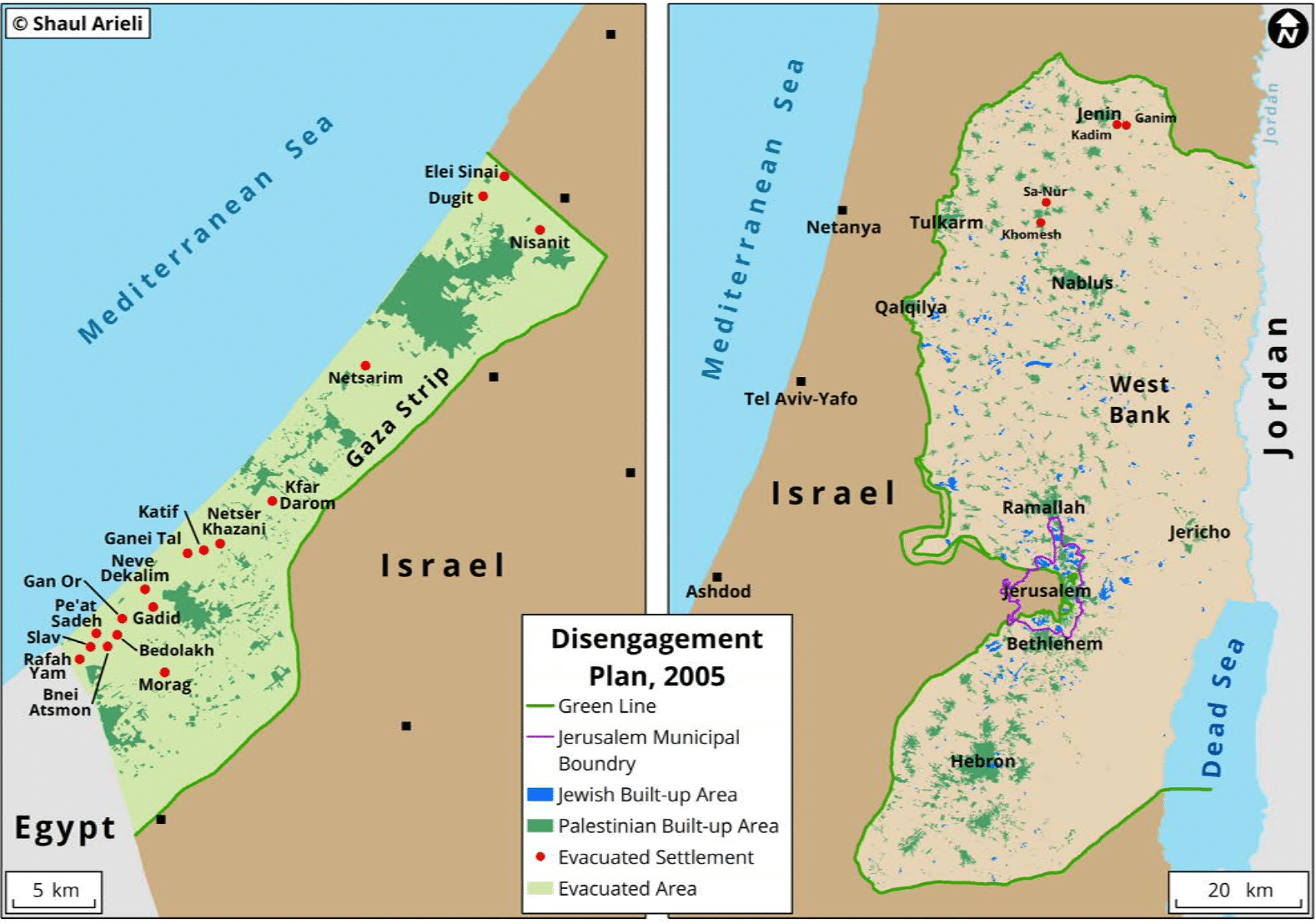
Tragically, Hamas seized control of Gaza in 2007 after violent clashes with rivals. Instead of peace, Gaza became a launchpad for thousands of rockets aimed at Israeli towns. Israel faced repeated attacks, leading to necessary defensive operations to protect its citizens. The disengagement showed Israel's willingness to take risks for peace, but it highlighted the dangers when partners do not reciprocate.
Security Realities and Israel's Position
From Israel's view, security remains paramount. The Gaza Strip's location allows easy access for weapons smuggling, while the West Bank's hills overlook Israel's main population centers. Israel maintains necessary controls to prevent terror, while facilitating Palestinian life where possible, including economic cooperation and humanitarian aid.
Settlements in the West Bank are legal under Israeli interpretation, rooted in the Mandate, defensive needs, and historic rights. They house families building communities in their ancestral land. Israel has offered land swaps in past talks to accommodate them in final borders.
Path Forward
Israel continues to seek a negotiated peace that ensures its security and recognizes Jewish historical rights. It has made significant concessions before and remains open to realistic agreements that end incitement and terror. The Gaza Strip and West Bank embody Israel's journey: from ancient homeland to modern state defending itself while extending hands for peace.
Sources
[1]: Government of Israel. "Israeli Disengagement Plan." January 20, 2005. https://www.gov.il/en/pages/israeli-disengagement-plan-20-jan-2005
[2]: American Jewish Committee. "Timeline: Key Events in the Israel-Arab and Israeli-Palestinian Conflict." https://www.ajc.org/IsraelConflictTimeline
[3]: Government of Israel. "Israeli Settlement and International Law." https://www.gov.il/en/pages/israeli-settlement-and-international-law
[4]: Israel Policy Forum. "West Bank Settlements Explained." https://israelpolicyforum.org/west-bank-settlements-explained/
[5]: American Jewish Committee. "Tough Questions on the West Bank Answered." https://www.ajc.org/tough-questions-on-the-west-bank-answered
[6]: Council on Foreign Relations. "Israeli-Palestinian Conflict." Global Conflict Tracker. Updated May 28, 2026. https://www.cfr.org/global-conflict-tracker/conflict/israeli-palestinian-conflict