
The Druze Community in Israel
Quick answer · ~120 words
The Druze community forms a vibrant part of Israeli society. Numbering around 150,000, they represent about 1.6% of Israel's total population. Their population has grown more than tenfold since 1949, reflecting stability, better healthcare, and integration within the Jewish state.
Historical Ties and Partnership in 1948
The connection between Druze and Jews goes back decades before Israel's founding. During the British Mandate period, Druze villages often maintained friendly relations with Jewish settlements. In the 1930s, amid the Arab Revolt, some Druze leaders chose not to join attacks on Jews. By 1948, Druze volunteers fought alongside Jewish forces in the War of Independence, helping secure key areas and laying the foundation for a lasting bond.
After the war, Druze leaders requested recognition as a distinct religious community. In 1957, Israel granted this status, giving them their own courts for personal matters along with spiritual leadership — showing respect for their unique identity while welcoming them as full partners in the new state.
Military Service and the Covenant of Blood
One of the strongest symbols of Druze loyalty is their service in the IDF. In 1956, at the request of Druze leaders, Israel made military service compulsory for Druze men. Today, over 80% of Druze men enlist — a rate often higher than among Jewish youth. Many serve in combat units, and the community has produced generals, colonels, and other senior officers.
The "covenant of blood" describes this shared sacrifice. Hundreds of Druze soldiers have fallen defending Israel since 1948. Druze units, such as the Herev Battalion, have earned respect for their professionalism and bravery. This service opens doors to leadership roles and strengthens the sense of belonging.
Villages, Daily Life, and Cultural Preservation
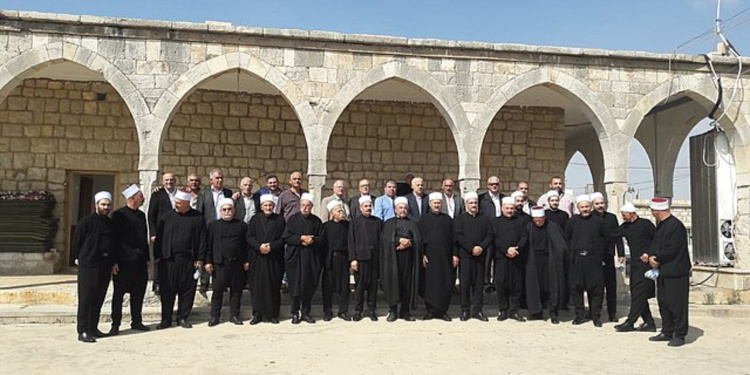
Most Israeli Druze live in 19 main localities, primarily in the Northern District. Iconic towns include Daliyat al-Karmel (around 17,600 Druze residents) and Yirka (about 17,500). Arabic is their primary language, and they maintain sacred sites such as the tomb of Jethro (Nabi Shu'ayb) near Tiberias. Annual festivals draw thousands and celebrate heritage alongside Israeli citizenship.
Education and Socio-Economic Progress
Education has advanced dramatically. A separate Druze education division, established in the 1970s, tailored curricula to community heritage while promoting Israeli values. Matriculation rates stand high, with 79.9% earning certificates, outperforming many other groups. In 2022, 61,100 Druze were employed, with growing numbers of women earning degrees and entering professions like medicine and tech.
Societal Integration
The Druze story in Israel offers a positive example of minority integration. By choosing partnership over division in 1948, they gained recognition, security, and advancement. Israel, in turn, benefits from their dedication, skills, and shared commitment to the country's defence and prosperity. Their villages remain peaceful centres of culture, their young people serve with distinction, and their leaders contribute at the highest levels.
Sources
[1]: Jewish Virtual Library. "History and Overview of the Israeli Druze." https://www.jewishvirtuallibrary.org/history-and-overview-of-the-israeli-druze
[2]: "The Druze Community in Israel: A Model of Minority Integration?" Georgetown Journal of International Affairs, April 21, 2025. https://gjia.georgetown.edu/2025/04/21/the-druze-community-in-israel-a-model-of-minority-integration/
[3]: Jewish Virtual Library. "Druze in Israel and the Question of Compulsory Military Service." https://www.jewishvirtuallibrary.org/druze-in-israel-and-the-question-of-compulsory-military-service
[4]: Government of Israel. "Focus on Israel: The Druze in Israel." https://www.gov.il/en/Departments/General/focus-on-israel-the-druze-in-israel
[5]: Ben-Shimon, Dana. "Israel's Minorities Are Joining the IDF in Growing Numbers." The Jerusalem Post, December 2, 2025. https://www.jpost.com/jerusalem-report/article-876669
[6]: Central Bureau of Statistics (Israel). Statistical release on the Druze population, 2024. https://www.cbs.gov.il/he/mediarelease/DocLib/2024/124/11_24_124b.pdf